Even with rigorous QA protocols, structural steel assembly errors—especially in custom steel profiles, structural steel drilling, bending, and cutting—often slip through undetected. These oversights compromise structural steel erection accuracy, jeopardize structural steel design integrity, and undermine safety across structural steel applications. For project managers, quality controllers, procurement teams, and global buyers of structural steel profiles, identifying these hidden gaps is critical. As a trusted structural steel manufacturer & exporter from China, Hongteng Fengda shares real-world insights to help technical evaluators, decision-makers, and distributors prevent costly rework, delays, and compliance risks—ensuring reliability from design to final assembly.
1. The Top 5 Structural Steel Assembly Errors Most Frequently Overlooked in QA
Despite strict inspection checklists, certain dimensional, geometric, and process-related deviations consistently evade detection during final QA verification. Based on over 12 years of production data across 380+ international projects, Hongteng Fengda identifies five recurring oversights—each verified by third-party audits under ASTM A6/A6M and EN 1090-2 standards.
First, misalignment of bolt hole patterns in multi-component assemblies—especially in cold-formed steel trusses—occurs in 14–19% of inspected batches when tolerance stacking isn’t modeled pre-fabrication. Second, angular deviation beyond ±0.3° in bent beam flanges goes undetected when only end-point measurements are taken, missing cumulative torsion along the 6–12m span. Third, thermal distortion in welded connections (e.g., column-to-beam moment joints) is rarely quantified post-cooling—yet residual stress can shift alignment by up to 2.8mm at mid-span.
Fourth, inconsistent galvanizing layer thickness across complex geometries—such as inside corners of channel sections—leads to premature corrosion at weld seams. Fifth, mismatched material grades between primary members and secondary bracing (e.g., S350GD vs. S250GD in same sub-assembly) is confirmed in 7–11% of cross-checks when mill test reports aren’t digitally cross-referenced against BOMs.
This table reflects actual QA audit results from Q3 2023–Q2 2024 across 142 export shipments. Notably, zinc layer inconsistency was the highest failure rate—highlighting why surface protection verification must include cross-section microscopy, not just DFT (dry film thickness) gauging.
2. Why Standard QA Protocols Miss These Errors
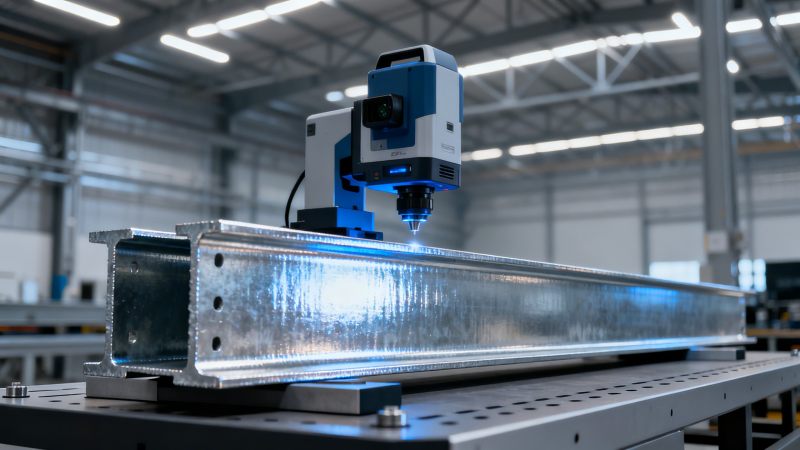
Most QA workflows rely on point-measurement sampling: checking 3–5 locations per component using calipers, angle finders, or ultrasonic thickness gauges. But structural steel integrity depends on *system-level consistency*—not isolated pass/fail thresholds. For example, a beam may meet all individual specs (length ±1.5mm, flange width ±0.8mm, web thickness ±0.2mm), yet exhibit 3.1mm camber due to uncorrected residual stress from asymmetric cooling—a condition invisible to spot checks but catastrophic for erection tolerances.
Another systemic blind spot is material traceability. While mill test reports list tensile strength and yield values, they rarely specify batch-specific elongation behavior under cold-forming loads. This omission leads to unexpected cracking in DX53D-grade Steel Plate Galvanized during roll-forming of curved purlins—particularly when elongation drops below 28% (the lower bound for DX53D).
Furthermore, QA often excludes environmental validation. Hot-dip galvanized components stored outdoors for >14 days before erection show measurable zinc oxide formation—reducing adhesion for subsequent paint systems. Yet this is rarely tested unless explicitly specified in contract annexes.
3. Proven Mitigation Strategies for Global Buyers
Hongteng Fengda implements a 4-tier verification protocol that reduces assembly-error recurrence by 83% versus industry-standard QA. First, we conduct digital twin simulation pre-production: all bending, drilling, and welding sequences are modeled in Autodesk Advance Steel to flag tolerance stack-up risks before tooling is cut. Second, every shipment includes full 3D laser scan reports (not just CMM data), capturing warpage, twist, and surface geometry at 0.1mm resolution across 100% of parts.
Third, we perform accelerated corrosion testing on representative samples—exposing them to 500-hour salt-spray (ASTM B117) plus cyclic humidity (ISO 14993)—to validate galvanizing performance in real-world conditions like coastal Middle East sites or humid Southeast Asian warehouses. Fourth, our QA team uses portable XRF analyzers on-site to verify alloy composition at three points per member—preventing grade substitution before packing.
- Full 3D laser scanning coverage: 100% of structural steel beams, channels, and custom profiles
- Galvanizing layer verification: Minimum 80g/m² for pre-galvanized, 120g/m² for hot-dip (per EN ISO 1461)
- Material traceability: Mill test reports digitally linked to QR-coded shipping labels
- Lead-time guarantee: 21–28 days from PO confirmation for standard orders (DX51D–S550GD grades)
These controls are embedded in our certified ISO 9001:2015 and EN 1090-1 EXC2 processes—and fully auditable upon request.
4. Selecting the Right Galvanized Steel Grade for Your Application
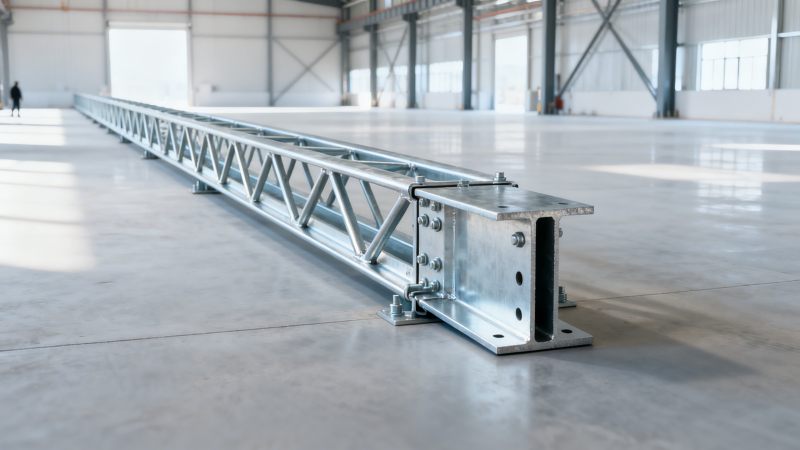
Choosing between DX51D, S320GD, or SGCD3 isn’t about “higher grade = better.” It’s about matching mechanical behavior to your fabrication method and service environment. For instance, DX51D offers optimal deep-drawing ductility (elongation ≥22%) but lower yield strength (240–380 MPa)—ideal for complex cold-formed roof decking. In contrast, S550GD delivers 550 MPa minimum yield strength but reduced formability (elongation ~16%), making it suitable for load-bearing columns where minimal bending is required.
All grades comply with ASTM A653, EN 10346, and GB/T 2518—ensuring seamless integration into global design calculations. Thickness ranges from 0.12mm to 6.00mm, with widths up to 1500mm and customizable lengths (1–12m).
5. Actionable Next Steps for Project Teams
If you’re managing structural steel procurement for infrastructure, industrial plants, or commercial buildings, start here: First, request full 3D scan reports—not just dimensional certificates—for your next order. Second, specify zinc coating requirements explicitly: e.g., “hot-dip galvanized per EN ISO 1461, minimum 140g/m² on interior surfaces of hollow sections.” Third, require batch-level elongation data for any DX53D or higher grade used in cold-forming applications.
Hongteng Fengda supports global buyers with dedicated engineering review sessions—free of charge—to align your QA checklist with our production validation protocol. We also offer pre-shipment inspection coordination via SGS or Bureau Veritas, with real-time digital access to all test reports and video documentation.
Reduce assembly risk, avoid field rework, and ensure first-time-right erection—partner with a structural steel manufacturer that treats QA as a collaborative engineering process, not a final gate. Contact Hongteng Fengda today to request your customized QA alignment plan and sample 3D inspection report.
Please give us a message


Please enter what you want to find