Understanding structural steel properties is essential when selecting materials for safe, durable, and cost-effective projects. From lightweight structural steel for flexible fabrication to high strength structural steel for demanding loads, each option serves different engineering needs. Even specialized applications like rebar for retaining wall systems require the right balance of strength, standards compliance, and long-term reliability.
For engineers, buyers, quality managers, project owners, and distributors, the practical question is not simply which steel grade is available, but which properties matter most for the intended load, fabrication route, service environment, and budget target. A mismatch in yield strength, weldability, corrosion resistance, or dimensional tolerance can increase fabrication waste, delay site installation, or shorten service life.
As a structural steel manufacturer and exporter from China, Hongteng Fengda supports global construction, industrial, and manufacturing projects with angle steel, channel steel, steel beams, cold formed steel profiles, and customized structural components. For international buyers comparing ASTM, EN, JIS, and GB requirements, understanding the core properties behind performance is a better decision tool than focusing on price alone.
Key Structural Steel Properties That Directly Affect Performance
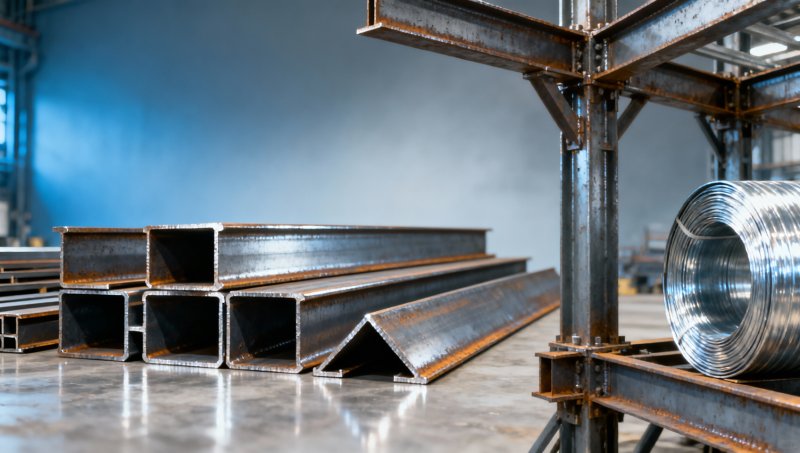
Structural steel properties determine how a member behaves under load, during fabrication, and throughout its service life. In most projects, the first 5 properties to verify are yield strength, tensile strength, elongation, toughness, and corrosion resistance. These values influence whether the steel can carry design loads, absorb stress concentration, and maintain reliability after welding, forming, or long-term outdoor exposure.
Yield strength is often the starting point because it shows when permanent deformation begins. For many structural applications, a difference between 235 MPa and 355 MPa can significantly affect section size, dead weight, and cost efficiency. Tensile strength matters because it indicates the maximum stress a material can withstand before failure. Elongation, often expressed as a percentage such as 20% to 26%, helps indicate formability and ductility.
Toughness becomes more critical in low-temperature service, heavy dynamic loading, and transport-related structures. A steel section with suitable strength but poor toughness can still be risky in impact-prone environments. At the same time, weldability is essential for fabricated beams, channels, brackets, and custom assemblies. Good weldability reduces cracking risk, improves productivity, and supports stable quality in mass production.
Corrosion resistance is another practical property that procurement teams should not overlook. In humid, coastal, industrial, or outdoor conditions, coating selection and base material quality affect maintenance cycles and replacement cost. Even when the mechanical properties are adequate, poor surface protection can reduce service performance within 3 to 5 years in aggressive environments if the right coating system is not specified.
Why these properties matter across the project cycle
- Design stage: strength and section efficiency influence tonnage, span capability, and structural safety margins.
- Fabrication stage: elongation, flatness, and weldability affect cutting, bending, punching, and assembly efficiency.
- Installation stage: dimensional tolerance and straightness reduce alignment issues and rework on site.
- Service stage: corrosion resistance, coating quality, and toughness impact maintenance intervals and total lifecycle cost.
The table below summarizes the structural steel properties most frequently reviewed by technical evaluators and purchasing teams when comparing grades for construction and industrial use.
A useful takeaway is that no single value defines the best structural steel. The right choice depends on balancing at least 4 dimensions at once: load capacity, fabrication method, environment, and compliance standard. That is why experienced suppliers focus on application matching instead of quoting by thickness alone.
How Application Conditions Change the Property Requirements
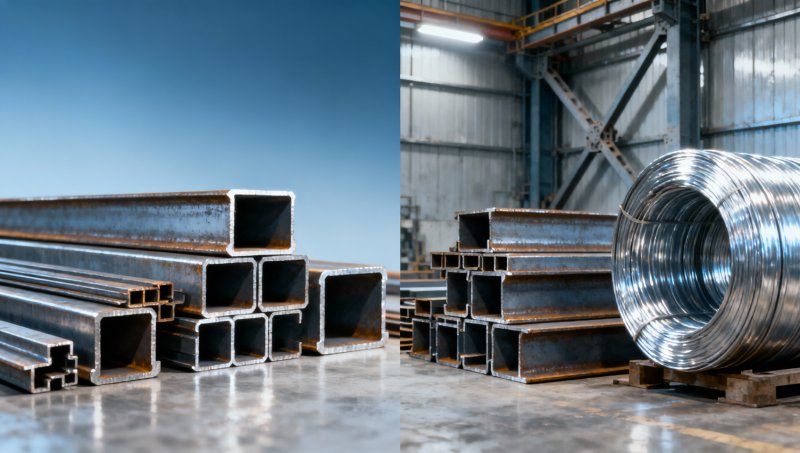
The most important structural steel properties vary by application. A warehouse frame, a machinery support base, a purlin line, and a retaining wall reinforcement system do not require the same performance priorities. In building structures with long spans, strength-to-weight ratio and dimensional stability may come first. In formed sections or light-gauge systems, bendability, coating adhesion, and profile consistency may matter more.
For outdoor construction in coastal or high-humidity regions, corrosion resistance can be as important as mechanical strength. Galvanized steel is often chosen where atmospheric protection is needed without complex painting systems. Depending on exposure level, zinc coating ranges such as 60-275 g/m² or 80-275 g/m² are common practical references for construction buyers evaluating durability and cost.
In processing-intensive applications, steel must perform well during roll forming, stamping, bending, or welding. That is why some buyers also evaluate surface uniformity, elongation, and stable coil quality. For example, Gi Sheet Coil is widely used in building processing and construction where corrosion protection, good processing performance, and welding performance are required together rather than separately.
Typical specifications for this galvanized steel material include thickness from 0.12 mm to 3.5 mm, width from 600 mm to 1500 mm, and coating options covering hot galvanizing at 60-275 g/m² and pre-galvanized layers at 80-275 g/m². With yield strength in the 140-300 MPa range, tensile strength of 270-420 MPa, and elongation around 26%, it suits many formed and fabrication-oriented applications that need a balance of protection and workable mechanical performance.
Property priorities by use case
The table below shows how the same steel buyer may prioritize different characteristics depending on the project type, exposure condition, and fabrication route.
This comparison shows why buyers should define service conditions early. A lower-cost option may appear suitable on paper, but if the material does not match the forming method or exposure level, total project cost can rise through rework, coating failure, or shorter maintenance intervals.
Common project risks when properties are misread
- Choosing based on strength only, while ignoring elongation needed for bending or profiling.
- Using insufficient coating mass for outdoor service where moisture or industrial pollutants are present.
- Overlooking tolerance requirements, leading to fit-up problems during assembly and installation.
- Assuming all galvanized materials behave the same in welding, despite differences in chemistry and surface condition.
Standards, Tolerances, and Quality Control in Structural Steel Procurement
For technical evaluators and quality teams, structural steel properties must be reviewed together with standards compliance and manufacturing control. A steel product may have acceptable nominal strength, but if thickness tolerance, flatness, coating mass, or chemical consistency are unstable, the actual project performance can vary from batch to batch. That is why procurement should move beyond catalog values and verify quality documentation, test methods, and inspection points.
International projects frequently require alignment with ASTM, EN, JIS, or GB standards. Cross-market sourcing becomes easier when suppliers can provide standard specifications and OEM solutions under controlled production conditions. For buyers serving North America, Europe, the Middle East, and Southeast Asia, this flexibility reduces sourcing risk, especially when local design codes and contractor preferences differ across regions.
Quality control usually involves at least 3 levels: raw material verification, in-process inspection, and final testing before shipment. At the product level, common checks include thickness tolerance, width, length or coil inner diameter, surface condition, coating weight, yield strength, tensile strength, and elongation. For welded or fabricated structural components, additional checks may include weld appearance, dimensional accuracy, and traceability by heat or batch number.
Lead time also matters in B2B steel sourcing. Depending on order size, product complexity, and finishing requirements, standard orders may follow a 2-6 week production window, while customized profiles or fabricated assemblies may require longer. Buyers should match delivery schedules with drawing approval, inspection planning, container loading, and site installation milestones to avoid hidden schedule pressure.
What purchasing and QC teams should verify
The following checklist helps procurement, finance approval teams, and project managers compare suppliers on technical and execution capability, not just unit price.
A reliable supply partner should also be able to explain how inspection results connect to real project use. This is particularly important for enterprise decision-makers and financial approvers, because lower rework rates, steadier delivery, and reduced sourcing disputes often create more value than a small difference in initial material cost.
How to Choose the Right Structural Steel for Cost, Reliability, and Long-Term Value
Selecting structural steel should be treated as a decision matrix rather than a one-point comparison. In most cases, 4 questions help narrow the best option: what load must the steel carry, how will it be processed, what environment will it face, and what standard must it meet? Once these are defined, the suitable balance between strength, ductility, coating, and fabrication performance becomes much clearer.
For project managers and buyers, the wrong approach is to over-specify every property. Steel that is stronger than required may increase raw material cost or reduce ease of forming. On the other hand, under-specifying thickness, coating, or weldability can create failure risk or additional maintenance. The goal is to match the actual service requirement with a practical margin of safety and a realistic fabrication route.
This is where experienced manufacturers add value. Hongteng Fengda supplies standard and customized structural steel solutions with modern manufacturing facilities and strict quality control, supporting international buyers who need stable production capacity, consistent quality, and dependable lead times. For OEM needs, profile geometry, dimensions, and material grade should be reviewed at the quotation stage so that production and logistics planning stay aligned from day 1.
Distributors, contractors, and end users should also consider lifecycle value. If a project can reduce maintenance cycles from every 2-3 years to a longer interval through a better coating or more suitable grade, the initial material decision may support better cash flow and lower operating disruption over time. This is often more relevant than chasing the lowest initial offer.
A practical 5-step selection process
- Define the application: structural frame, formed profile, outdoor support, reinforcement, or custom fabricated part.
- Confirm core performance targets: load level, corrosion exposure, bending requirement, and welding needs.
- Match the relevant standard and dimensional tolerance required by the project documentation.
- Review supplier capability: production consistency, inspection practice, export support, and lead-time stability.
- Compare total value: material cost, fabrication efficiency, maintenance expectations, and delivery reliability.
Frequently asked questions from technical and commercial teams
How do I know whether higher strength steel is necessary? Start with the design load and section requirement. If the design can meet performance using a standard grade without excessive weight, higher strength may not bring a net benefit. It is most useful when reducing section size or handling heavier loads is a real project need.
What should I prioritize for outdoor construction steel? Review corrosion resistance, coating mass, and surface quality together with mechanical properties. In many outdoor applications, coating selection has a direct effect on durability and maintenance planning.
Is galvanized material suitable for fabrication? In many cases yes, especially when processing performance and welding performance are specified appropriately. Buyers should still confirm the required grade, thickness range, and post-fabrication treatment expectations.
What documents should be requested before ordering? At minimum, request grade and standard confirmation, mechanical property data, size details, coating information if applicable, and inspection or test records relevant to the order.
Structural steel performance depends on more than one number. The most successful procurement decisions combine strength, ductility, corrosion resistance, weldability, tolerances, and standards compliance into a clear application-based specification. Whether the requirement is for beams, channels, angle steel, cold formed profiles, or galvanized materials for construction processing, the right property mix improves safety, fabrication efficiency, and long-term value.
Hongteng Fengda supports global buyers with reliable structural steel products and customized solutions designed for real project conditions. If you are evaluating grades, comparing standards, or planning a new order, contact us to get product details, discuss your specifications, and receive a tailored structural steel solution for your market and application.
Please give us a message


Please enter what you want to find