Understanding the structural steel I beam is essential for commercial construction planning and material sourcing. Its shape delivers high strength with efficient material use.
This section supports floors, roofs, frames, transfer structures, and columns. It also helps control deflection, improve stability, and simplify fabrication in many steel building systems.
This guide explains structural steel I beam basics, common applications, selection points, comparison issues, and sourcing considerations for international projects requiring reliable steel products.
What Is a Structural Steel I Beam and Why Is It So Widely Used?
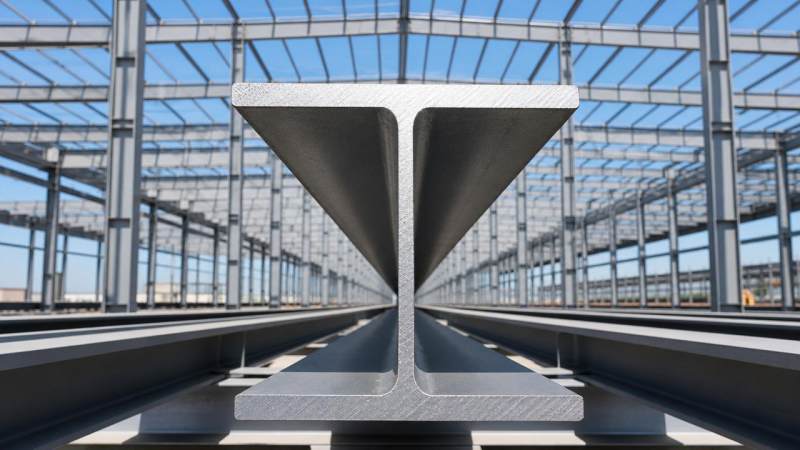
A structural steel I beam is a hot rolled or fabricated steel section shaped like the letter I. It has two flanges and one central web.
The flanges resist bending stress. The web carries shear forces. This geometry gives the structural steel I beam strong load performance with efficient steel consumption.
In commercial buildings, engineers often choose this profile for long spans and predictable structural behavior. It is common in warehouses, offices, factories, malls, and mixed-use developments.
Another reason for its popularity is standardization. Many sizes follow ASTM, EN, JIS, and GB systems, making design, fabrication, and replacement more manageable across projects.
- High strength-to-weight efficiency
- Good bending resistance
- Reliable performance in framed structures
- Compatibility with welded and bolted connections
- Availability in many international grades
Where Is the Structural Steel I Beam Used in Commercial Construction?
The structural steel I beam appears in many primary and secondary structural systems. Its exact role depends on span, loading, building height, and connection design.
Primary frame members
It is frequently used as main beams, girders, columns, and portal frame elements. These members carry gravity loads and transfer forces into the foundation system.
Floor and roof support
A structural steel I beam can support metal decking, concrete slabs, mechanical platforms, and roof trusses. It helps reduce excessive deflection over longer spans.
Industrial and service areas
Factories and logistics buildings often use these beams around equipment platforms, crane support zones, and mezzanine structures where predictable strength is critical.
Integrated steel packages
Some projects combine beams with floor-safe materials. For example, access zones may also use A36 Patterned steel plate for anti-skid walking surfaces.
That plate is available in grades such as A36, Q235B, 235JR, S235, and SS400. Thickness commonly ranges from 2mm to 8mm with patterned surface performance.
Such products are often selected for transportation, construction, decoration, machinery areas, shipbuilding, and floors around equipment where slip resistance adds practical value.
How Do You Choose the Right Structural Steel I Beam?
Selecting a structural steel I beam is not only about size. A sound choice balances load demand, standard compliance, fabrication needs, corrosion conditions, and supply stability.
Check load and span requirements
The beam must match dead load, live load, wind effects, seismic design, and serviceability targets. Deflection limits are just as important as ultimate capacity.
Confirm steel grade and standards
Ask whether the structural steel I beam meets ASTM, EN, JIS, or GB requirements. Grade equivalency should be checked carefully rather than assumed by name alone.
Review dimensional tolerances
Flange thickness, web thickness, straightness, twist, and section depth affect fit-up and installation. Tolerance consistency helps avoid field correction and welding delays.
Evaluate fabrication compatibility
Connection details matter. Hole punching, cutting, copes, bevels, and welding preparation should align with the fabrication drawings before mass production starts.
Consider coating and environment
Indoor dry buildings need different protection than coastal, humid, or chemical exposure zones. Primer systems or galvanizing should be matched to service conditions.
What Is the Difference Between an I Beam and Other Steel Sections?
Many buyers compare the structural steel I beam with H beams, channels, angles, and hollow sections. Each profile serves different structural and fabrication priorities.
I beam vs H beam
An H beam usually has wider flanges and a more balanced cross-section. It often performs better for heavy columns and major load-bearing applications.
A structural steel I beam may be preferred when bending efficiency and lighter section weight are suitable for the design intent and fabrication approach.
I beam vs channel steel
Channel steel is useful for bracing, frames, purlins, and edge members. It is generally less efficient than a structural steel I beam for major bending spans.
I beam vs hollow structural sections
Hollow sections perform well in torsion and offer clean architectural lines. However, connection details can be more complex than open beam connections.
What Mistakes Should Be Avoided When Buying Structural Steel I Beam?
Common sourcing errors can create expensive delays. A structural steel I beam may look correct on paper, yet still cause project issues if details are incomplete.
Assuming all standards are interchangeable
Equivalent grades are not always identical. Mechanical properties, chemistry, and dimensional series can vary. Always confirm the governing code and approved substitutions.
Ignoring inspection documentation
Material test certificates, dimensional inspection, and traceability records are essential. They support compliance, customs clearance, and dispute prevention.
Overlooking logistics and lead time
Long members require suitable packing, bundling, and container or break bulk planning. Delivery timing should match fabrication and site installation schedules.
Choosing only by lowest price
A cheaper structural steel I beam can increase total cost if quality inconsistency leads to rework, coating failure, welding defects, or rejected material on arrival.
- Confirm drawings, quantities, and section schedule
- Request standard and grade evidence
- Check production capacity and shipment plan
- Verify coating, marking, and packing details
How Can Global Buyers Source Structural Steel I Beam More Reliably?
Reliable sourcing starts with technical clarity and supplier capability. The best results come from combining engineering requirements with disciplined production control.
A dependable supplier should offer stable manufacturing, strict quality inspection, and familiarity with export documents, packaging rules, and destination market standards.
Hongteng Fengda supplies structural steel products from China for construction, industrial, and manufacturing projects. Its range includes angle steel, channel steel, beams, and custom profiles.
With compliance experience across ASTM, EN, JIS, and GB standards, the company supports projects requiring consistent quality, OEM options, and dependable lead times.
This approach helps reduce sourcing risk, improve schedule control, and support efficient project execution across North America, Europe, the Middle East, and Southeast Asia.
Quick FAQ About Structural Steel I Beam Selection
The structural steel I beam remains one of the most important sections in commercial construction. Its value comes from strength, versatility, and compatibility with modern steel systems.
Better results come from careful comparison, standard verification, and supplier assessment. Clear specifications reduce risk before production and before installation begins.
For upcoming projects, prepare a section list, required standards, and coating needs first. Then confirm manufacturing capability and documentation support before placing the order.
Please give us a message


Please enter what you want to find