Structural steel cutting directly affects fit-up, strength, and project cost, yet common mistakes still lead to waste, delays, and quality risks. From poor planning to inaccurate equipment settings, understanding the most frequent errors in structural steel cutting and structural steel drilling helps buyers, fabricators, and project teams improve efficiency, maintain compliance, and achieve better results in modern steel construction.
For steel buyers, operators, QC teams, and project managers, cutting errors are not just shop-floor problems. A deviation of even 1-3 mm can affect assembly, rework time, welding sequence, and final installation. In export-oriented supply chains, mistakes in processing may also trigger delivery delays of 7-15 days, additional freight costs, or site modification risks.
In structural steel manufacturing, common issues often begin long before the torch or saw starts. Drawing review, material identification, process selection, drilling coordination, tolerance control, and inspection routines all influence the final result. The following guide explains the most common structural steel cutting errors, why they happen, and how to reduce them in real production and procurement scenarios.
Why Structural Steel Cutting Errors Have a Bigger Impact Than Many Teams Expect
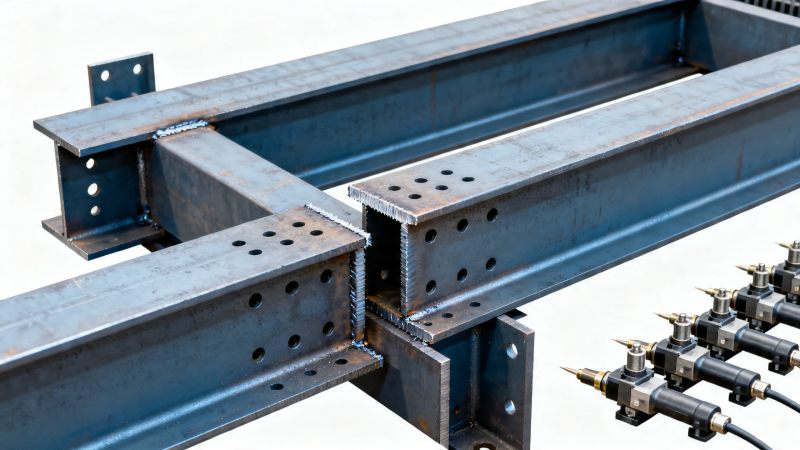
Structural steel components are rarely isolated parts. They connect into frames, trusses, platforms, equipment supports, and building systems where hole position, edge quality, and cut length must work together. If one beam flange is cut inaccurately or a channel web is distorted by excessive heat, the effect can spread across 5, 10, or even 20 connected members.
A common misunderstanding is that cutting is only a rough preparation stage. In reality, it establishes the dimensional baseline for welding, drilling, coping, fitting, and coating. Once the first operation is wrong, downstream teams spend more labor hours on correction. In many fabrication shops, rework can consume 3%-8% of total processing time when cutting and drilling coordination is weak.
Another reason these errors matter is compliance. International projects often specify ASTM, EN, JIS, or GB requirements for dimensional tolerance, traceability, and surface condition. Improper cutting may create excessive burrs, hardening zones, edge cracks, or thermal distortion that affect inspection acceptance and later fabrication performance.
For procurement and commercial evaluation teams, cutting quality also changes the total cost picture. A lower unit price can become expensive if material yield drops by 2%-5%, scrap increases, or site modifications are needed. This is especially relevant when sourcing from overseas suppliers, where replacement cycles may take several weeks.
Typical Cost Drivers Created by Cutting Mistakes
The table below shows how common processing errors turn into direct and indirect costs across a structural steel project.
The key point is simple: structural steel cutting should be evaluated as a precision and project-control activity, not only as a basic workshop step. Companies that manage this stage well usually see smoother fabrication flow, fewer NCRs, and more predictable lead times.
The Most Common Structural Steel Cutting and Drilling Errors
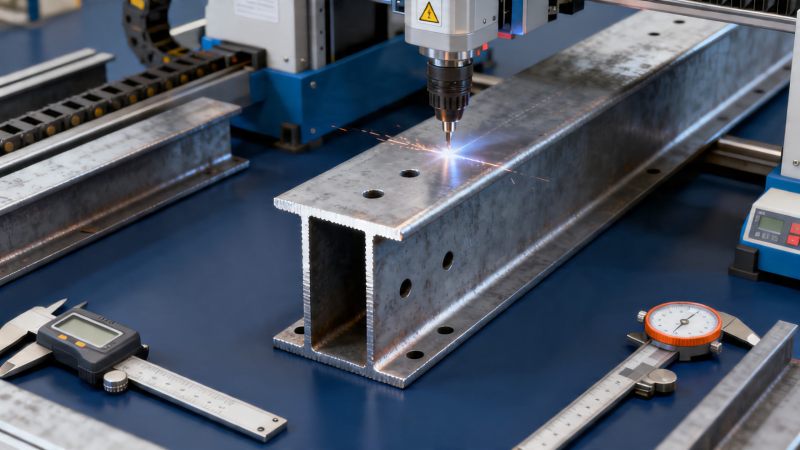
Most cutting problems fall into a few repeat categories. These include poor drawing interpretation, wrong machine parameters, unsuitable cutting methods for the section size, weak material traceability, and insufficient verification before drilling. The error itself may look small, but the root cause is often procedural rather than accidental.
One frequent issue is starting production with incomplete nesting or without checking revision status. If a project team uses drawing Revision A while the customer approved Revision B, lengths, cope details, and hole positions can all be affected. In a batch of 50-200 pieces, that kind of mistake can quickly create large rework volume.
Another common problem is incorrect equipment setup. Plasma, flame, band saw, and drilling machines each require parameter matching based on thickness, grade, and section profile. For example, cutting a thick beam web with unstable speed may cause taper, dross, or rough edges, while drilling without proper clamping can shift the hole center beyond acceptable tolerance.
Heat management is also critical. Thin sections, cold formed profiles, and some carbon steel parts may deform if heat input is not controlled. Operators sometimes focus only on getting through the material quickly, but uneven thermal loading can distort straightness and reduce downstream assembly efficiency.
High-Frequency Errors Seen in Steel Fabrication
- Cutting before confirming steel grade, heat number, or section orientation, which creates traceability and application risks.
- Using the same parameter set across 6 mm plate, 20 mm flange, and heavier sections, even though speed and heat input requirements differ significantly.
- Ignoring kerf compensation in CNC programming, leading to cumulative deviation over repeated parts.
- Skipping first-piece inspection, so batch problems are only discovered after dozens of components are already processed.
- Separating cutting and drilling teams without a shared datum system, which increases hole mismatch and fitting difficulties.
A Practical Note on Related Steel Components
Although this article focuses on structural steel cutting, many projects also combine beams, channels, profiles, and machined round materials in one package. For applications requiring excellent strength and wear resistance in construction, handrail, railing, staircase, or industrial support parts, buyers may also review options such as 45# Carbon Steel Round Bar. It is commonly available in hot rolled or cold rolled form, diameters from 5-2500 mm, and lengths such as 2 m, 5 m, 6 m, or 12 m, with reference standards including ASTM, DIN, JIS, GB, and EN.
For sourcing teams, the important lesson is consistency across the full steel package. Even when a component is not cut from a wide-flange or channel section, the same rules still apply: clear grade identification, suitable surface condition such as passivation, oiling, lacquer sealing, or anti-rust oil, and dimensional verification before final dispatch.
Error Sources by Process Stage
The following table helps engineering, QC, and purchasing teams identify where mistakes usually begin and how to stop them earlier.
When these controls are applied at the right stage, the defect rate usually drops faster than by relying on final inspection alone. Prevention is cheaper than sorting, grinding, or remanufacturing finished pieces.
How to Prevent Errors Through Process Planning, Equipment Control, and Inspection
The most effective way to improve structural steel cutting quality is to treat it as a controlled workflow with defined checkpoints. Strong workshops usually build control around 3 layers: engineering confirmation, machine setup verification, and in-process inspection. This approach helps reduce avoidable variation before large batches are released.
At the engineering stage, each job should confirm section type, steel grade, critical dimensions, hole coordinate references, edge preparation, and allowable tolerance. For exported structural steel, it is good practice to align acceptance criteria with the project specification before production begins, rather than solving interpretation gaps after shipment.
At the equipment stage, operators need standard parameter sheets for different thickness ranges such as under 10 mm, 10-25 mm, and above 25 mm. Regular calibration of CNC systems, drilling heads, measuring tools, and stop blocks should also be scheduled, often every 1-4 weeks depending on workload and equipment intensity.
Inspection must be integrated into the process, not left until packing. A first-piece check, random in-batch verification, and final dimensional review form a practical 3-step control method. For critical members, many fabricators also verify straightness, squareness, hole spacing, and edge condition before welding or coating starts.
Recommended Prevention Checklist
- Confirm material identity, grade, and drawing revision before cutting begins.
- Match the cutting method to section shape, thickness, and required edge quality.
- Apply trial cutting or first-piece approval for new jobs, special profiles, or tight tolerances such as ±1.0 mm to ±2.0 mm.
- Coordinate drilling and cutting from the same datum reference to avoid assembly mismatch.
- Record inspection results and segregate nonconforming pieces immediately.
Method Selection Matters
Different cutting methods serve different production goals. Band saw cutting is often suitable for straight cuts on bars and sections where dimensional consistency is important. Flame cutting is practical for thicker carbon steel sections, while plasma cutting may support higher speed and more complex contours. The right choice depends on thickness, edge finish needs, batch quantity, and downstream processing requirements.
For suppliers serving international construction and industrial projects, process discipline is equally important. A manufacturer with stable capacity, modern fabrication equipment, and strict quality control can help buyers reduce scrap exposure, shorten correction cycles, and keep delivery performance reliable across North America, Europe, the Middle East, and Southeast Asia.
What Buyers and Project Teams Should Check Before Approving a Steel Supplier
Purchasing structural steel is not only about material grade and unit price. If the supplier also provides cutting, drilling, or custom fabrication, the evaluation should include production control, tolerance capability, inspection routines, and communication quality. This is especially important for OEM projects or customized structural components where a minor detail can influence installation performance.
A good supplier should clearly explain how they manage standard products and custom orders. That includes document review, material traceability, equipment range, inspection points, packaging methods, and delivery planning. For many project teams, dependable lead times within 2-6 weeks are as important as the steel itself, because fabrication delays can disrupt erection sequences and cash flow.
Commercial and financial reviewers should also look at hidden risk factors. If a supplier has unstable cutting quality, the apparent savings from a lower quotation can disappear through claims, field correction, or delayed milestone payments. In contrast, a manufacturer with consistent quality control often helps reduce sourcing risk and total project uncertainty.
For distributors, agents, and contractors sourcing from China, it is useful to work with manufacturers that can supply angle steel, channels, steel beams, cold formed profiles, and custom structural components under recognized standards such as ASTM, EN, JIS, and GB. That makes cross-project sourcing more efficient and reduces vendor fragmentation.
Supplier Evaluation Table for Processed Structural Steel
The table below can be used as a practical screening framework during RFQ, technical review, or commercial comparison.
A supplier that answers these questions clearly is usually better prepared for long-term cooperation. Transparency in processing capability often indicates stronger internal control and lower execution risk.
FAQ: Practical Questions About Structural Steel Cutting Errors
Many buyers and end users ask similar questions when comparing suppliers or troubleshooting fabrication issues. The answers below focus on practical decisions that affect quality, lead time, and project outcomes.
How much tolerance deviation is considered risky in structural steel cutting?
The answer depends on project specification, member type, and connection detail. In many fabrication scenarios, a deviation around ±1-2 mm may be manageable for some parts, but the same deviation can be critical where bolted connections, repeated assemblies, or tight fit-up conditions exist. Buyers should always confirm tolerance expectations before ordering processed steel.
Why do cutting and drilling errors often appear together?
Because both operations depend on shared reference points. If the cut edge is inaccurate, the drilling datum moves. If the drilling setup uses a different reference system than the cutting program, the holes may still be wrong even when each machine appears accurate. Integrated process planning is usually more effective than checking each operation separately.
What should importers request from a structural steel manufacturer?
At minimum, request material grade confirmation, dimensional requirements, processing drawings, inspection checkpoints, packing method, and expected production lead time. For custom components, it is also wise to request first-piece confirmation or sample verification, especially when the order includes multiple profiles, hole patterns, or nonstandard details.
Which projects are most sensitive to cutting accuracy?
Projects with modular assembly, bolted frames, staircases, platforms, equipment skids, and export steel structures are usually the most sensitive. In these cases, dimensional errors can multiply quickly because there is limited room for site correction, and every extra adjustment may affect safety, schedule, and installation cost.
Structural steel cutting errors are preventable when engineering review, machine setup, and inspection are treated as one connected system. The biggest gains often come from simple controls: confirming revisions, matching parameters to thickness and steel grade, inspecting the first piece, and aligning cutting with drilling from a common datum.
For buyers, project managers, and distributors, choosing a reliable structural steel manufacturing partner means more than securing steel supply. It means reducing rework risk, controlling total project cost, and keeping delivery performance stable across standard and custom orders. Hongteng Fengda supports global customers with structural steel products, OEM solutions, modern manufacturing capability, and strict quality control aligned with international standards.
If you are evaluating processed steel components, custom profiles, beams, channels, or related carbon steel products for construction and industrial use, now is a good time to review your technical requirements and sourcing process. Contact us to get a tailored solution, discuss product details, or explore more structural steel options for your next project.
Please give us a message


Please enter what you want to find