Steel tube weight is more than a technical specification—it directly affects freight cost, loading efficiency, and project budgeting. For business evaluators comparing suppliers and planning procurement, understanding this detail helps reduce logistics risks and avoid hidden expenses. As a structural steel manufacturer and exporter from China, Hongteng Fengda supports global buyers with reliable data and practical solutions for smarter transport planning.
Why does steel tube weight matter so much in transport planning?
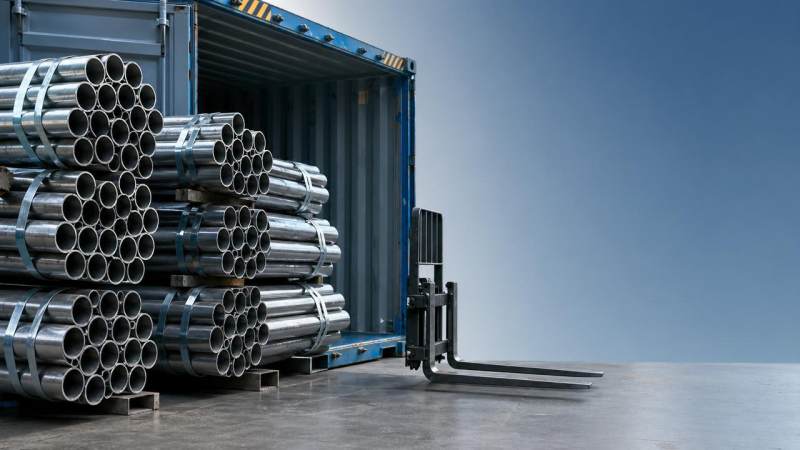
In steel procurement, many buyers focus first on grade, section size, coating, and unit price. However, steel tube weight often becomes the detail that changes the real landed cost. A small deviation in theoretical or actual mass per meter can affect container loading plans, truck allocation, crane selection, and even customs documentation.
For business evaluators, the issue is practical. If the supplier quote is based on nominal dimensions but the shipping plan uses inaccurate tonnage assumptions, the result may be underloaded containers, overloaded trucks, or budget gaps discovered too late. In cross-border steel trade, even a 3%–5% weight variance across a medium-volume order can alter freight efficiency and cash flow timing.
Steel tube weight also shapes how inventory is received and handled on site. Heavier bundles may require different forklift capacity, stronger storage supports, or more labor coordination. For projects running on 2–4 week delivery windows, these details can directly influence installation sequencing and overall site productivity.
The three cost layers behind tube weight
- Material cost layer: steel tube weight determines how many kilograms or metric tons are actually purchased, especially when pricing is weight-based rather than piece-based.
- Logistics cost layer: ocean freight, inland trucking, loading labor, and lifting equipment are all sensitive to cargo weight bands and packing density.
- Project execution layer: handling speed, storage planning, installation rhythm, and safety controls often depend on whether the delivered bundle weight matches the site plan.
For these reasons, evaluating steel tube weight should never be treated as a back-office calculation only. It is a procurement control point that connects engineering assumptions with commercial decisions.
How is steel tube weight evaluated in real procurement?
In day-to-day sourcing, steel tube weight is usually checked through theoretical weight, actual shipment weight, and packing-unit weight. Business evaluators should compare all three instead of relying on a single figure. This is especially important when multiple suppliers offer similar specifications but use different tolerance practices or packing methods.
Theoretical weight is commonly calculated from outside diameter, wall thickness, length, and steel density assumptions. Actual weight may differ because of manufacturing tolerance, coating, edge condition, or moisture in packing materials. Packing-unit weight matters because freight planning often happens at the bundle, pallet, or container level rather than by individual tube.
For structural and industrial procurement, a practical review should cover at least 5 key checks: section dimensions, wall thickness tolerance, unit length, bundle quantity, and total loading weight. If one of these items is unclear, the freight budget may be less reliable than the material quote itself.
Core evaluation dimensions for business teams
The table below shows how steel tube weight should be reviewed from a purchasing and transport perspective rather than from a pure engineering perspective.
A disciplined review of these items helps procurement teams compare offers on a landed-cost basis. This is often more useful than comparing ex-works ton price alone.
Where supplier capability becomes important
Hongteng Fengda supports buyers not only with product supply, but also with structured data for loading and shipment review. As a structural steel manufacturer and exporter from China, we work with standard specifications and OEM requirements across ASTM, EN, JIS, and GB systems, which helps international buyers align technical requirements with commercial execution.
This matters when orders include multiple steel items in one shipment. Mixed cargo planning requires accurate weight breakdowns by item type, bundle, and packing sequence. Without that, the risk of imbalance, damage, or freight inefficiency increases.
What changes freight cost, loading efficiency, and budget accuracy?
Steel tube weight affects freight cost in two linked ways: weight limit and space utilization. Some shipments reach the weight ceiling before the container is full; others fill the volume first. Business evaluators should identify which constraint applies before approving a sourcing plan. A dense steel tube order may hit truck or container tonnage limits long before available cubic space is consumed.
In practical terms, 20-foot and 40-foot loading plans differ not only by length compatibility but also by route restrictions and destination handling conditions. For certain projects, reducing bundle count while increasing bundle weight can improve loading speed. In other cases, lighter bundles are safer and more cost-effective because of local unloading equipment limits.
The same transport logic appears in other steel building materials. For example, when buyers evaluate roofing and cladding systems, lower material weight can reduce structural load and simplify transport. In this context, Color Coated Galvanized Steel Sheet PPGI is often considered for agricultural, residential, commercial, and public building use because its lighter sheet weight can improve handling efficiency compared with heavier conventional alternatives.
This product is available in aluminum-zinc steel with thickness options of 0.2mm–1.2mm, widths of 600mm–1250mm, and coating thickness ranges of Top 11–35μm and Back 5–14μm. For evaluators, the transport implication is clear: thinner, coated sheet systems may offer lower dead load, easier manual positioning, and simpler storage planning while still supporting long service life expectations in appropriate environments.
Comparison: when weight drives different logistics outcomes
The table below compares common procurement situations where steel tube weight changes decision logic.
The comparison shows that steel tube weight is not only about metal mass. It changes how the shipment is packed, moved, unloaded, and installed. That is why logistics review should be part of the quotation evaluation stage, not postponed until shipment booking.
How should business evaluators compare suppliers more effectively?
When several mills or exporters quote similar steel tube specifications, differences in service discipline become visible in the supporting documents. A reliable supplier should provide a clear weight list, packing details, standard references, and a realistic lead-time range such as 15–30 days for standard production, depending on quantity and processing requirements.
For procurement teams, the most useful comparison method is to review offers across four layers: product conformity, weight accuracy, logistics readiness, and communication responsiveness. This creates a more complete picture than comparing FOB price only. In many projects, a slightly higher unit price may still produce lower total cost if the loading plan is tighter and the documentation is cleaner.
A practical supplier review checklist
- Confirm the manufacturing standard and tolerance basis, such as ASTM, EN, JIS, or GB, so the theoretical steel tube weight calculation is aligned with the ordered specification.
- Ask for bundle-level and shipment-level weight data, not just piece-level dimensions. This avoids surprises during container stuffing and destination unloading.
- Check whether the supplier can support mixed-product planning. This is important if your order includes angle steel, channel steel, beams, cold formed profiles, or custom fabricated parts in one shipment.
- Review packaging methods, marking, and document consistency across packing list, invoice, and loading plan. Errors here can delay customs or site receiving.
Hongteng Fengda supports this type of evaluation by combining manufacturing capability with export coordination. Our experience with standard and customized structural steel supply helps buyers reduce sourcing risk, especially when orders must balance technical compliance, weight control, and dependable lead times.
Questions worth asking before you approve a purchase order
- Is the quoted steel tube weight theoretical, actual, or estimated from historical production data?
- What is the expected variance between mill calculation and packed shipment weight?
- How many bundles will be prepared, and what is the typical bundle weight range?
- Can the supplier adjust bundle sizes to match a site’s forklift or crane capacity?
These questions improve decision quality because they translate steel tube weight into actionable commercial control points.
Common misconceptions and FAQ about steel tube weight
Many avoidable freight and budgeting issues come from simple misunderstandings. The most common mistake is assuming that identical outer dimensions always mean identical shipment cost. In reality, wall thickness, tolerance range, coating, bundle arrangement, and total order mix all influence the final transport plan.
Another misconception is that weight matters only after production is complete. Experienced buyers know the opposite is true. Weight review should begin at RFQ stage, continue at order confirmation, and be checked again before shipment. These 3 stages help prevent specification drift and late-stage logistics revisions.
How do I choose the right steel tube weight basis for quotation comparison?
Use theoretical weight for fast standardization across suppliers, but ask for estimated actual shipment weight before final freight budgeting. If the project is cost-sensitive, also request bundle count and bundle-weight distribution. This gives a clearer picture of handling and transport efficiency.
Which projects are most sensitive to steel tube weight differences?
Export orders, remote construction sites, mixed cargo shipments, and projects with limited unloading equipment are usually the most sensitive. In these cases, even moderate weight differences can affect truck selection, crane planning, and receiving schedules.
What should I check if the supplier offers a very competitive ton price?
Verify specification tolerance, actual wall thickness, packing inclusions, and logistics assumptions. A low ton price may still lead to higher total delivered cost if the steel tube weight data is incomplete or the packing plan reduces container utilization.
How long does it usually take to finalize a reliable shipment plan?
For standard orders, buyers often need 2–5 working days to align specifications, weight lists, bundle plans, and loading assumptions after receiving complete supplier data. Complex mixed-product orders may require a longer coordination cycle, especially if custom fabrication is involved.
Why work with a structural steel exporter that understands weight, compliance, and delivery together?
Business evaluation is not just about buying steel; it is about reducing uncertainty across the full supply chain. When your supplier understands steel tube weight in connection with production, packing, documentation, and export logistics, your procurement plan becomes easier to control and easier to defend internally.
Hongteng Fengda supplies angle steel, channel steel, steel beams, cold formed steel profiles, and customized structural steel components for global construction, industrial, and manufacturing projects. Our approach is built around stable production capacity, strict quality control, and practical coordination for international buyers across North America, Europe, the Middle East, and Southeast Asia.
If you are reviewing a new inquiry or re-evaluating current suppliers, we can support you with specification confirmation, weight-based quotation analysis, standard compliance review, lead-time discussion, and customized packing suggestions. This is especially useful when you need to compare multiple offers within a tight budget or delivery window.
What you can discuss with our team
- Parameter confirmation for steel tube, beam, channel, angle, and cold formed profile orders
- Supplier comparison support based on steel tube weight, packing logic, and freight implications
- Estimated production and delivery cycles for standard and OEM structural steel requirements
- Documentation alignment for ASTM, EN, JIS, and GB-related procurement needs
- Sample support, quotation communication, and export packing recommendations
If steel tube weight is influencing your freight plan, project budget, or supplier shortlist, contact Hongteng Fengda with your dimensions, target standards, destination, and estimated order volume. We can help you turn a basic weight figure into a clearer transport strategy and a more reliable procurement decision.
Please give us a message


Please enter what you want to find