Understanding steel sheet price gaps between thicknesses is essential for buyers comparing steel coil price per ton, high strength steel plate options, and broader structural material costs. Whether you source galvanized steel for construction or evaluate supply plans for industrial projects, this guide explains how thickness affects pricing, performance, and purchasing decisions across quality, processing, and application needs.
For procurement teams, engineers, project managers, distributors, and end users, thickness is never just a number on a specification sheet. A difference between 2.5 mm and 6.0 mm can change yield rate, freight efficiency, forming difficulty, welding time, and service life. In real sourcing work, the price gap between steel sheet thicknesses usually reflects both material consumption and the hidden costs tied to production, handling, compliance, and application risk.
In structural steel supply, buyers also need to consider grade, coating, dimensional tolerance, standard compliance, and whether the material will be processed into beams, channels, profiles, or custom components. As a structural steel manufacturer and exporter from China, Hongteng Fengda supports global buyers with standard and OEM steel solutions that help balance cost, lead time, and reliable project execution.
Why thicker steel sheets cost more than a simple per-ton calculation suggests
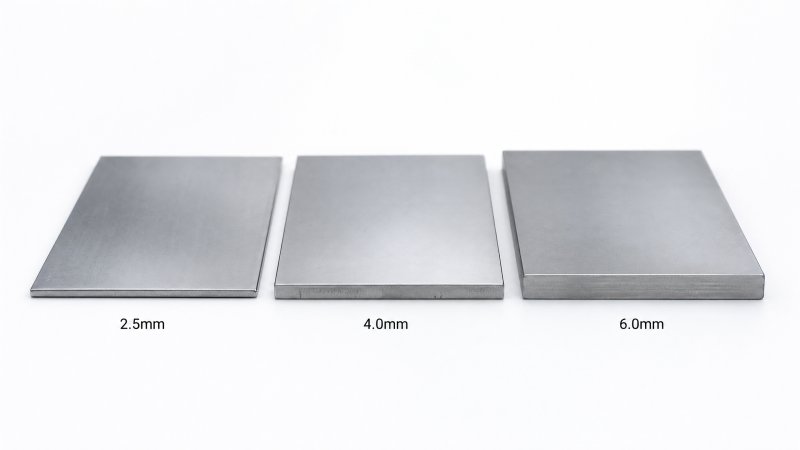
At first glance, steel sheet pricing seems straightforward: more thickness means more steel per square meter, so the price should rise in proportion to weight. The basic formula supports that view. For example, a carbon steel sheet with a density near 7.85 g/cm³ will weigh roughly 19.6 kg/m² at 2.5 mm and about 47.1 kg/m² at 6.0 mm. However, market quotations often show a wider gap than weight alone would predict.
One reason is mill routing. Thin-gauge material may run on high-volume lines with faster rolling speeds, better coil productivity, and less per-unit downtime. Thicker sheets or plates can require different rolling schedules, lower throughput, and more intensive flatness control. When output per hour drops by 15% to 30%, the conversion cost per ton rises even before packaging and freight are included.
Another factor is yield loss. If a project needs fixed blank sizes, thicker sheet can generate higher scrap value in absolute weight terms. A cutting loss of 5% on 3.0 mm material is not equal in cash terms to the same 5% on 8.0 mm material. Buyers focused only on steel coil price per ton may miss this downstream difference, especially in fabrication-heavy industries.
Price gaps also widen when application requirements move beyond general structural use. High strength steel plate, galvanized sheet, pickled sheet, or stainless variants all bring additional process steps. Surface finish, tighter tolerances, ultrasonic inspection, or export packaging can each add cost layers. In short, thickness is a core variable, but it interacts with at least 4 other cost drivers: grade, process route, dimensional control, and delivery condition.
Weight-based pricing versus processed cost
For project budgeting, it helps to separate two views of cost: raw material cost per ton and effective installed cost per usable part. A thicker sheet may have a higher purchase price but a lower lifecycle cost if it reduces deformation, maintenance frequency, or field failure risk over 5 to 10 years of service.
The table below shows how thickness can affect both weight and practical cost considerations in structural and industrial procurement.
The practical lesson is clear: comparing quotations by ton alone can distort decision-making. Buyers should convert offers into at least 3 views—price per ton, price per square meter, and price per finished part—before selecting thickness.
The main cost drivers behind thickness-based steel sheet price gaps
Thickness influences cost through the entire supply chain, from steelmaking and rolling to export packing and end-use fabrication. In B2B purchasing, the biggest mistake is assuming that all price differences are caused by raw material input. In reality, mills and exporters often price thicker products differently because the production route, order quantity, and tolerance requirements change together.
Minimum order quantity is one example. A standard thickness with high turnover may be available from stock in 20 to 50 ton lots, while a less common thickness might require a mill rolling plan, pushing lead time from 7–10 days to 20–35 days. Short production runs generally carry a higher conversion cost per ton, especially when the order needs custom width, slit coil, or cut-to-length service.
Tolerance control matters as well. A ±0.1 mm tolerance on thinner stainless or cold formed material can be more demanding than a wider tolerance on general hot-rolled sheet. For thicker structural sheet, flatness, edge quality, and internal stress may become more critical in welding and assembly. Buyers in machinery, transportation, and industrial equipment sectors usually pay more for tighter control because it reduces downstream rejection rates.
Freight is another overlooked factor. Ocean freight is quoted by container payload and volume efficiency. A 20-foot container may reach weight limits quickly on thick plate, while thinner sheet may be constrained by packaging height or handling rules. This means the delivered cost gap can differ from the ex-works cost gap. For imports into North America, Europe, the Middle East, or Southeast Asia, freight optimization can shift the real purchasing advantage by 3% to 8%.
Four cost layers buyers should compare
- Base steel value: affected by grade, alloy content, and market cycle.
- Processing cost: rolling, slitting, leveling, cutting, edging, and surface finishing.
- Compliance cost: ASTM, EN, JIS, or GB alignment, inspection documents, and traceability.
- Logistics cost: packaging, inland transport, container loading, and destination handling.
A practical material comparison from a buyer perspective
In corrosion-sensitive applications, stainless options can enter the discussion even when the original budget was based on carbon or galvanized sheet. For example, a buyer evaluating chemical, food-processing, or medical support structures may compare structural carbon steel with stainless coil for fabricated components. In that context, thickness remains a pricing driver, but corrosion resistance, finish, and forming behavior become equally important.
A relevant example is 316 Stainless Steel Coil, commonly considered for high temperature and electrical industry use, medical equipment construction, chemical environments, food industry equipment, ship parts, kitchenware, and automotive parts. Typical dimensions include thickness from 2.5 mm to 10.0 mm, width from 610 mm to 2000 mm, and length options such as 2000 mm, 2440 mm, 3000 mm, 5800 mm, and 6000 mm.
Technical indicators such as tensile strength of at least 520, yield strength of at least 275, elongation around 55%–60%, hardness up to 183HB or 100HRB, and finishes like BA, 2B, NO.1, NO.4, HL, and 8K show why thickness pricing in stainless applications cannot be judged by weight alone. Certification expectations such as ISO, SGS, and BV can further affect final quotations when export documentation is required.
How to choose the right thickness for structural, industrial, and fabrication use
Selecting sheet thickness should begin with function, not price. A roof flashing, machine cover, duct support, trailer part, and welded structural bracket may all use steel sheet, but their load, corrosion, and fabrication requirements differ significantly. If thickness is underspecified, the result may be bending, vibration, premature corrosion at stress points, or failed inspections. If it is overspecified, buyers face unnecessary raw material, freight, and processing cost.
For structural and construction use, buyers often focus on 3 checkpoints: design load, span or unsupported length, and joining method. A sheet that performs well in a short-span stiffened assembly may fail in a wide unsupported panel. Welding also matters. Moving from 3 mm to 8 mm can increase heat input requirements, labor time, and consumable use. That changes the total installed cost, especially on projects with hundreds of repeated parts.
For industrial processing, thickness should also be matched to forming limits. Thin sheet may be ideal for roll forming and bending, while thicker material can require stronger tooling, slower press cycles, and more springback compensation. Fabricators should request test pieces or confirm forming radii before placing large orders above 20 tons if the part geometry is complex.
Quality teams and project owners should review standards and documentation early. Structural steel exports frequently involve ASTM, EN, JIS, or GB compliance. If the project requires mill test certificates, heat traceability, or surface inspection records, those items should be locked into the purchase specification before quotation, not after production starts.
Typical thickness selection logic by application
The table below gives a simplified decision guide. Final selection should always follow engineering design, local codes, and actual service conditions.
This comparison shows that the “right” thickness is application-specific. The lowest price per ton does not automatically produce the best value per project, especially where structural reliability and consistent fabrication matter.
A five-step thickness review process
- Confirm load, span, and service environment, including humidity, chemicals, or outdoor exposure.
- Match the steel grade and finish to required standards and corrosion expectations.
- Calculate cost in 3 units: per ton, per square meter, and per finished component.
- Review fabrication impact, including bending radius, weld length, and cutting loss.
- Lock in tolerance, documents, and packaging before production release.
Common purchasing mistakes that distort thickness price comparisons
One common error is comparing hot-rolled sheet with cold-rolled or galvanized material as if thickness were the only difference. Surface condition, dimensional accuracy, and coating add real value and real cost. A 3.0 mm galvanized sheet for outdoor structural use should not be benchmarked directly against a 3.0 mm black hot-rolled sheet intended for indoor fabrication.
Another mistake is ignoring tolerance and standard equivalency. Two offers may both list 5.0 mm thickness, but one may allow broader variation, while the other follows tighter mill practice. For safety-related projects, small thickness deviations can affect connection fit-up, hole alignment, or overall assembly quality. Procurement and quality teams should compare not only nominal thickness but also tolerance band, standard, and inspection method.
Buyers also underestimate the cost of poor packaging and traceability. Thick sheets and plates are more prone to edge damage during transport if skids, separators, or moisture protection are inadequate. Rejection after an ocean shipment can delay a project by 2–6 weeks. For exported steel, good packaging and clear marking are not cosmetic extras; they are risk control tools.
Finally, teams sometimes optimize for one department and create costs for another. A finance-led decision may reduce purchase price by selecting thinner steel, only for operations to face higher rejection, more reinforcement work, or shorter service life. The best sourcing decisions are cross-functional, involving engineering, procurement, quality, and project management from the start.
Checklist for accurate supplier comparison
- Verify base material grade and applicable standard, such as ASTM, EN, JIS, or GB.
- Ask whether the quotation is based on actual thickness, theoretical weight, or nominal weight.
- Confirm tolerance, flatness, finish, coating mass, and edge condition.
- Review lead time in calendar days, not only “ready soon” wording.
- Check packing method, loading plan, and document package before issuing PO.
What reliable exporters contribute beyond the steel itself
For international buyers, a dependable structural steel supplier reduces sourcing risk through stable production capacity, consistent quality control, and communication that links technical details with commercial execution. This matters when buying angle steel, channel steel, steel beams, cold formed steel profiles, or customized structural components along with sheet and coil products.
A capable exporter should be able to support standard specifications and OEM requirements, coordinate mixed-product shipments, and provide documentation suitable for multiple regions. For projects spread across North America, Europe, the Middle East, and Southeast Asia, this consistency often has more value than a narrow unit-price advantage.
FAQ: practical answers for buyers evaluating steel sheet thickness and cost
Below are several frequent questions raised by procurement teams, engineers, distributors, and project owners when reviewing steel sheet thickness options and price gaps.
How should I compare steel sheet prices across different thicknesses?
Use at least 3 comparison units: price per ton, price per square meter, and price per finished part. If fabrication is involved, also estimate cutting loss, welding hours, and coating or corrosion-protection cost. This gives a more accurate view than a single ex-works ton price.
Does thicker steel always mean better value?
Not always. Thicker steel usually offers greater stiffness and load capacity, but it can raise freight cost, processing time, and installation effort. In many fabricated applications, a well-selected 4.0–6.0 mm sheet may outperform an overbuilt 8.0 mm sheet from a total-cost perspective.
What lead time should buyers expect?
For common specifications, supply can often be arranged in 7–15 days depending on stock and processing needs. Custom thickness, non-standard widths, or mixed export orders may require 20–35 days. Buyers should confirm both production time and shipment booking time, especially during peak freight seasons.
Which documents are important for project approval and quality control?
Typical requirements include mill test certificates, packing lists, commercial invoices, and if needed, third-party inspection or origin-related documents. For structural projects, consistency between ordered standard, actual thickness, and traceability marks is especially important for audit and acceptance.
When should stainless be considered instead of coated carbon steel?
Stainless becomes attractive when the application faces chemicals, high hygiene requirements, repeated moisture exposure, or long maintenance intervals. In those cases, the initial price gap may be offset by lower corrosion risk and reduced replacement frequency over the service life.
Steel sheet price gaps between thicknesses are driven by more than weight alone. Production route, tolerance, processing method, freight efficiency, compliance requirements, and end-use performance all influence the final cost and the real value of a quotation. Buyers who compare steel by application, not just by tonnage, make stronger purchasing decisions and reduce project risk.
Hongteng Fengda supports global customers with structural steel manufacturing, export coordination, quality-focused production, and customized supply solutions across standard and OEM requirements. If you are evaluating steel sheet thickness options, structural steel components, or mixed-material sourcing plans, contact us to get a practical recommendation, detailed product information, or a tailored quotation for your project.
Please give us a message


Please enter what you want to find