Steel sheet metal thickness directly affects forming limits, structural performance, and total project cost. Whether you source mild steel plate, compare steel standards, or evaluate related products like industrial pipes and galv steel tube, thickness is one of the first variables that changes manufacturability, scrap rate, logistics cost, and long-term performance. In most projects, thicker steel improves stiffness and load capacity, but it also raises forming force, tool wear, processing difficulty, coating consumption, and overall budget. Thinner steel can reduce material cost and weight, yet it may create new risks in deformation, welding distortion, and quality consistency. For buyers, engineers, fabricators, and project managers, the key is not choosing the thickest option, but choosing the thickness that fits the actual forming method, service environment, compliance requirement, and cost target.
What do users really need to know about steel sheet metal thickness?
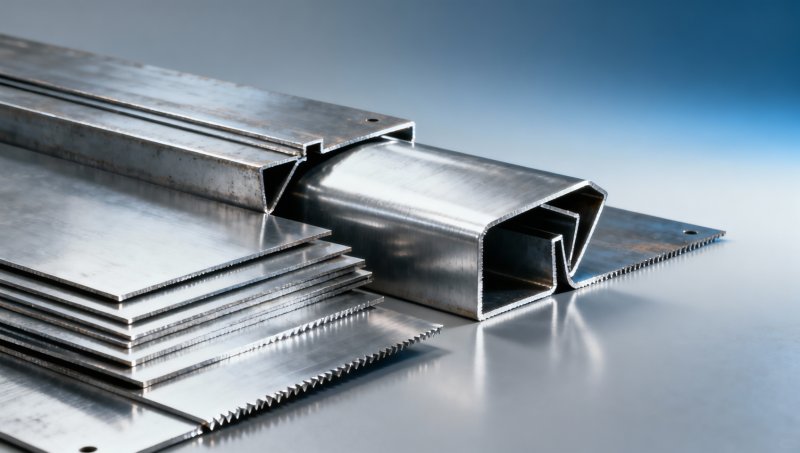
When people search for “steel sheet metal thickness: what changes in forming and cost?”, they are usually not looking for a simple gauge chart. Their real intent is to understand what will practically change if they move from a thinner sheet to a thicker one, or vice versa. That decision affects:
- Whether the part can be bent, stamped, rolled, or formed without cracking
- Whether the finished component will be strong enough for the job
- How much the material and processing will cost
- What tolerances, flatness, and surface quality can realistically be achieved
- How sourcing choices affect project timeline, waste, and downstream assembly
For technical evaluators and operators, the main concern is forming feasibility and quality stability. For procurement teams and financial approvers, the concern is total delivered cost, not just raw steel price per ton. For project owners and decision-makers, the real issue is balancing safety, service life, fabrication efficiency, and budget control.
How thickness changes forming behavior in real production
Thickness has a direct influence on nearly every metal forming process. As thickness increases, the material generally requires greater forming force, larger equipment capacity, and more robust tooling. At the same time, the part may become more stable after forming because thicker sections resist local deformation better.
In bending operations, thicker steel usually needs a larger minimum bend radius. If the radius is too tight for the grade and thickness, cracking on the outer surface becomes more likely. This is especially important when dealing with higher-strength materials, cold-formed profiles, or galvanized surfaces where coating integrity also matters.
In stamping and deep drawing, thinner sheet may appear easier to form, but it can also wrinkle, tear, or lose dimensional stability if die design, lubrication, and blank holding are not well controlled. Thicker sheet often improves rigidity during handling, but it raises press tonnage and may slow production.
In roll forming, thickness affects springback, profile accuracy, edge condition, and line speed. A small change in thickness can require die adjustment or different setup parameters. For laser cutting and punching, thicker steel changes cutting speed, edge quality, burr level, and energy consumption. In welding, thicker sections normally require more heat input, more filler metal, and sometimes joint redesign, while thinner sheets are more vulnerable to burn-through and distortion.
This is why thickness selection should never be separated from the actual fabrication route. A sheet that looks economical on paper may become expensive if it causes tool wear, rejects, rework, or slow throughput.
What happens to cost when steel sheet gets thicker or thinner?
The most obvious change is material consumption. If all other factors stay the same, a thicker sheet means more weight per square meter, and therefore a higher raw material cost. But in practice, total cost changes in more ways than simple weight multiplication.
When thickness increases, buyers often see:
- Higher steel consumption and freight cost
- Higher forming and cutting energy use
- Higher tooling load and maintenance frequency
- Potentially slower processing speed
- More expensive welding and surface treatment
When thickness decreases, buyers may save on material and transport, but new hidden costs can appear:
- Greater risk of warping, denting, or handling damage
- Tighter process control requirements
- Higher rejection rates if flatness or dimensional stability is critical
- Need for added stiffeners, reinforcements, or assembly steps
- Reduced service life in demanding environments
So the right question is not “Which thickness is cheaper?” but “Which thickness delivers the lowest total cost for the required performance?” In many industrial and structural applications, a slightly thicker material may reduce field failures, repair frequency, and installation risk. In other cases, optimized thinner material can reduce overall project weight and bring major savings in transport and assembly.
How to choose the right thickness for strength, safety, and compliance
Thickness should always be evaluated together with steel grade, load condition, span, forming method, corrosion environment, and applicable standards such as ASTM, EN, JIS, or GB. A thicker low-strength sheet is not always a better solution than a thinner higher-strength sheet. What matters is the required end performance and whether the material can be consistently produced and fabricated.
For quality control and safety teams, common checkpoints include:
- Thickness tolerance and actual delivered dimension
- Yield and tensile performance
- Surface condition before forming or coating
- Bend test or forming suitability
- Coating quality and corrosion resistance where applicable
- Traceability to mill certificates and standard compliance
In many construction, infrastructure, and manufacturing projects, engineers also evaluate whether plate or sheet thickness matches fastening details, hole tolerances, weld design, and equipment loading. A change in thickness can affect not just one part, but the whole assembly logic.
Why thickness decisions also matter for corrosion protection and service life
In outdoor, marine, transport, and utility environments, thickness influences long-term durability in two ways. First, the base steel itself has a corrosion allowance effect in some designs. Second, processing and coating performance may change depending on section size, geometry, and application method.
This is especially relevant when comparing sheet products with related steel components used in the same project. For example, structural systems often combine formed sheet parts with bars, profiles, or tubular products. In such cases, buyers should consider not only nominal dimensions but also anti-corrosion treatment, tolerance consistency, and compatibility across components.
As one example, midstream projects that require anti-corrosion steel for towers, highway protection, building steel structures, or industrial hardware may also evaluate Galvanized Round Steel. This type of product is used in applications such as electric power towers, communication towers, street light poles, marine components, metal stamping parts, and building structural components. With diameter options from 16–250 mm or customized sizes, tensile strength of 570–820 MPa, and support for standards including ASTM, EN, JIS, GB, and others, it is often selected where long anti-corrosion life, glossy durable surface, and tighter tolerance control are needed. For buyers comparing different steel forms in one procurement plan, understanding how thickness, coating, and processing interact helps reduce sourcing risk and improve service life.
Which thickness-related questions matter most to buyers and project teams?
For practical decision-making, these are usually the most important questions:
- Can the steel be formed reliably with the available equipment?
Check press capacity, bend radius, die design, welding method, and expected scrap rate. - Does the chosen thickness meet structural and safety requirements?
Review design load, deflection limits, impact conditions, and code requirements. - What is the true total cost?
Include material, yield loss, processing time, coating, transport, installation, maintenance, and failure risk. - How stable is supply?
Not every thickness, grade, or tolerance combination has the same availability or lead time. - Will quality be consistent across batches?
Look at thickness tolerance, flatness, mechanical properties, and documentation control.
For distributors and sourcing managers, these questions are essential because customer complaints often come not from the nominal grade, but from issues such as poor formability, inconsistent actual thickness, unexpected springback, or excessive production losses.
Practical thickness selection tips for steel sourcing and fabrication
If you want to make a better thickness decision, start with the end-use requirement rather than the catalog range. Define the loading condition, fabrication route, surface treatment, and service environment first. Then compare thickness options against the following checklist:
- Required mechanical performance
- Minimum bend radius and forming risk
- Welding complexity and heat input
- Cutting method and production efficiency
- Corrosion protection strategy
- Tolerance requirements for assembly
- Export standard or project specification compliance
- Total landed cost and lead time
For global buyers, it is also useful to work with a supplier that can support both standard steel products and customized structural solutions. This reduces coordination issues between design, manufacturing, inspection, and delivery. Manufacturers with experience in ASTM, EN, JIS, and GB standards can often help international customers compare equivalent options more efficiently and avoid over-specification or under-specification.
Conclusion: thickness is a performance and cost decision, not just a size choice
Steel sheet metal thickness changes much more than weight. It affects forming limits, bend performance, welding behavior, dimensional stability, corrosion strategy, production speed, and full project economics. Thicker steel can improve strength and stiffness, but it usually increases processing difficulty and total cost. Thinner steel can reduce weight and material spend, but it may introduce quality, durability, or fabrication risks if not properly selected.
The best choice is the thickness that meets structural and manufacturing requirements with the lowest total lifecycle cost. For engineers, that means validating formability and compliance. For buyers, it means looking beyond price per ton. For project managers and decision-makers, it means selecting a reliable steel solution that balances quality, lead time, safety, and long-term value.
Please give us a message


Please enter what you want to find