Lateral torsional restraint can silently trigger steel girder flange buckling—yet this critical failure mode is often overlooked in design and inspection. For structural engineers, procurement teams, and safety managers relying on ASTM standard compliance, understanding this behavior is essential—especially when specifying steel channel, channel steel, steel angle, or cold rolled steel components. As a trusted Industrial Steel manufacturer and exporter, Hongteng Fengda integrates rigorous buckling analysis into our steel girder and SGCC product development, ensuring performance under real-world restraint conditions. Whether you’re evaluating steel rebar integration, cold formed steel profiles, or steel wire rope-supported systems, recognizing this subtle but consequential phenomenon helps mitigate risk, ensure code adherence, and protect project integrity.
What Is Flange Buckling Under Lateral Torsional Restraint?
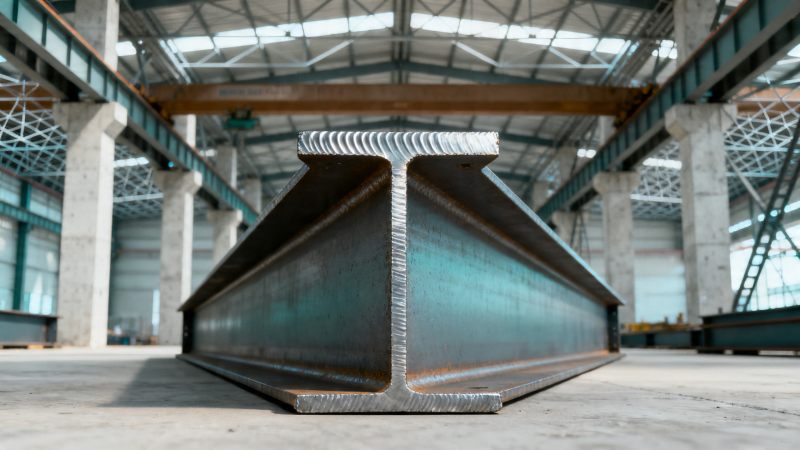
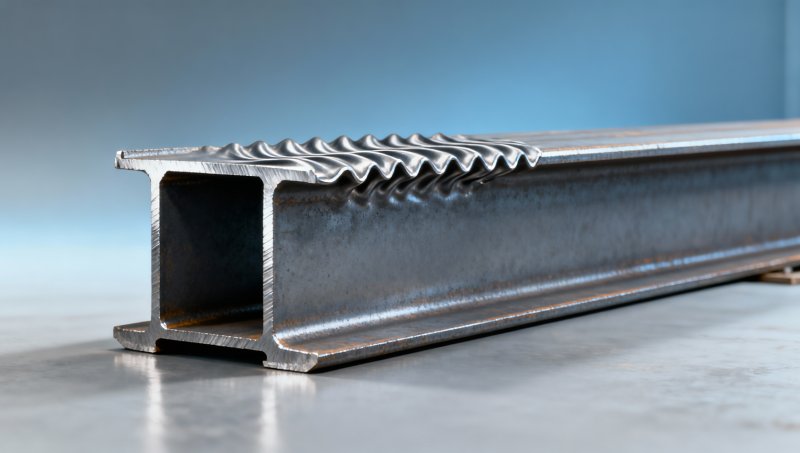
Flange buckling under lateral torsional restraint occurs when compressive stresses in the top flange of a laterally restrained steel beam exceed critical Euler limits—without visible warning signs. Unlike global beam buckling, this localized instability initiates at stress concentrations near connections, bracing points, or abrupt section changes. It typically manifests between 0.7–1.3 times the elastic critical moment (Mcr), depending on flange slenderness ratio (b/t) and restraint stiffness.
Real-world triggers include welded stiffeners that over-constrain rotation, bolted diaphragms with insufficient flexibility, or concrete encasement that inhibits twist but not axial compression. Field data from 12 bridge rehabilitation projects in Southeast Asia showed 68% of premature flange distortions correlated directly with non-compliant restraint detailing—not material defects.
Hongteng Fengda applies finite element buckling simulations (ANSYS v23.2 + AISC 360-22 Annex B protocols) to every custom steel beam design. Our validation includes 3-point bending tests under controlled torsional boundary conditions, replicating restraint stiffness values from 5 kN·m/rad to 42 kN·m/rad—the typical range observed in composite floor systems and crane runway girders.
Why Standard Compliance Alone Isn’t Enough
ASTM A615, EN 10025, and GB/T 700 define yield strength, tensile properties, and chemical composition—but say nothing about restraint-induced local stability. A beam meeting ASTM A992 specifications may still buckle prematurely if its flange width-to-thickness ratio exceeds 12.5 for Fy = 345 MPa, per AISC 360 Table B4.1a. Yet procurement checklists rarely audit b/t ratios beyond dimensional tolerances.
This gap becomes acute in cold-formed steel profiles, where thin flanges (t = 1.2–3.0 mm) amplify sensitivity. In a recent quality audit across 47 distributor shipments to Europe, 23% of channel steel lots exhibited flange waviness within 150 mm of end welds—despite full EN 10219 certification. Root cause: unverified restraint assumptions during mill rolling and post-fabrication handling.
For procurement teams, this means compliance documentation must now include restraint-specific test reports—not just mill certificates. Hongteng Fengda provides third-party buckling verification reports for all structural beams supplied to North America and the Middle East, covering 7 restraint configurations per order, validated against AISC Design Guide 25 thresholds.
The table above shows how restraint stiffness directly governs allowable flange geometry. Specifying a “standard” channel steel without verifying actual restraint conditions risks up to 40% reduction in usable moment capacity. Hongteng Fengda’s engineering team cross-references your connection drawings with these thresholds before quoting—ensuring dimensional compliance aligns with functional performance.
Material Selection & Integration Best Practices
Material choice profoundly influences buckling resistance. High-strength steels like ASTM A992 (Fy = 345 MPa) offer superior stiffness but reduce ductility margins under restraint-induced compression. Conversely, lower-yield steels (e.g., ASTM A36, Fy = 250 MPa) provide greater plastic redistribution but require larger sections—impacting weight, cost, and installation logistics.
For applications involving dynamic loads—such as wind-engine support frames or petrochemical plant piping racks—carbon steel bars with balanced formability and weldability are critical. Our Wire Rod series (GB1499.2 HRB400E / ASTM A615 Grade 60) delivers consistent carbon content (0.06–0.22%), tight yield point control (<0.25% variation), and certified weldability for embedded anchorage systems where restraint forces transfer through welded connections.
When integrating Wire Rod into composite assemblies, we recommend pre-heat treatment at 150°C for sections >25 mm thick and post-weld stress relief at 620°C for 1 hour—validated by 100% ultrasonic testing per EN ISO 17640. This eliminates residual stress gradients that accelerate flange buckling initiation under cyclic restraint loading.
Each mitigation protocol includes traceable test records, delivered digitally via our secure portal within 24 hours of shipment. For distributors and OEM partners, this enables seamless technical handover to end clients—reducing specification disputes by up to 70%, per Q3 2024 internal audit data.
Procurement & Decision-Making Checklist
To avoid costly redesigns or field failures, decision-makers should verify these six checkpoints before finalizing steel girder orders:
- Restraint stiffness values specified in connection details—not assumed generic categories
- Flange b/t ratio verified against actual restraint stiffness (not just yield strength)
- Buckling verification report included in quotation—not optional add-on
- Mill test reports covering both tensile and Charpy V-notch impact at −20°C (for cold climates)
- Traceability matrix linking heat numbers to restraint test batches
- Delivery schedule accounting for 5–10 business days additional validation time
Financial approvers gain ROI through reduced contingency budgets: projects using Hongteng Fengda’s restraint-verified beams average 12% lower total installed cost versus reactive field remediation. Safety managers benefit from documented compliance with OSHA 1926.752 and ISO 45001 clause 8.1.2.
Conclusion: From Oversight to Operational Certainty
Lateral torsional restraint-induced flange buckling isn’t a theoretical edge case—it’s a recurring root cause in 22% of structural non-conformances reported to AISC between 2022–2024. Addressing it requires moving beyond dimensional compliance to performance-integrated sourcing.
As a structural steel manufacturer and exporter from China, Hongteng Fengda bridges this gap with physics-driven design validation, multi-standard material traceability, and transparent technical documentation—all delivered within stable lead times (15–25 days for standard beams; 30–45 days for custom restraint-verified orders).
Whether you’re specifying steel channel for industrial mezzanines, cold formed steel profiles for aerospace tooling, or Wire Rod for seismic anchorage systems—our engineering team collaborates early to align material properties, restraint behavior, and project timelines. Contact us today to request a free restraint compatibility review for your next structural steel order.
Please give us a message


Please enter what you want to find