Why Steel Wire for Concrete Reinforcement Needs Strict Performance Checks
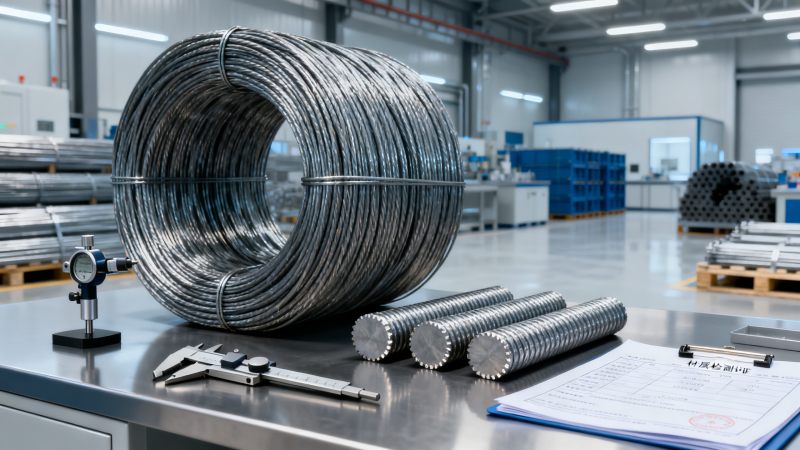
For technical evaluators, selecting Steel Wire for concrete reinforcement starts with verifying the performance factors that directly affect structural safety, consistency, and compliance.
From tensile strength and ductility to surface condition, dimensional accuracy, and standard conformity, each check influences long-term project reliability and installation performance.
A clear review process reduces rejection risk, supports stable concrete bonding, and helps avoid delays caused by unsuitable steel material entering production or site work.
Why a Structured Review Method Matters
Steel Wire for concrete reinforcement is often approved under time pressure, yet small defects can lead to poor anchorage, cracking risk, or failed compliance audits.
Using a structured review method keeps inspection consistent across batches, suppliers, and projects. It also improves comparison when specifications vary by design code or market.
This is especially important in the steel industry, where wire quality must align with structural intent, concrete behavior, and applicable ASTM, EN, JIS, or GB requirements.
Core Performance Checks for Steel Wire for Concrete Reinforcement
- Confirm tensile strength meets design values and standard limits, with test certificates showing stable results across heats, coils, and delivered production lots.
- Check yield behavior and elongation together, because high strength without adequate ductility may reduce crack control and deformation tolerance in reinforced concrete elements.
- Inspect diameter accuracy and ovality carefully, since dimensional variation affects spacing, reinforcement ratio, mesh fabrication, and final structural consistency.
- Review surface condition for rust scale, oil, pitting, burrs, or drawing defects that may weaken bond performance with concrete or disrupt processing.
- Verify rib pattern or surface profile when applicable, because mechanical interlock strongly influences anchorage and load transfer in concrete reinforcement applications.
- Check bendability and reverse bend performance to ensure the wire can be formed, welded, or handled without brittle fracture or surface splitting.
- Match chemical composition data with the required standard to control weldability, strength consistency, aging behavior, and potential performance variation after processing.
- Confirm coil weight, packaging, identification, and traceability labels, making sure each batch can be linked back to mill records and inspection results.
- Review compliance documents, including mill test reports and third-party checks, to verify that Steel Wire for concrete reinforcement meets contract and code requirements.
Mechanical Properties That Deserve Extra Attention
Tensile strength alone is not enough. The best approval decisions compare tensile results, yield response, elongation, and fracture appearance as one performance group.
For seismic or dynamic loading environments, ductility becomes especially important. A wire that is too hard may fail during bending, handling, or stress redistribution.
Dimensional and Surface Checks
Even when certificates look acceptable, field issues often begin with dimensional inconsistency or poor surface condition. These directly affect concrete bond and fabrication efficiency.
Measure several points on each sample length. Compare actual values against tolerance limits, not just nominal size listed in order documents.
Related Steel Products Used in Supporting Systems
Concrete reinforcement projects often involve additional steel components in plant systems, utility routing, or thermal equipment connected to industrial construction environments.
For heat-transfer installations, A36 Steel Pipe may be specified for tubular heat exchangers, condensers, and similar equipment.
Available sizes can cover outer diameters from 1/8 inch to 3 inches, with minimum wall thickness options and unit lengths from 3m to 13.5m.
Relevant standards may include ASTM A106, A53, A179, API 5L, JIS G3452, EN10210, and GB/T 8163, depending on service conditions and design specifications.
Application Notes for Different Construction Situations
Precast Concrete Production
In precast operations, Steel Wire for concrete reinforcement must maintain stable dimensions and predictable bending behavior for mesh welding and automated placement.
Surface cleanliness matters more here, because contamination can reduce bond and create inconsistency across repeated production cycles.
Cast-in-Place Structural Elements
For slabs, walls, and foundations, check straightness, coil memory, and site handling tolerance. Material that springs excessively can slow placement and reduce accuracy.
Where field tying is extensive, wire flexibility and coating condition should be checked to avoid cracking or local damage before concrete pouring.
High-Humidity or Coastal Environments
Corrosion exposure raises the importance of storage control, rust evaluation, and any protective treatment specified by project standards or durability design requirements.
If light surface oxidation is present, determine whether it remains within acceptable limits instead of assuming all discoloration means rejection.
Seismic or Heavy-Duty Structural Use
Structures subject to cyclic loading need stronger focus on elongation, bend performance, and consistency between batches of Steel Wire for concrete reinforcement.
In these cases, additional testing or third-party verification may be justified before full approval, especially for critical structural zones.
Commonly Missed Issues That Create Risk
One common mistake is accepting mill certificates without confirming they match the actual coil tags and shipment batch numbers on site.
Another issue is checking average diameter only. Local under-tolerance sections can still affect reinforcement performance and fabrication reliability.
Surface defects are also underestimated. Shallow pits, laps, or drawing marks may appear minor, but they can indicate unstable production quality.
Some approvals ignore storage damage. Wire exposed to moisture, mud, or mechanical impact after delivery may no longer represent certified mill condition.
It is also risky to compare Steel Wire for concrete reinforcement from different standards without reviewing differences in testing methods and acceptance limits.
Practical Steps for On-Site and Incoming Inspection
- Prepare a single inspection form covering size, mechanical data, surface condition, labeling, certificates, and sampling results before delivery arrives.
- Sample multiple coils from each lot instead of relying on one piece, especially when shipment volume is large or project tolerance is strict.
- Use calibrated tools for diameter checks and keep photos of defects, labels, and packaging status for traceable documentation.
- Separate accepted, pending, and rejected materials physically to avoid accidental use during busy production or construction periods.
- When results are unclear, request additional laboratory testing before release rather than approving material on appearance alone.
Final Review Before Approval
A reliable decision on Steel Wire for concrete reinforcement should combine document review, physical inspection, dimensional verification, and mechanical performance confirmation.
When each check is completed in sequence, the risk of hidden defects drops sharply, and project quality becomes easier to control.
Use this performance-based approach as the standard approval path for every batch. It supports compliance, protects structural integrity, and improves long-term construction outcomes.
For future orders, align technical specifications, standards, and inspection points in advance so each shipment can be evaluated quickly and consistently.
Please give us a message


Please enter what you want to find