Choosing the right steel square rod size is essential for strength, cost control, and project performance. In this guide, we explain how steel square rod dimensions compare with materials such as Q235 steel and S235JR steel, while also clarifying their relation to products like stainless steel square pipe, seamless steel tube, and carbon pipe. Whether you are sourcing for fabrication, construction, or industrial use, this overview helps buyers and engineers make informed decisions.
What do buyers really need to know about steel square rod sizes?
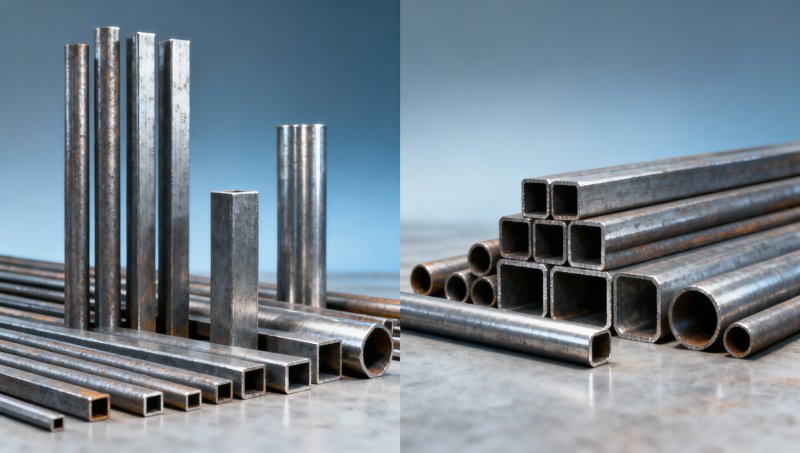
The core search intent behind “Steel Square Rod Sizes Explained” is usually practical, not theoretical. Most readers want to know which size to choose, how size affects load capacity and fabrication, what grade is suitable, and how to avoid overpaying for unnecessary material.
In simple terms, steel square rod size selection depends on five factors: required strength, span or load condition, machining or welding method, corrosion environment, and procurement standard. A larger square rod generally provides higher load-bearing capacity, but it also increases weight, machining cost, and transport expense. The best choice is not the biggest size, but the one that matches the application safely and economically.
For engineers and technical evaluators, the main concern is section performance and material compliance. For procurement teams and decision-makers, the focus is standard availability, price stability, lead time, and sourcing risk. For quality and safety personnel, dimensional tolerance, traceability, and consistency matter most. A useful guide should address all of these concerns together.
Common steel square rod sizes and how they are usually selected
Steel square rods are commonly specified by width × width, such as 10mm × 10mm, 12mm × 12mm, 16mm × 16mm, 20mm × 20mm, 25mm × 25mm, 30mm × 30mm, 40mm × 40mm, and larger custom dimensions. The exact range available depends on the production method, steel grade, and country standard.
Smaller sizes are often used for brackets, decorative fabrication, machine parts, frames, gates, and light supports. Medium sizes are common in general fabrication and structural accessories. Larger sizes are selected when higher stiffness, greater impact resistance, or heavier loads are required.
When choosing a size, buyers should review:
- Static and dynamic load requirements
- Welding, bending, cutting, or machining needs
- Installation constraints and connection design
- Surface treatment needs such as galvanizing or painting
- Local or project-specific standards
If the application is structural or safety-related, size should never be chosen by appearance alone. The right approach is to confirm the required section performance first, then match it with an available grade and dimensional tolerance.
How material grade affects performance: Q235 steel vs S235JR steel
Size is only part of the decision. Material grade also influences whether a steel square rod performs as expected. Two commonly discussed grades are Q235 steel and S235JR steel. Both are widely used mild structural steels, and they are often compared because their strength levels are broadly similar for many general applications.
Q235 steel is commonly used in the Chinese market and in export supply chains tied to GB standards. S235JR steel is widely used in European-standard projects under EN specifications. In many non-critical applications, they may appear comparable from a purchasing perspective, but they are not automatically interchangeable without checking the full standard, mechanical properties, chemical composition, and certification requirements.
For buyers, this means a square rod with the same nominal size may still differ in project suitability depending on its grade. If the project involves code compliance, third-party inspection, or cross-border procurement, the grade should be confirmed as carefully as the size.
As a reference point, many steel buyers sourcing structural products also review related sections such as Channel Steel Supplier options when comparing support members, framing components, and corrosion-protected materials. In some projects, U channel steel in grades such as Q195, Q235, Q235B, Q345B, 201, 304, or 316 may be selected instead of solid square rod, depending on weight, weldability, and section efficiency requirements. Products with thickness from 1.5mm to 25mm, height from 80mm to 160mm, and lengths of 6-12m are commonly considered for construction, wall beams, brackets, lightweight roofing, and mechanical supports. For projects exposed to moisture or corrosive environments, hot-dip galvanized options and certified supply under ISO, CE, SGS, or BV standards can reduce lifecycle risk.
Steel square rod vs square pipe, seamless steel tube, and carbon pipe
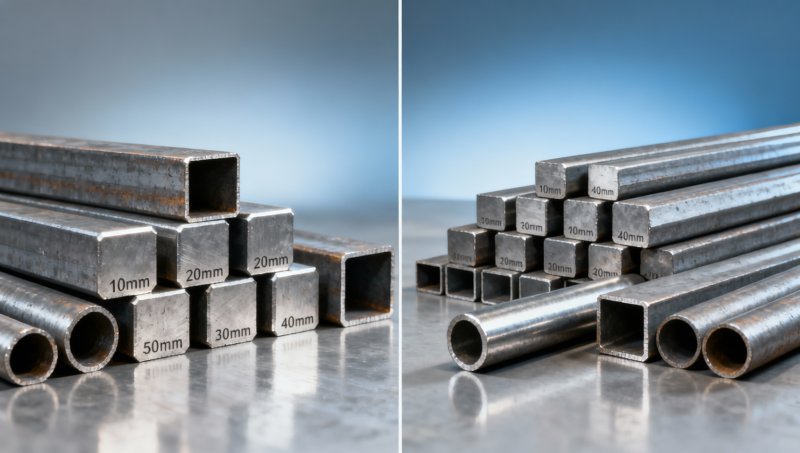
Another common source of confusion is product type. A steel square rod is a solid section. A stainless steel square pipe is hollow. A seamless steel tube is usually round and hollow, produced without a welded seam. A carbon pipe is typically round as well and used for fluid transport, structural support, or mechanical purposes depending on specification.
These products are not interchangeable just because their outer dimensions may look similar.
- Steel square rod: solid, strong in compact applications, suitable for machining, pins, supports, and fabricated parts
- Stainless steel square pipe: hollow, lighter than solid rod, often used where appearance, corrosion resistance, and reduced weight are important
- Seamless steel tube: preferred in pressure, mechanical, or precision applications where uniformity and strength are required
- Carbon pipe: common in industrial systems, construction, and transport applications depending on wall thickness and standard
For cost control, it is important to avoid specifying a solid square rod when a hollow section would meet the mechanical requirement. On the other hand, when machining, impact resistance, or concentrated load transfer is critical, a solid rod may be the safer and more practical option.
How to choose the right size for fabrication, construction, and industrial use
A practical size selection process usually starts with the application category.
For fabrication: focus on machinability, weldability, cutting loss, and finishing requirements. Small to medium steel square rod sizes are often enough for frames, fittings, hardware, and support parts.
For construction: check whether the rod is a true load-bearing member or only a secondary element. If it supports structural loads, section calculations and standard compliance are essential. Material certificates and dimensional consistency also become more important.
For industrial use: evaluate wear, impact, vibration, and environmental exposure. Some industrial applications require tighter tolerance or better surface quality to ensure assembly accuracy.
Useful buyer questions include:
- What is the actual load or force condition?
- Will the rod be welded, drilled, threaded, or bent?
- Is corrosion protection required?
- Is the project governed by ASTM, EN, JIS, or GB standards?
- Do I need mill test certificates or third-party inspection?
- Is a standard stock size available, or is custom production necessary?
Answering these questions early helps prevent two common problems: under-specification that creates safety risk, and over-specification that increases cost without adding useful value.
What procurement teams should check before placing an order
For purchasing and commercial teams, steel square rod size selection is closely linked to supply reliability. A technically correct size still creates project problems if tolerance is inconsistent, certification is incomplete, or delivery is delayed.
Before placing an order, it is wise to verify:
Please give us a message


Please enter what you want to find