Understanding steel shelf angle load limits is essential for project managers responsible for safe, efficient storage design. The right steel shelf angle affects load capacity, structural stability, and long-term performance in warehouses, workshops, and industrial facilities. This guide explains the key factors that influence strength, helping you make informed sourcing and specification decisions for reliable storage applications.
For project leaders managing racking layouts, mezzanine storage, maintenance platforms, or parts shelving, load rating is never a single-number decision. A steel shelf angle must be evaluated through section size, steel grade, span, connection detail, support spacing, and service environment. A practical specification can reduce deflection, extend service life beyond 10-15 years, and lower rework risk during installation.
As a structural steel manufacturer and exporter from China, Hongteng Fengda supports buyers in construction, industrial, and manufacturing projects with angle steel, channel steel, beams, cold formed profiles, and custom structural steel components. For global sourcing teams, the real value is not only supply capacity, but also consistent compliance with ASTM, EN, JIS, and GB requirements, especially when shelf angle performance must align with safety, lead time, and budget targets.
Why Steel Shelf Angle Load Limits Matter in Storage Projects
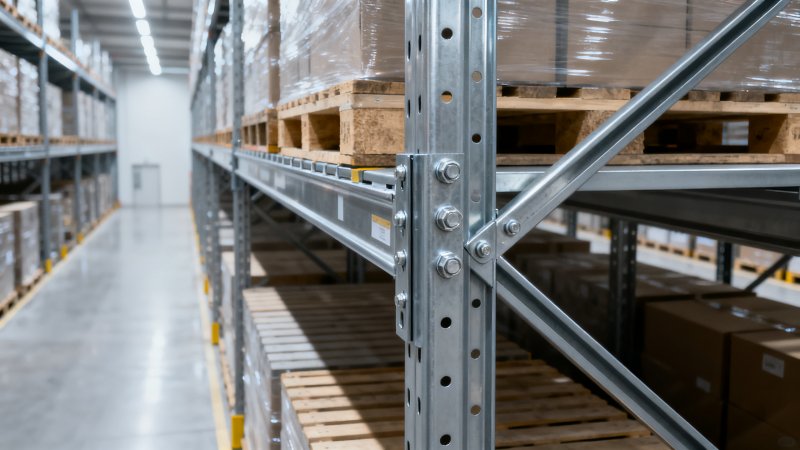
In storage applications, the steel shelf angle acts as a load-carrying member that transfers force from stored goods to supporting frames, walls, brackets, or columns. If the selected section is too light, common problems include excessive deflection above L/180 or L/240, bolt hole distortion, local buckling, and long-term fatigue under repeated loading cycles.
For project managers, the risk is not limited to visible collapse. An under-specified steel shelf angle can also create hidden costs in the form of damaged inventory, disrupted workflow, replacement labor, and delayed commissioning. In a medium-size warehouse with 200-500 storage positions, even a 5% design error can multiply into significant corrective work.
Three Main Performance Targets
- Load capacity: the section must safely carry dead load plus live load with an appropriate design margin.
- Deflection control: many storage systems fail serviceability checks before they fail strength checks.
- Connection stability: welds, anchors, and bolts must resist shear, bending, and vibration during use.
Typical Storage Conditions That Change Load Limits
The same steel shelf angle may perform very differently between a 600 mm tool shelf and a 2400 mm pallet support. Load limits drop quickly as span increases. Corrosive environments, impact loading from forklifts, and dynamic stocking patterns can further reduce usable capacity by 10%-30% compared with static indoor conditions.
The table below shows how project conditions commonly affect specification decisions for steel shelf angle members in industrial storage systems.
The key takeaway is that load limit evaluation should always start with the service condition, not just the nominal size of the angle. In many projects, connection design and span control determine the final rating more than the steel section label alone.
What Determines the Strength of a Steel Shelf Angle
A steel shelf angle is usually selected by leg size, thickness, steel grade, and manufacturing method. Equal angles and unequal angles behave differently under eccentric loading. Hot rolled and cold formed profiles can also show different stiffness characteristics. For project specification, four variables deserve the closest review.
Section Size and Thickness
Common storage applications may use angles such as 40x40x4 mm, 50x50x5 mm, 75x75x6 mm, or larger custom sections. Increasing thickness from 4 mm to 6 mm does more than add mass. It improves bending resistance, reduces local deformation at bolt holes, and can noticeably improve serviceability under repeated shelf loading.
Steel Grade and Standard
Material strength depends on the standard and grade selected. Buyers commonly request compliance with ASTM, EN, JIS, or GB. Higher strength material may allow a smaller section in some designs, but this must be verified against weldability, fabrication practicality, and local code acceptance. A stronger grade does not automatically solve instability caused by poor geometry.
Manufacturing Consistency Matters
For shelf members used across 50, 100, or 500 bays, dimensional tolerance is critical. Variations in thickness, straightness, or hole placement can slow installation and create uneven load sharing. Manufacturers with modern production lines and strict inspection controls help project teams maintain predictable assembly quality and reduce site adjustment time.
Span, Support, and Load Distribution
A steel shelf angle carrying 300 kg over a 900 mm span is very different from one carrying the same total load over 1800 mm. As span increases, bending moment and deflection increase sharply. If goods are concentrated in the center rather than distributed, the effective demand on the angle becomes even more severe.
Connection Design and Anchorage
In practical installations, the load path includes bolts, welds, anchor plates, and support frames. If bolts are undersized or spacing is too wide, the actual system may fail at the connection before the angle reaches its theoretical capacity. For most industrial storage projects, it is good practice to verify at least 4 checks: member strength, deflection, bolt shear, and support bearing.
How Project Managers Can Estimate a Suitable Shelf Angle Specification
Early-stage selection does not replace structural calculation, but it helps procurement and engineering teams narrow options faster. A practical review process can reduce quotation rounds from 4-5 cycles to 2-3 cycles, especially when overseas sourcing is involved.
Step 1: Define the Real Working Load
Separate dead load from live load. Include stored goods, shelf decking, bins, tools, and any temporary loading during maintenance. For industrial shelving, a design allowance of 10%-25% above the expected operating load is often used for planning discussions before final engineering verification.
Step 2: Confirm Span and Support Layout
Measure clear span, support spacing, and bracket position. A 1200 mm clear span with center support behaves differently from a single unsupported span of the same total length. If shelf angles are fixed on both ends, stiffness can improve compared with a simple support condition, but only when connection rigidity is reliable.
Step 3: Match Standard and Surface Protection
Indoor dry storage may only need mill finish or standard paint, while humid or chemically exposed facilities often require galvanizing or stronger coating systems. Protection choice affects service life, maintenance intervals, and total cost over 5-10 years.
The following table gives a practical planning reference for common steel shelf angle applications. Final values should still be checked by qualified engineering review.
This comparison shows that the same steel shelf angle concept covers very different duty levels. Project teams should focus on actual support condition and stock behavior rather than choosing only by price or by a familiar section size.
A Useful Procurement Checklist
- Confirm load per shelf level in kg or kN.
- State clear span and support details.
- Specify standard requirement such as ASTM, EN, JIS, or GB.
- Clarify finish: black, painted, or galvanized.
- Request dimensional tolerance and inspection method.
- Verify whether OEM drilling, punching, or cut-to-length service is needed.
Material Support Around Shelf Systems and Why It Affects Total Project Efficiency
Although angle steel is the main focus in storage framing, project efficiency often depends on how well related steel products are coordinated. In fabrication and industrial support work, reinforcement bars, tie elements, and auxiliary carbon steel materials may be required for surrounding structures, foundations, brackets, or embedded components.
For buyers managing multiple steel categories in one package, Wire Rod can be a relevant supporting material in broader manufacturing and construction supply plans. Available in carbon steel grades such as GB1499.2 HRB400, HRB500, HRB400E, HRB500E, ASTM A615 Grade 60, BS4449 460B, 500B, 500C, and AS/NZS 4671 500N, it is used across auto manufacturing, shipbuilding, aerospace industry, petrochemical plants, metallurgical machinery, precision tools, and building material applications.
This product is typically supplied in round shape, with length options from 1-12 m, and complies with ASTM, GB, EN, DIN, and JIS standards. Its carbon content range of 0.06-0.22% supports excellent formability and weldability, which is useful where fabrication compatibility matters across connected steel components. For project managers, combining shelf angle sourcing with related steel supply can shorten coordination time and reduce supplier fragmentation.
Common Mistakes When Specifying Steel Shelf Angle for Storage Use
Many storage problems come from specification shortcuts rather than material defects. In international purchasing, these mistakes can be expensive because they may only appear after delivery or during installation.
Choosing by Thickness Alone
A 6 mm angle is not automatically safer than a 5 mm angle if the leg size, span, or connection detail is wrong. Section geometry and support layout are just as important as thickness. A heavier section may also add unnecessary freight and handling cost when a better-designed profile would perform more efficiently.
Ignoring Deflection Limits
Some systems meet basic strength requirements but still sag noticeably in service. Excessive deflection can affect shelf flatness, part retrieval, and user confidence. In storage design, a stable appearance and predictable service behavior matter almost as much as ultimate load resistance.
Overlooking Corrosion and Maintenance Cycles
If steel shelf angle members operate in humid workshops, coastal facilities, or chemical plants, corrosion can gradually reduce section thickness. Even a loss of 0.5-1.0 mm over time may change performance in lighter sections. Maintenance review every 6-12 months is a reasonable starting interval for demanding industrial sites.
Failing to Clarify Fabrication Requirements
Project delays often occur because drawings show standard angle steel, but the site actually needs punched holes, welded tabs, notched ends, or pre-cut lengths. Early clarification of these OEM needs can reduce installation modification, improve fit-up accuracy, and keep lead times closer to planned windows such as 2-4 weeks or 4-6 weeks depending on volume.
How to Source Steel Shelf Angle from a Reliable Structural Steel Partner
For engineering procurement teams, supplier selection should be based on capability, process control, and communication quality. A reliable structural steel exporter should be able to support both standard sections and customized fabrication while maintaining traceability to the requested standard.
Key Supplier Evaluation Points
- Production range covering angle steel, channels, beams, and cold formed profiles.
- Ability to work with ASTM, EN, JIS, and GB specifications.
- Quality control for dimensional checks, material verification, and surface inspection.
- Support for OEM processing such as cutting, drilling, punching, and welded assemblies.
- Stable export coordination for North America, Europe, the Middle East, and Southeast Asia.
Why This Matters for Project Outcomes
When project managers work with one supplier that understands structural steel applications, the result is usually faster document alignment, fewer interpretation gaps, and more dependable shipment scheduling. This is especially important when steel shelf angle components must interface with frames, brackets, base plates, or custom supports within the same project package.
Hongteng Fengda focuses on reliable steel products and customized solutions for global construction, industrial, and manufacturing projects. With modern manufacturing facilities, strict quality control, and export experience across multiple regions, the company helps buyers reduce sourcing risk, control cost, and keep project timelines on track without sacrificing specification discipline.
Final Guidance for Safe and Cost-Effective Shelf Angle Selection
The right steel shelf angle is selected through a combination of load, span, steel grade, connection detail, finish, and installation condition. For most project managers, the smartest approach is to define 6 essentials early: load per level, shelf depth, clear span, support method, environmental exposure, and required standard. That simple discipline can prevent costly revisions later.
If you are planning warehouse shelving, workshop storage, or industrial support systems, a qualified structural steel partner can help convert rough capacity targets into workable steel sections and fabrication details. Hongteng Fengda supplies angle steel and custom structural components with international standard alignment and dependable export support. Contact us today to get a tailored solution, discuss product details, or learn more about steel shelf angle options for your storage project.
Please give us a message


Please enter what you want to find