When evaluating steel rod high strength for critical construction or industrial applications, the yield-to-tensile ratio isn’t just a number—it’s a vital indicator of ductility risk and structural reliability. For procurement managers, engineers, and project leaders sourcing ASTM A36 angle steel, steel channel for construction projects, or galvanized cold drawn steel wire rod from China, understanding this ratio helps prevent brittle failure, optimize safety margins, and ensure compliance with international standards for structural steel products. At Hongteng Fengda—a certified structural steel manufacturer and exporter—we engineer high-strength steel rods with controlled yield-to-tensile ratios, backed by rigorous testing and global certifications (ASTM, EN, GB). Let’s decode what this ratio reveals—and why it matters for your next order.
What Does Yield-to-Tensile Ratio Really Mean for Structural Integrity?
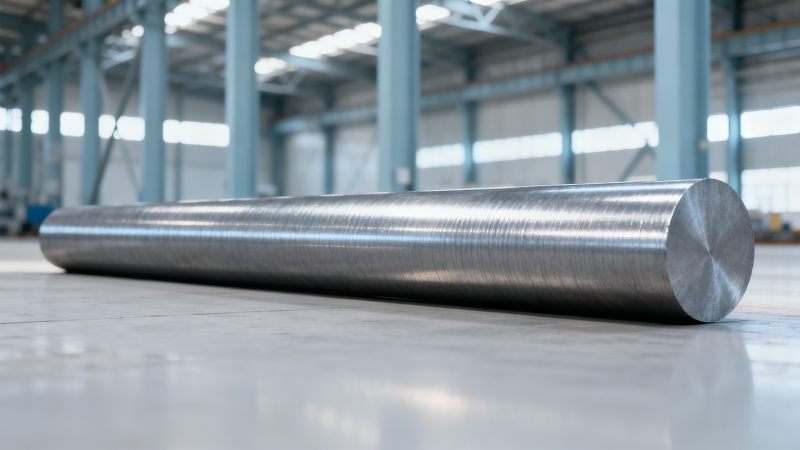
The yield-to-tensile ratio (Y/T ratio) is the quotient of a steel’s yield strength divided by its ultimate tensile strength—typically expressed as a decimal between 0.60 and 0.85. A lower ratio (e.g., 0.65–0.72) indicates higher ductility: the material yields significantly before fracture, allowing visible deformation and energy absorption under overload. A higher ratio (e.g., 0.78–0.85) signals reduced elongation capacity and increased susceptibility to sudden, brittle failure—especially in low-temperature environments or cyclic loading scenarios common in seismic zones or heavy machinery frames.
For structural steel rods used in tension-critical components—such as bracing systems, anchor rods, or pre-stressed connections—this ratio directly impacts design safety factors. International codes like Eurocode 3 (EN 1993-1-1) and AISC 360 require minimum elongation values (≥15% for hot-rolled sections), which correlate strongly with Y/T ≤ 0.75. Exceeding that threshold without compensatory design adjustments increases non-compliance risk during third-party inspections.
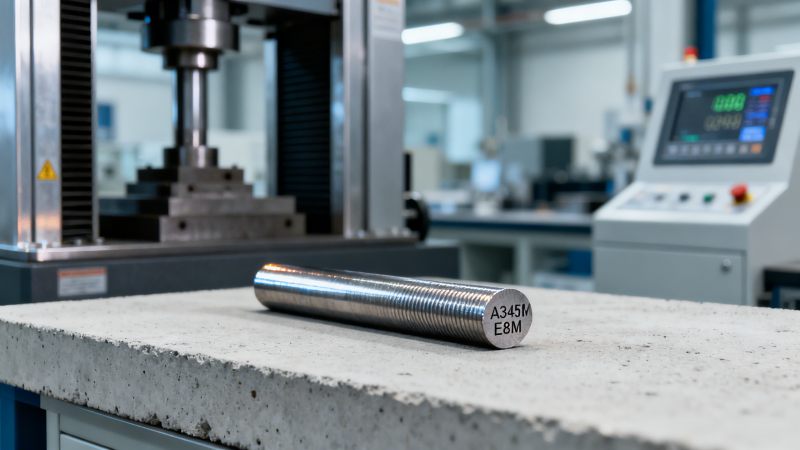
At Hongteng Fengda, every batch of high-strength steel rod undergoes dual-point tensile testing per ASTM E8M and GB/T 228.1. Our standard Q345B and Q460C rods maintain Y/T ratios within 0.70–0.74—verified across ≥3 independent test reports per production lot—to support predictable plastic hinge formation in moment-resisting frames and purlin systems.
How It Impacts Real-World Applications
- Roof purlins in large-scale steel structure workshops: Ductile behavior prevents progressive collapse when snow load exceeds design limits.
- Mechanical columns under dynamic torsion: Controlled Y/T enables reliable fatigue life prediction over 2 million cycles.
- Galvanized cold drawn steel wire rod in lifting slings: Ratios >0.76 increase notch sensitivity—raising rejection rates during NDT ultrasonic scanning.
- Customized structural steel components for offshore platforms: EN 10225-compliant Y/T ≤ 0.73 ensures survivability in -20°C service temperatures.
Comparing Yield-to-Tensile Behavior Across Common Structural Steel Grades
Not all high-strength steels behave the same—even when nominal tensile strength appears comparable. The table below compares key mechanical performance indicators across grades commonly supplied by Chinese structural steel manufacturers, including those used in Z-beam fabrication for lightweight roof systems and wall beam applications.
This data confirms that while Q460C delivers superior strength, its narrower ductility margin demands stricter welding procedure specifications (WPS) and post-weld heat treatment (PWHT) planning—especially for thick-section Z-beam components used in mechanical column assemblies. In contrast, Q345B offers optimal balance for cost-sensitive projects requiring CE, SGS, and ISO-certified solutions with 2–12m customizable lengths and ±1% dimensional tolerance.
Procurement Checklist: 5 Critical Checks Before Ordering High-Strength Steel Rods
Procurement teams and technical evaluators must verify more than tensile strength alone. Here’s what to request from suppliers—before issuing PO or releasing payment:
- Certified mill test reports (MTRs) showing actual Y/T ratio—not just nominal grade compliance—for each heat number (traceable to batch).
- Verification that elongation at break meets ≥15% minimum for hot-rolled sections per EN 10025-2 or ASTM A6/A6M.
- Confirmation of galvanizing compatibility: zinc coating adhesion tests (e.g., bend test per ASTM A123) for cold-drawn rods with Y/T >0.72.
- Lead time alignment: Standard delivery for Q345B/Q460C rods with full certification is 12–18 days; custom perforated or galvanized Z-beam profiles require 3–4 weeks due to additional slitting and coating stages.
- Third-party witness testing option: BV or SGS supervision available at our Jiangsu facility for buyers requiring audit-ready documentation.
Why Global Buyers Choose Hongteng Fengda for High-Strength Structural Steel
We don’t just supply steel—we deliver verified structural assurance. As a vertically integrated structural steel manufacturer and exporter from China, Hongteng Fengda controls the full value chain: raw material sourcing (ISO 9001-certified billets), precision rolling (±0.5mm thickness control), multi-standard galvanizing (zinc coating 60–120g/m²), and traceable logistics across 32 countries. Our clients reduce sourcing risk through consistent quality across 50+ annual production batches, stable lead times (≤15 days for standard ASTM A36 angle steel), and responsive engineering support—from initial specification review to final inspection coordination.
Whether you need galvanized cold drawn steel wire rod for tension-critical applications, ASTM A572 Grade 50 beams for North American infrastructure, or customized Z-beam profiles with perforated flanges and S355JR material for European roofing systems, we provide full documentation packages—including EN 10204 3.1 certificates, CE marking files, and weldability assessments—within 48 hours of order confirmation.
Ready to validate yield-to-tensile performance for your next project? Contact us today for: (1) free MTR sample review, (2) custom Y/T ratio verification protocol, (3) galvanized cold drawn steel wire rod test coupons, or (4) OEM design consultation for Z-shaped steel profile integration into light manufacturing arm structures.
Please give us a message


Please enter what you want to find