In precision fabrication, even small variations in steel rod diameter can directly affect machining accuracy, tool wear, fit-up, and final product performance. For buyers, engineers, and quality teams sourcing from a structural steel manufacturer, understanding tolerance control is essential to reduce waste, avoid rework, and ensure reliable results across structural steel components and industrial applications.
Why steel rod diameter tolerances matter more than many buyers expect
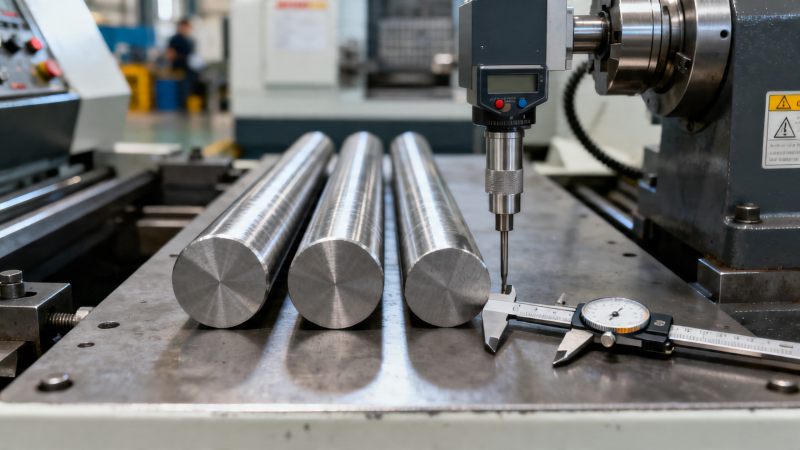
In steel machining, diameter tolerance is not a minor paperwork detail. It influences turning stability, clamping reliability, cutting depth consistency, and the final dimensional accuracy of machined parts. A difference such as +0.10 mm versus -0.10 mm can change stock allowance, cycle time, and even the feasibility of a finishing pass when the customer requires close fit assemblies.
For operators and technical evaluators, the issue usually appears first at the machine. A rod that runs oversize may require extra passes, while undersize material can leave insufficient stock for correction. In batch production, these small deviations become cumulative. Over 500 pieces or 1,000 pieces, even a narrow tolerance shift can lead to measurable scrap, unstable process capability, and more tool changes than planned.
For procurement teams and project managers, tolerance control also affects hidden cost. The quoted price per ton or per meter is only one part of the decision. If inconsistent diameter creates 3 additional setup adjustments per shift, or increases tool wear by one insert change every few hours, the downstream cost can easily exceed the original material savings.
This is especially relevant in the steel industry, where products may move from stockholding to cutting, drilling, turning, welding, and assembly within 2–4 production stages. Material variation introduced at the first step often becomes more expensive to correct at the third or fourth step. That is why buyers increasingly review tolerance capability before approving suppliers.
What machining results are usually affected
- Dimensional accuracy after roughing and finishing, especially when the target fit is narrow and the machining allowance is limited.
- Tool life and wear pattern, because oversize bars often increase metal removal volume and cutting force.
- Concentricity and runout during turning or grinding, particularly for longer bars in the 4 m to 6 m range.
- Assembly fit, welding preparation, and downstream rework where multiple components must align within the same tolerance chain.
Typical tolerance-related risk signals on the shop floor
When a machine shop reports unstable cycle time, frequent chuck adjustments, or inconsistent finished size from the same material lot, diameter tolerance should be checked early. Other signs include vibration during high-speed rotation, unusual tool edge chipping, and visible differences in stock removal between bars from one bundle and the next.
Quality teams should also watch for repeated nonconformance concentrated at the first operation. If most rejected parts fail at incoming setup or first-pass turning rather than final inspection, the rod itself may be contributing to the variation. A practical response is to verify actual incoming diameter at 3 positions per bar and on at least 5–10 bars per heat or bundle, depending on project criticality.
How tolerance influences machining, fit-up, and production cost
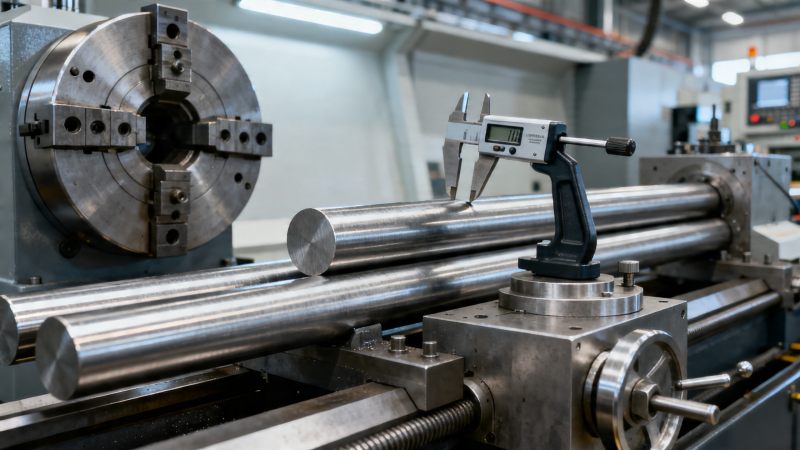
Diameter tolerance affects machining in two directions. Oversize material increases cutting volume and machine time. Undersize material reduces the safety margin for final dimensions, especially when parts need precise fits for shafts, sleeves, flanges, or welded structural connections. In either case, process control becomes harder, and that makes forecasting labor and tool consumption less reliable.
For procurement and finance teams, this issue should be viewed as a total-cost factor. If a lower-cost rod creates 2%–5% more scrap or extends each machining cycle by 20–40 seconds, the true cost per usable part may rise instead of fall. In medium-volume orders, that difference is often more important than a small reduction in the raw material purchase price.
For quality and safety managers, tolerance stability also supports traceability. When diameter remains within the specified range from lot to lot, it is easier to keep process capability consistent, maintain inspection records, and support customer audits. This matters when projects follow ASTM, EN, JIS, or GB requirements and need disciplined material documentation.
The table below shows how common tolerance conditions can affect machining results in practical B2B production environments.
The key takeaway is simple: tolerance is not only a dimensional requirement. It is a production control variable. Companies that machine steel rods regularly should compare suppliers not just by nominal size, but by tolerance consistency across lots, traceability records, and responsiveness when a deviation is found.
A useful mid-process reference for buyers handling broader steel sourcing
In many projects, buyers source rods, profiles, and pipe products together, especially for industrial fabrication or structural support systems. When machining compatibility and cost-effectiveness are both important, it helps to evaluate related carbon steel items with the same discipline used for diameter tolerance review.
For example, High Carbon Steel Pipe can be considered for global industrial applications where buyers need carbon steel material with standards such as API 5L, ASTM A106 Gr.B, ASTM A53 Gr.B, and BS EN 10217. Available outer diameter ranges from 15 mm to 1200 mm, with wall thickness options from SCH10 to XXS, lengths including 1 m, 4 m, 6 m, 8 m, and 12 m, plus surface treatments such as black paint, varnish, oil, galvanized, and anti-corrosion coated finishes.
From a sourcing perspective, this kind of product is attractive when the project needs excellent mechanical properties, good machinability, and high cost-effectiveness within one procurement package. It also shows why buyers should review standards, end treatment, and delivery format carefully rather than focusing only on nominal dimensions.
What should buyers, engineers, and QC teams check before approval?
A reliable purchasing decision usually combines 4 checkpoints: specification clarity, production capability, inspection method, and lot traceability. If one of these is missing, even a supplier with acceptable nominal size may still deliver steel rods that create machining instability. This is why technical review should happen before price confirmation, not after a quality issue appears.
Engineers should define the acceptable diameter range together with the required machining allowance. Procurement should verify whether the supplier controls that range during rolling, drawing, straightening, and final inspection. QC teams should confirm how many measurements are taken per bundle, per heat, or per production lot. For critical parts, asking for actual inspection records is often better than relying on generic declarations.
Project managers and commercial evaluators also need to connect tolerance with lead time. Tighter tolerance may require additional processing or sorting, which can extend production by several days or by 1–2 weeks depending on quantity, size, and standard. The right decision is not always the tightest tolerance. It is the tolerance that matches the real functional need of the part.
The following table can be used as a practical procurement and technical assessment reference when reviewing steel rod or related carbon steel supply.
This evaluation approach helps multiple stakeholders. Operators get more stable incoming material. QC gets clearer inspection criteria. Procurement avoids low-price but high-risk supply. Finance gains a better basis for total-cost approval. And decision-makers reduce exposure to delay claims, rework, and unexpected shop-floor loss.
A 5-point incoming inspection checklist
- Measure diameter at no fewer than 3 positions along each selected bar to identify taper or local deviation.
- Check at least 5 bars per lot for routine orders, and increase the sample size for critical assemblies or repeat issue materials.
- Review heat number and mill documentation to ensure traceability matches the delivered bundles.
- Inspect straightness and surface condition because diameter alone does not guarantee machinability.
- Record actual measurements before cutting, especially when the order has close-fit or repeatable CNC requirements.
Why supplier capability matters in export projects
For global buyers, the supply chain adds another layer of risk. Replacing a nonconforming steel shipment is far more disruptive when the project is in North America, Europe, the Middle East, or Southeast Asia and the supplier is overseas. This is where a manufacturer with stable production capacity, strict quality control, and familiarity with ASTM, EN, JIS, and GB requirements provides practical value rather than just a lower initial quotation.
Hongteng Fengda supports this type of evaluation by supplying structural steel products and customized solutions with export-oriented quality control. For buyers managing schedules, the ability to confirm specification details, OEM needs, and lead-time expectations before production can reduce sourcing risk and improve project execution.
Common mistakes, FAQ, and practical decisions for steel sourcing
Many material problems are not caused by poor steel quality in a general sense. They come from a mismatch between application need and purchasing criteria. A bar can meet the base material grade but still be unsuitable for a machining-intensive job if diameter tolerance, straightness, or lot consistency is not aligned with the process requirement. That is why a practical FAQ is useful for both new buyers and experienced sourcing teams.
Another common mistake is to specify overly tight tolerance without checking whether the part actually needs it. Tightening a range from a standard commercial level to a much narrower special level can increase processing cost and sometimes extend delivery by 7–15 days. If the final part will still receive heavy machining, that extra cost may not create real value.
The right approach is functional. Start from the finished part requirement, then define the minimum stable incoming material condition needed to achieve it. This avoids both under-specification and over-specification, which are equally expensive in different ways.
How should I choose steel rod tolerance for machining work?
Begin with the finished part tolerance, surface finish target, and expected machining allowance. If the component requires only general turning and no precision fit, a standard tolerance may be enough. If it will be used in a close assembly, repeated CNC batch production, or a high-speed rotating application, tighter and more consistent incoming diameter becomes more important. Ask the supplier to confirm the actual control range, not only the nominal size.
What matters more: grade or diameter tolerance?
Both matter, but for machining stability they serve different roles. Grade affects mechanical properties and application suitability. Diameter tolerance affects process consistency and finished dimension control. A correct grade with unstable size can still create scrap. A stable size with the wrong grade can fail service requirements. In technical evaluation, these two factors should be reviewed together, along with surface condition and straightness.
How long is the normal lead time for standard versus customized steel supply?
Lead time depends on specification, quantity, and processing level. Standard stock or common export specifications may move faster, while customized dimensions, special tolerance review, or added surface treatment often require more planning. For many B2B projects, the practical difference can be several days up to 2–4 weeks. It is wise to confirm production scheduling, inspection timing, and shipping arrangement at the quotation stage.
What are the most overlooked checks before placing a steel order?
Three items are often missed: actual tolerance range, inspection frequency, and delivery condition. Buyers sometimes confirm grade and price but forget to ask how the supplier measures the lot, how traceability is maintained, and whether the material arrives with the right length, end condition, and surface protection. These details directly affect receiving efficiency and machining results.
Why work with a structural steel manufacturer that understands machining outcomes
When your project involves structural steel, fabricated components, or industrial carbon steel products, the best supplier is not simply the one offering material. It is the one that understands how material performance affects the next process. That includes tolerance control, standard compliance, documentation, packaging, and dependable export coordination.
Hongteng Fengda combines manufacturing and export support for angle steel, channel steel, steel beams, cold formed steel profiles, and customized structural steel components. This allows buyers to discuss standard specifications, OEM needs, and process-oriented requirements with one partner instead of splitting technical and commercial communication across multiple parties.
For procurement teams, this means clearer confirmation of parameters, standards, and delivery scope. For engineers and QC personnel, it means a better basis for reviewing dimensional control, applicable standards, and inspection expectations. For project managers, it supports more stable scheduling and fewer surprises after material arrival.
If you are reviewing steel rod tolerance, related carbon steel products, or broader structural steel sourcing, you can contact us to discuss 6 practical points: parameter confirmation, suitable product selection, applicable ASTM/EN/JIS/GB standards, customized solutions, expected lead time, and sample or quotation support. This makes the sourcing process faster, more transparent, and better aligned with actual machining and project requirements.
Please give us a message


Please enter what you want to find