Choosing the right steel rod diameter is essential for matching strength, durability, and performance to the job at hand. Whether you are working on construction, fabrication, or industrial applications, the correct size helps improve safety, efficiency, and material use. In this guide, we’ll explain how to select the most suitable steel rod diameter based on load requirements, project conditions, and application needs, so operators and buyers can make confident, cost-effective decisions.
What Steel Rod Diameter Means in Practice
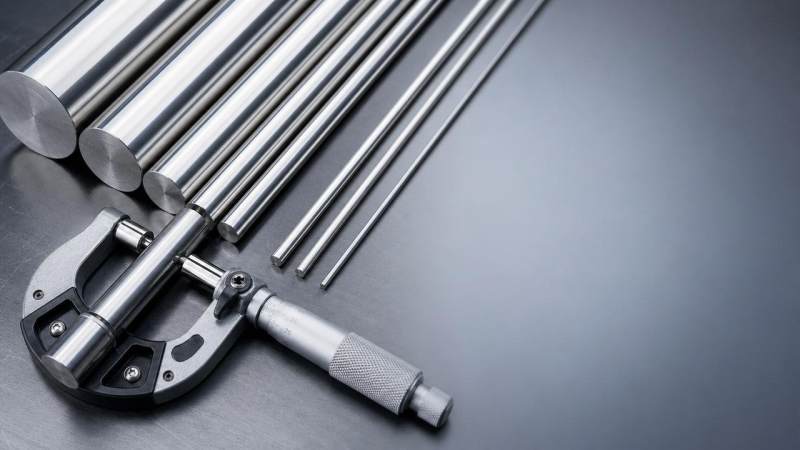
In simple terms, steel rod diameter refers to the thickness of the rod or tube section used in a project. For operators, it is not just a measurement; it is a direct factor that affects load capacity, bending resistance, handling, and service life. A larger diameter usually provides more strength and stiffness, while a smaller diameter can reduce weight, cost, and installation effort. The best choice depends on how the material will be used, not just on size alone.
In steel work, size selection often starts with the operating environment. For structural frames, supports, and mechanical parts, the selected steel rod diameter must balance safety margins with fabrication efficiency. For operators on the shop floor, that means understanding the job first, then matching the diameter to the expected stress, corrosion exposure, and assembly method.
Why Diameter Selection Matters in the Steel Industry
Across construction and manufacturing, diameter choice affects both performance and cost. If the steel rod diameter is too small, the part may deform, vibrate, or fail under repeated loading. If it is too large, the project may carry unnecessary weight and higher material expense. For users and operators, the goal is to select a size that delivers enough strength without over-specifying the material.
This is especially important in steel sourcing, where project buyers need stable quality and consistent dimensions. As a structural steel manufacturer and exporter from China, Hongteng Fengda supports global projects with reliable steel products and customized solutions, helping customers reduce risk in size matching, production consistency, and delivery planning.
Product Materials and Typical Specifications
When selecting steel rod diameter, material grade matters as much as size. In many industrial projects, stainless steel options such as 201 and 304 are chosen for their corrosion resistance, appearance, and practical cost balance. A related product category is 201 Stainless steel pipe, which is commonly used where both durability and surface quality are important. These products are available in round, square, and rectangular forms, with outer diameter options from 4mm to 200mm, wall thickness from 0.6mm to 6.0mm, and lengths from 1 to 6 meters.
For operators, mechanical data also helps confirm whether the selected size fits the task. Typical performance includes tensile strength of ≥ 520MPa, yield strength of ≥ 205MPa, elongation of ≥ 40%, and density of 8.0g/cm³. These values support applications that need mechanical strength, toughness, and resistance to oxidation or corrosion. Common standards such as ASTM, AISI, JIS, GB, DIN, EN, ISO, SGS, and BV provide additional confidence for international projects.
Common Applications and Size Priorities
Different industries evaluate steel rod diameter differently because the service conditions are not the same. In food processing equipment and breweries, smooth surfaces and corrosion resistance are often more important than extreme load capacity. In construction and building materials, the emphasis usually shifts toward mechanical strength and dimensional stability. In chemical applications, fertilizers and pesticides, or water treatment plants, resistance to acids, alkaline gases, and aggressive media becomes critical.
For these applications, steel rod diameter should be evaluated together with wall thickness, length, surface finish, and the actual working load. A polished surface may be preferred in visible or sanitary areas, while rough turning or matt treatment can be acceptable for internal or utility components.
Practical Guidelines for Operators and Buyers
A good sizing decision starts with clear operating requirements. First, define the load, pressure, vibration, and temperature conditions. Next, consider whether the part will be welded, machined, bent, or assembled with other components. Then confirm whether corrosion resistance or high temperature resistance is needed. For jobs with uncertain conditions, choosing a slightly stronger material grade or a more robust diameter can improve reliability without creating unnecessary waste.
Operators should also check certification and supply consistency. Standard-compliant products help reduce quality disputes and keep project records clear. In long-term sourcing, stable production capacity and dependable lead times are just as important as the nominal steel rod diameter, because field work depends on matching the right material to the right stage of the project.
Conclusion
Choosing the correct steel rod diameter is a practical decision that affects safety, cost, and performance across many steel applications. By comparing load needs, material grade, surface condition, and working environment, users can select a size that fits the job instead of overspending on excess capacity. For buyers and operators who need reliable supply and customized structural steel solutions, working with an experienced manufacturer can make sizing decisions faster and more accurate.
If your project requires consistent dimensions, standard compliance, and stable delivery, it is worth discussing your application in detail before ordering. The right steel rod diameter is not just a specification; it is a foundation for better results.
Please give us a message


Please enter what you want to find