Steel bar cost is never just a number on a quote. From steel rebar price per ton and grade selection to cutting loss, coating, and supply chain factors, every detail affects your final budget. For buyers, engineers, and project managers, understanding these variables is the key to comparing offers accurately, reducing waste, and securing reliable value from a trusted channel steel supplier or Steel Rod supplier.
In steel procurement, a lower unit price can still lead to a higher project cost if the product grade is unsuitable, dimensional tolerances are inconsistent, or scrap rates rise during cutting and installation. This is especially true in structural applications, where procurement teams must balance mechanical performance, fabrication efficiency, corrosion protection, and delivery reliability.
For global buyers sourcing from China, cost evaluation should also include mill capability, export experience, packaging methods, compliance with ASTM, EN, JIS, or GB standards, and the supplier’s ability to deliver customized structural steel without causing schedule delays. A realistic steel cost analysis always goes beyond price per ton.
What Really Makes Up Steel Bar Cost
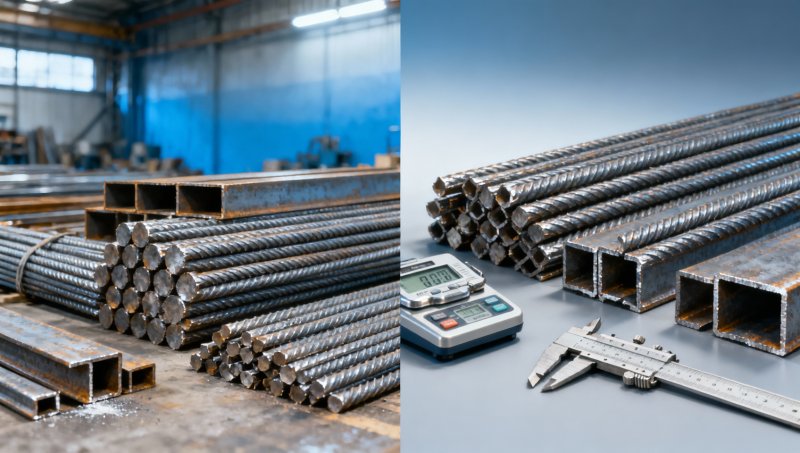
Steel bar cost starts with the base steel rebar price per ton, but final spending is shaped by at least 6 practical cost layers: material weight, steel grade, dimensional tolerance, processing loss, surface treatment, and logistics. Buyers who compare only FOB or EXW price often overlook the hidden cost differences that appear later in fabrication, welding, storage, or site installation.
Weight is the most direct variable. A small deviation in section size or actual meter weight can produce a meaningful budget gap across 50 tons, 200 tons, or more. In large projects, even a 2% increase in actual steel consumption may affect transport planning, crane handling, and total installed cost. That is why technical review and procurement review should happen together instead of separately.
Grade also changes cost in a non-linear way. Moving from Q235B or S235 to Q345B, S355, or A572 Grade 50 does not simply raise raw material price. It can also alter forming difficulty, welding procedure requirements, and substitution flexibility. In some applications, a higher grade reduces overall tonnage. In others, it only raises purchase cost without adding practical value.
Waste is the third major factor. Cutting loss, hole punching, edge trimming, offcuts shorter than usable lengths, and rework from tolerance issues can add 3% to 8% to real material consumption. For customized structural components, waste can climb higher if the cutting plan is not optimized at the quotation stage.
Direct cost vs. total installed cost
Many teams evaluate supplier offers based on direct purchase price alone. However, total installed cost usually includes at least 5 linked categories:
- Material purchase cost based on theoretical or actual weight
- Processing cost such as cutting, drilling, punching, beveling, or galvanizing
- Transport and export packaging cost by ton, bundle, or container load
- On-site efficiency impact caused by dimensional accuracy and labeling clarity
- Quality risk cost related to rejection, replacement, or project delay
The table below shows how a quotation can change when hidden cost elements are considered rather than only tonnage price.
The key takeaway is simple: the cheapest steel quote is not automatically the most competitive. A sound comparison method should check cost structure, usable yield, quality consistency, and supply reliability together.
Why Weight and Dimensional Accuracy Change the Final Budget
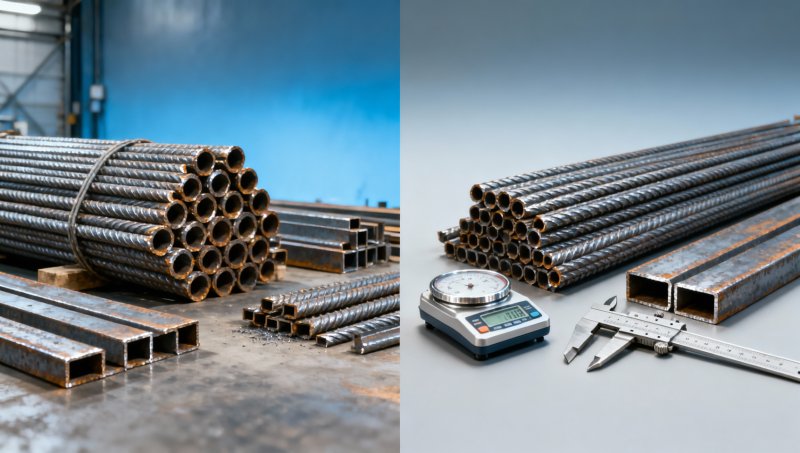
In steel purchasing, weight drives both material value and logistics cost. Yet many disputes come from the difference between theoretical weight and actual delivered weight. When buyers order by nominal size but receive products with tolerances close to the upper limit, total mass per bundle or per truck can increase noticeably. On a 100-ton order, a 1.5% variance means 1.5 extra tons of steel to pay for, move, and handle.
Dimensional accuracy affects more than accounting. It impacts fit-up, alignment, weld gap control, drilling accuracy, and on-site assembly time. If tolerance control is weak, crews may spend extra hours trimming, shimming, or reworking members. Labor and crane standby often cost far more than the apparent savings on the material quote.
For this reason, structural steel buyers should check thickness range, length tolerance, straightness, and bundle identification before approving a purchase order. Export projects usually benefit from a tolerance agreement written directly into the technical appendix, especially when multiple standards are involved.
A practical example from light structural sections
A good reference is Z-beam used in purlins, wall beams, lightweight roofs, brackets, mechanical columns, and light manufacturing supports. This type of Z-shaped steel profile is commonly supplied in thicknesses from 6–25mm and lengths from 2–12m or customized, with a typical tolerance target of ±1% for controlled projects.
Available materials may include Q235B, Q345B, Q420C, Q460C, SS400, S235, S275, S355, A36, and A572 Grade 50, allowing buyers to match performance to load and code requirements instead of overbuying strength. Optional forms such as perforated, galvanized coated, mill edge, and slit edge also influence both price and fabrication speed.
For project teams that need cold formed or light structural sections, choosing the right profile specification early can reduce waste in secondary processing. Certifications such as CE, SGS, BV, and ISO, plus execution according to GB50018-2002 where relevant, help procurement teams validate whether the supplied section aligns with quality expectations for export markets.
Weight control checklist for buyers
- Confirm whether the quote is based on theoretical weight, actual weighbridge weight, or fixed bundle weight.
- Request thickness, length, and tolerance range in writing before production starts.
- Check whether galvanizing, perforation, or punching changes the final net delivered weight.
- Review loading plan by 20GP, 40GP, or bulk shipment to avoid inefficient freight allocation.
- Match section length with project cutting plan to reduce short offcuts and nested scrap.
This approach is particularly useful for distributors, contractors, and OEM buyers who manage repeat orders. Better dimensional control often delivers savings in labor, wastage, and schedule protection, not just in steel price itself.
How Grade Selection Affects Cost, Performance, and Risk
Steel grade selection should always follow load requirements, fabrication method, service environment, and target standard. Choosing a higher grade than necessary can increase the steel bar cost without improving project outcomes. Choosing a lower grade can create safety risks, code non-compliance, or expensive redesign after engineering review.
For structural sections and bars, common grades such as Q235B, SS400, S235, and A36 are widely used where moderate strength and good workability are enough. Grades like Q345B, S355, and A572 Grade 50 are often selected when projects need better yield strength, better weight efficiency, or improved structural capacity. The price gap may look acceptable at quotation stage, but welding consumables, preheating requirements, and forming limitations must also be reviewed.
Another issue is cross-standard equivalence. Similar grades under GB, ASTM, EN, and JIS are not always interchangeable one-to-one. Procurement teams should confirm chemical composition limits, yield strength, tensile strength, and impact requirements instead of relying on informal substitutions. This is especially important for export projects reviewed by third-party inspectors.
Grade selection by application scenario
The table below gives a practical way to compare grade choices in typical steel projects.
For procurement managers and financial approvers, the best practice is to compare not only cost per ton but cost per required performance level. If a stronger grade reduces member size, freight volume, or support count, the project may save money overall. If the design does not benefit from that higher strength, the upgrade may simply inflate cost.
Manufacturers with broad grade capability and strict quality control can help buyers avoid mismatches between design intent and mill supply. That matters when serving mixed markets across North America, Europe, the Middle East, and Southeast Asia, where standard expectations and documentation requirements can vary project by project.
Waste, Processing, and Surface Treatment: The Costs Buyers Miss Most Often
Waste is often underestimated because it does not always appear clearly in the supplier quotation. In reality, procurement waste begins before the steel reaches the site. It can come from non-optimized stock lengths, poor nesting plans, punching patterns, end cropping, damaged packaging, or rejecting out-of-tolerance pieces after delivery. In many steel structure projects, the gap between purchased tonnage and usable tonnage is one of the most important budget indicators.
Processing services add value, but they also change cost structure. Drilling, slotting, perforation, edge trimming, and galvanizing can reduce site labor by 20%–40% when done correctly, yet they may increase factory lead time or require tighter drawings approval. Buyers should decide whether to buy raw sections and process locally, or purchase finished or semi-finished steel ready for assembly.
Surface treatment is another common blind spot. Galvanized coated steel usually costs more than black steel, but in outdoor, humid, or lightly corrosive environments, it may reduce maintenance frequency over a 5–10 year service period. The right choice depends on exposure conditions, coating specification, and project maintenance strategy.
Typical hidden cost sources in fabricated steel orders
- Stock length mismatch, such as ordering 12m material for parts mostly cut into 2.2m to 2.8m pieces
- Punching or perforation layout that creates unusable edge strips or weak offcuts
- Repeated handling because bundles are not marked by heat number, grade, or drawing code
- Galvanizing delays caused by incomplete vent or drain hole planning on fabricated parts
- Rework due to unclear tolerance for hole spacing, edge distance, or bow/straightness
How to reduce avoidable waste
A practical waste-control plan usually follows 4 steps: review drawing lengths, optimize cutting nests, confirm processing sequence, and align bundle packing with site installation order. Even a modest reduction from 6% waste to 3.5% waste can make a visible difference on medium and large export orders.
For distributors and project owners, it is also wise to ask suppliers whether ancillary products can be coordinated together. In some lightweight building systems, matching components such as color steel tile, rock wool sandwich panel, or floor deck with structural sections helps reduce fragmented sourcing and coordination loss.
The broader lesson is that buyers should evaluate steel bar cost as a process cost, not only a material number. The better the fit between steel specification, processing method, and final application, the lower the risk of hidden waste.
How to Compare Suppliers and Build a More Reliable Steel Purchasing Plan
A reliable steel supplier should offer more than pricing speed. Buyers should examine manufacturing capability, quality control discipline, export documentation, standard compliance, and delivery stability. For structural steel projects, one delayed shipment can disrupt installation sequencing, subcontractor allocation, and payment milestones.
When sourcing from China, it is useful to work with a manufacturer and exporter that can supply angle steel, channel steel, steel beams, cold formed profiles, and customized structural steel components under one procurement framework. This reduces interface risk and makes technical communication faster. It also helps if the supplier can support ASTM, EN, JIS, and GB-related requirements for different destination markets.
Hongteng Fengda focuses on structural steel manufacturing and export for global construction, industrial, and manufacturing projects. For buyers concerned with lead times, quality consistency, and sourcing risk, this kind of integrated supply capability can be valuable when evaluating long-term cooperation rather than one-off transactions.
Supplier comparison framework for steel procurement
Before final approval, procurement and technical teams can use the following matrix to compare offers more objectively.
This type of comparison helps business evaluators, project managers, quality teams, and finance approvers make decisions based on total value. In many cases, a supplier with stable production, dependable documentation, and consistent lead times can create lower real cost than a low-priced but less controlled source.
FAQ for buyers comparing steel cost
How should I compare steel rebar price per ton from different suppliers?
Compare the same basis each time: identical grade, size, coating status, weight method, delivery term, and tolerance requirement. If one quote includes galvanizing or tighter tolerances and another does not, the lower number is not a true equivalent.
What waste percentage should I budget for in structural steel projects?
A common planning range is 3%–8%, depending on section type, stock length match, processing complexity, and project discipline. Customized parts with many holes or short cut lengths may exceed that range if nesting is poor.
When is galvanized steel worth the extra cost?
It is often worth considering for outdoor, humid, or exposed environments where maintenance access is limited. The initial price increase may be justified if it reduces repainting cycles, shutdown time, or premature corrosion risk over several years.
How long does delivery usually take for customized structural steel?
A common range is 2–6 weeks depending on tonnage, grade availability, processing scope, inspection requirements, and shipping mode. Galvanizing, perforation, third-party inspection, or mixed-standard orders can extend the schedule.
Steel bar cost becomes easier to control when buyers evaluate the full picture: weight basis, grade suitability, processing waste, coating, tolerance, and supplier execution. This approach supports better budgeting, better technical fit, and fewer surprises after the order is placed.
For contractors, distributors, manufacturers, and project owners seeking dependable structural steel supply from China, a capable partner can help reduce sourcing risk while supporting customized requirements and international standards. If you want to compare options more accurately, review a project drawing, or discuss steel sections and OEM supply, contact Hongteng Fengda to get a tailored solution and detailed product support.
Please give us a message


Please enter what you want to find