Steel angle for construction remains one of the most practical structural choices for frames, supports, trailers, and reinforcement details. For buyers comparing angle iron for construction, angle iron for trailer use, or related options like I beam vs H beam strength, understanding where steel angles work best helps improve design efficiency, cost control, and project safety across commercial, industrial, and infrastructure applications.
Where steel angle for construction performs best in real projects
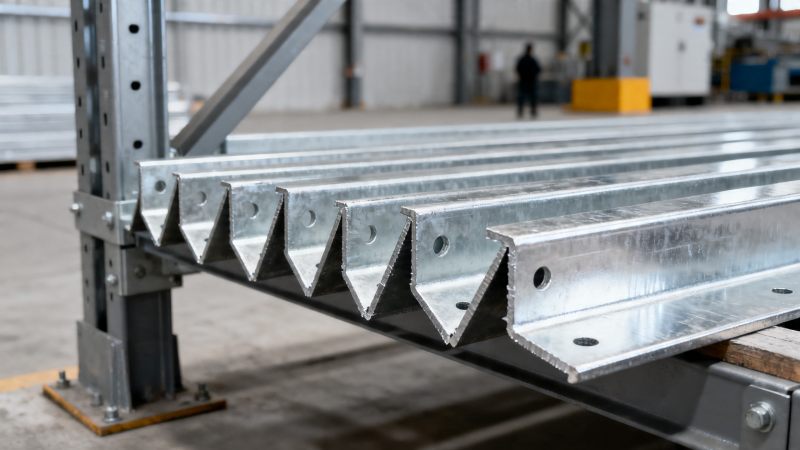
Steel angle for construction is widely used because it offers a simple shape, reliable load transfer, and flexible fabrication. In many projects, the L-shaped profile works well where engineers need edge reinforcement, bracing, framing support, or connection members without adding unnecessary weight. This makes it common in workshops, warehouses, platforms, trailers, towers, equipment bases, and secondary building structures.
For users and project managers, the main value is practical efficiency. Angle steel is easier to cut, drill, weld, and bolt than many more complex profiles. In small to medium structural details, it often reduces fabrication steps by 1–2 stages compared with built-up sections. That helps contractors control schedule pressure, especially when installation windows are limited to 7–15 days or when site conditions require fast adjustments.
For procurement teams and financial approvers, steel angle often makes sense when the design does not require the deeper section modulus of I beams or H beams. It is a cost-conscious option for brackets, shelf frames, cross members, lintel supports, walkway frames, and trailer edge structures. The key is matching section size, thickness, and steel grade to the actual service condition instead of overbuying heavier sections.
From a manufacturing and export perspective, Hongteng Fengda supports global buyers with standard and customized structural steel components. That matters when projects need ASTM, EN, JIS, or GB aligned production, repeatable dimensions, and dependable lead times for multi-batch supply. Stable manufacturing is especially important when a buyer must coordinate 2–4 shipment stages across construction, industrial, or equipment assembly schedules.
Typical applications where angle iron for construction is a strong choice
- Building frames and secondary supports, including roof edge members, stair supports, equipment stands, and door or opening reinforcement.
- Trailer and transport structures where angle iron for trailer assembly is used for edge framing, body supports, protective rails, and accessory mounting points.
- Industrial maintenance and retrofits, where operators need quick replacement parts that can be drilled or welded on site with common tools.
- Infrastructure and utility supports, such as small platforms, guard structures, cable tray supports, and light equipment foundations.
Why engineers keep specifying angle steel
The answer is not only strength. It is also about connection convenience, stock availability, fabrication simplicity, and lower processing risk. In many non-primary or semi-structural parts, angle steel provides enough stiffness without the cost or fabrication complexity of larger beam sections. For distributors and OEM buyers, this also means easier inventory planning across common size ranges and thickness combinations.
When the application involves repeated modules, such as racks, frames, enclosures, or support skeletons, steel angle improves production rhythm. Standardized cutting plans can reduce waste, and repeat drilling patterns help maintain dimensional consistency. For quality and safety managers, that consistency is useful because inspection points become clearer across 3 key checkpoints: dimensional tolerance, weld quality, and surface condition.
How does steel angle compare with channels, beams, and other options?
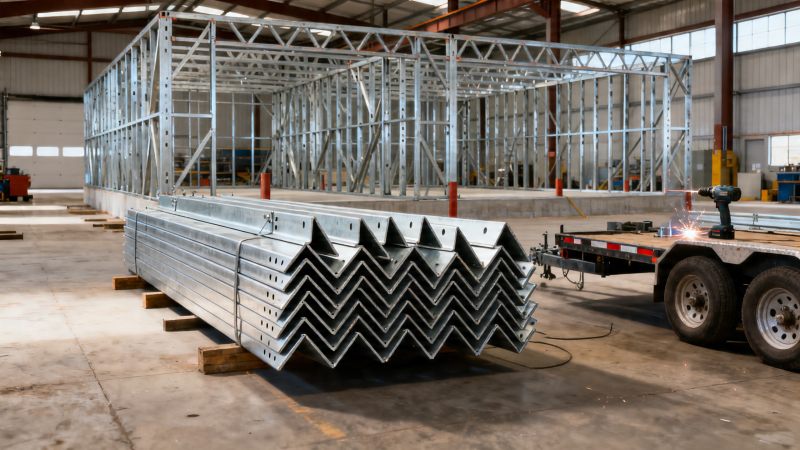
Buyers often ask whether angle iron for construction is enough, or whether a channel, I beam, or H beam would be safer. The answer depends on span, load direction, connection method, and service environment. Angle steel is highly useful for localized support and framing details, but it is not the automatic choice for every structural member. Correct section selection can reduce both underdesign risk and overspecification cost.
A common comparison is I beam vs H beam strength versus angle steel. In simple terms, I beams and H beams usually deliver stronger bending performance for primary load-bearing spans. Angle steel is more suitable when the member acts as a brace, edge stiffener, seat angle, frame component, or connection support. If a project confuses these roles, it may either waste steel tonnage or create serviceability issues such as deflection or connection distortion.
The following table helps technical evaluators and purchasing teams compare where each section type generally fits. This is especially useful during early-stage budget planning, when the design team is still comparing 3–5 structural options before final detailing.
The comparison shows why steel angle remains important. It fills the space between very light fabricated parts and large structural beams. For many construction buyers, the real question is not whether angle steel is stronger than a beam. It is whether the application truly needs beam-level performance. Correct matching can improve material efficiency across 5 practical metrics: weight, fabrication time, installation speed, connection simplicity, and procurement cost.
When angle iron for trailer use is the better option
In trailer structures, angle steel is commonly selected for perimeter frames, support brackets, flooring edges, side rail reinforcement, and light to medium load accessories. It performs well where the shape needs easy bolt-on or weld-on integration. However, the final decision still depends on axle load, vibration frequency, road conditions, and whether the member faces torsion, bending, or repeated impact stress.
For repeated transport loading, procurement should review at least 4 technical points: material grade, section thickness, weld access, and corrosion protection. A trailer built for farm, factory, or regional logistics use may not require the same section strategy as one designed for long-distance, high-cycle operation.
What should buyers check before selecting steel angle?
Procurement decisions in the steel industry are rarely based on price alone. Buyers need to confirm whether the selected steel angle matches design requirements, fabrication methods, delivery schedule, and compliance needs. For global sourcing, the practical goal is to balance 3 outcomes at the same time: structural suitability, supply reliability, and total landed cost.
For technical evaluators, section size and thickness are the first screen, but they are not the only ones. You should also review equal angle or unequal angle configuration, length tolerance, straightness, edge condition, hole processing requirements, and coating or surface treatment strategy. In many export projects, early confirmation of these details can prevent 1–2 rounds of drawing revision and shipment delay.
The table below summarizes a practical selection checklist for construction buyers, project engineers, and distributors comparing angle iron for construction across different project types.
A good supplier should support this evaluation process with clear production capability, specification matching, and inspection discipline. Hongteng Fengda focuses on structural steel manufacturing and export, covering angle steel, channels, beams, cold formed profiles, and customized components. For B2B buyers, this combination is valuable because a single supplier can coordinate multiple steel categories under one procurement plan.
A practical 5-point purchasing checklist
- Confirm the structural role first: brace, frame member, support, reinforcement, or connection element.
- Match standard and grade to project documents before quotation comparison.
- Define processing scope early, including hole positions, cut lengths, and welding preparation.
- Review corrosion environment and maintenance expectation for indoor, coastal, humid, or industrial exposure.
- Check supply schedule, batch consistency, and inspection records for projects delivered in multiple lots over 2–8 weeks.
Mid-project material coordination matters too
Many construction projects use angle steel together with roofing and enclosure materials. When planning full building packages, buyers may also need corrosion-resistant sheet solutions for roof and wall systems. In such cases, Color Coated Galvanized Roof Sheet PPGI can be inserted into procurement planning for residential, commercial, agricultural, and public building applications.
This product is available in PPGI and PPGL, with thickness from 0.2mm to 1.2mm, width from 600mm to 1250mm, and common lengths from 750mm to 1100mm. Wavy and trapezoidal profiles are widely used. For buyers comparing total building envelope cost, long service life above 25 years, corrosion resistance, and easy installation can support more efficient project coordination with structural members.
How to manage standards, quality control, and project risk
Quality issues in steel angle supply usually come from mismatch, not from the section shape itself. Common problems include incorrect leg dimensions, unsuitable grade substitution, inconsistent lengths, poor hole accuracy, and weak surface protection. For quality control personnel and safety managers, the solution is a disciplined review process from drawing confirmation to packing inspection, usually across 4 steps before shipment release.
International projects often refer to ASTM, EN, JIS, or GB frameworks. Even when the final product is not a highly complex custom assembly, document clarity matters. The buyer should specify required standard family, dimensional tolerance expectations, mill or inspection documentation, coating needs, and packaging method. This is especially important when shipment includes mixed items such as angle steel, channel steel, and beam sections in the same container plan.
A practical inspection routine can reduce downstream disputes. For example, pre-shipment verification may include 5 key checks: section size, thickness, length, visual surface condition, and quantity by bundle or piece. If there is processing work, add hole spacing and cut-angle confirmation. These checks are simple, but they can prevent installation delays that may cost more than the material itself.
Hongteng Fengda supports global projects with modern manufacturing facilities and strict quality control, which helps buyers looking for consistent output over repeat orders. This matters to distributors, EPC teams, and OEM customers who need stable product quality across North America, Europe, the Middle East, and Southeast Asia rather than one-off supply with uncertain repeatability.
Common mistakes buyers should avoid
- Using angle steel for a long-span primary beam role without checking bending and deflection demand.
- Comparing quotations without aligning standards, processing scope, or surface treatment requirements.
- Ignoring transport and packing details for long members, which can increase deformation risk during transit.
- Assuming all angle iron for construction has the same tolerance or steel grade across different mills and export sources.
FAQ for engineers, buyers, and project teams
How do I know whether steel angle is suitable for my project?
Start by identifying the member function. If it is a brace, support, edge frame, connection detail, or reinforcement part, steel angle is often suitable. If the member must carry major bending load over a longer span, compare it with channel, I beam, or H beam options. At minimum, review 3 items with your engineer: load type, span, and connection method.
What is the typical lead time for angle steel orders?
Lead time varies by size range, processing scope, and quantity. Standard sizes may move faster than custom drilled or cut-to-length orders. For export procurement, many buyers plan around 2–4 weeks for production preparation plus shipping time, while urgent replacement demand may require a different stock-based sourcing strategy.
What should trailer manufacturers focus on when buying angle iron for trailer production?
Focus on vibration resistance, weld accessibility, section thickness, and corrosion protection. Trailer applications can involve repeated load cycles, so the material should fit the duty level instead of only the initial build cost. Ask the supplier to confirm dimensional consistency if your production line uses repeat jigs or modular weld fixtures.
Can one supplier support multiple structural steel items in one project?
Yes, and that often improves procurement efficiency. When one manufacturer can provide angle steel, channel steel, steel beams, cold formed profiles, and customized structural components, buyers reduce coordination points, document mismatch risk, and shipment fragmentation. This is especially helpful in projects with 3 or more steel categories and phased delivery requirements.
Why work with a structural steel manufacturer that understands export projects?
For many B2B buyers, the issue is not finding any steel angle supplier. It is finding one that understands drawings, standards, packaging, inspection expectations, and delivery coordination across borders. A reliable export-oriented manufacturer helps reduce sourcing risk, particularly when the project involves standard sections plus customized components under one purchasing plan.
Hongteng Fengda manufactures and exports structural steel products from China for construction, industrial, and manufacturing projects worldwide. The company supplies angle steel, channel steel, steel beams, cold formed steel profiles, and OEM structural steel components. This allows buyers to discuss both standard specification orders and project-specific fabrication needs in one communication chain.
If you are comparing steel angle for construction, angle iron for trailer fabrication, or other section options for commercial and industrial projects, a focused technical discussion can save time before final purchase. You can consult on section selection, standard alignment, surface treatment, processing details, delivery schedule, sample availability, and quotation structure. That is often the fastest way to move from broad market research to an actionable sourcing plan within 3–7 working days.
Contact Hongteng Fengda if you need support with parameter confirmation, product selection, OEM customization, lead time planning, certification-related requirements, or multi-item structural steel sourcing. Clear drawings or specification lists will help the team provide a more accurate recommendation and quotation for your project.
Please give us a message


Please enter what you want to find