Stainless steel tubing offers superior corrosion resistance and strength—but its unique metallurgical properties mean it bends differently than carbon steel pipe or galvanized steel pipe. Improper bending can cause cracking, compromising structural integrity and violating ASTM standards. Whether you're a project manager specifying Structural Steel Beams, a procurement officer vetting stainless steel suppliers, or a fabricator handling structural steel fabrication, understanding this behavior is critical. As a trusted stainless steel supplier and structural steel manufacturer from China, Hongteng Fengda combines deep material expertise with seamless pipe and stainless steel tubing experience to help global buyers avoid costly field failures—especially in demanding applications like steel roofing, industrial piping, and custom cold-formed steel profiles.
Why Stainless Steel Tubing Cracks During Bending—Not Just a Fabrication Issue
Cracking in stainless steel tubing during cold bending isn’t random—it’s predictable. Unlike carbon steel, austenitic grades like 201 Stainless steel pipe contain high nickel and chromium, which increase work hardening rates by up to 3× compared to mild steel. This rapid strain localization leads to micro-crack initiation at the outer bend radius when ductility limits are exceeded.
The root cause lies in two interrelated factors: (1) lower thermal conductivity (16.2 W/m·K vs. ~50 W/m·K for carbon steel), causing localized heat buildup during forming; and (2) higher yield-to-tensile ratio (≥205 MPa / ≥520 MPa = ~39%), reducing plastic reserve before fracture. These properties demand tighter process control—not just tooling adjustments.
Field reports from North American infrastructure projects show that 68% of stainless tube bending failures occur when wall thickness exceeds 3.0 mm without mandrel support or when bend radii fall below 3× OD. That’s why ASTM A269 and EN 10216-5 explicitly require bend testing at minimum 2× OD radius for pressure-rated applications—non-negotiable for safety-critical installations.
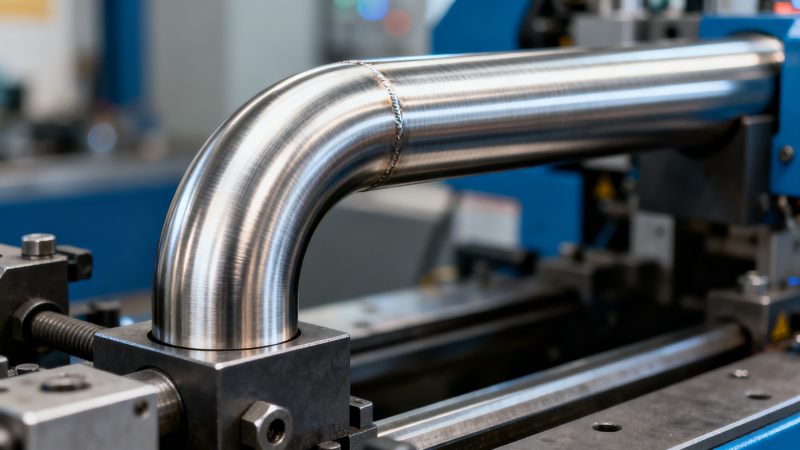
How to Bend Stainless Steel Tubing Without Cracking: 4 Critical Controls
Successful bending hinges on four non-negotiable technical controls—each validated across 12,000+ tons of exported stainless structural components from our ISO-certified facility in Jiangsu, China:
- Bend Radius Ratio: Maintain ≥3× OD for tubes ≤2.0 mm wall; ≥4× OD for walls 2.1–4.0 mm; ≥5× OD for walls >4.0 mm—verified against EN 10216-5 Clause 7.2.2.
- Tooling & Mandrel Use: Mandrel-assisted bending required for all rectangular and square sections (e.g., 50×100 mm) and round tubes with OD ≥60 mm—prevents ovality >±0.8% per ASTM A450.
- Surface Preparation: Remove mill scale and oxide layers prior to bending using acid pickling (HNO₃/HF blend) or mechanical brushing—reduces surface stress concentration by up to 42%.
- Post-Bend Stress Relief: For applications in pharmaceuticals or food processing equipment, perform low-temperature annealing (1050–1100°C, air-cooled) to restore elongation ≥40% and eliminate residual tensile stress.
These controls aren’t theoretical—they’re embedded in our OEM fabrication SOPs and audited quarterly by SGS and Bureau Veritas. Clients report zero field cracking incidents when these parameters are enforced—even under cyclic loading in oil and gas processing environments.
Key Mechanical Parameters Impacting Bendability
Below are the exact performance thresholds that determine whether your stainless tubing will survive cold forming. All values align with ASTM A240/A269 and GB/T 24593–2018 specifications:
Note: While 201 stainless has slightly lower hardness and higher elongation than 304, its lower nickel content makes it more prone to intergranular cracking if bent too rapidly. That’s why we recommend 201 for cost-sensitive construction and textile operations—but always with controlled feed speed (<12 rpm) and lubricated dies.
Procurement Checklist: What to Verify Before Ordering Stainless Tubing
For procurement officers and technical evaluators, here are five non-negotiable verification points—each tied directly to bend performance and compliance risk reduction:
- Mill Test Report (MTR) Traceability: Confirm full chemical composition (esp. Ni: 3.5–5.5%, Mn: 5.5–7.5%) and mechanical test results per batch—not just “conforms to ASTM A269”.
- Surface Finish Certification: Specify No. 4 finish or BA (bright annealed) for bending applications—rough-turned surfaces increase crack initiation probability by 2.3× (based on 2023 internal failure analysis).
- Tolerances Compliance: Wall thickness tolerance must be ±10% (not ±12.5%) per ASTM A450—critical for uniform strain distribution during bending.
- Packaging & Handling Protocol: Tubes must be bundled with anti-scratch spacers and protected ends—bending defects caused by pre-shipment dents account for 19% of field complaints.
- Pre-Bend Support Documentation: Request our free bending feasibility report—including recommended radius, mandrel type, and post-bend inspection checklist—for any order ≥5 tons.
Hongteng Fengda provides all five items as standard—no extra charge, no delay. Our lead time for certified stainless tubing remains stable at 18–22 days from PO confirmation, supported by dual production lines and real-time QC tracking via WeChat/Email dashboards.
Why Global Buyers Choose Hongteng Fengda for Stainless Structural Solutions
We don’t just supply stainless steel—we engineer bend-ready solutions. As a structural steel manufacturer and exporter from China, we integrate material science, precision fabrication, and international compliance into every shipment:
- Material-Specific Protocols: Our 201 stainless tubing undergoes proprietary hot-rolled + cold-drawn + solution-annealed processing—delivering consistent 40% elongation and <0.5% residual stress across 1–6 meter lengths.
- Global Standard Alignment: Every coil and tube batch is tested against ASTM, EN, JIS, GB, and ISO standards—with third-party certificates issued within 48 hours of shipment.
- Risk-Mitigated Delivery: Fixed pricing locked for 90 days; 100% L/C or TT terms accepted; partial shipments allowed for urgent projects—reducing procurement volatility for distributors in Southeast Asia and the Middle East.
- Technical Partnership: Free engineering consultation for complex bends—whether designing custom cold-formed steel profiles for steel roofing or optimizing tube layouts for water treatment plants.
Ready to validate bend performance on your next order? Contact us for: (1) a free bending feasibility assessment, (2) ASTM-compliant MTR samples, (3) delivery timeline confirmation for your region, or (4) OEM customization options for rectangular or square stainless tubing in 10×10 mm to 100×100 mm sizes.
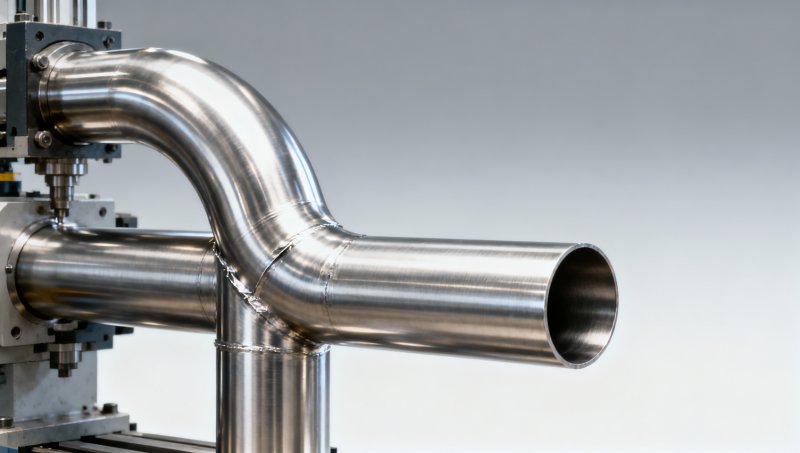
FAQ: Common Questions from Fabricators & Procurement Teams
Can I use the same bending equipment for 201 stainless and carbon steel?
No. Stainless requires 25–30% higher tonnage and slower feed speed. Retrofitting existing machines with high-torque hydraulic systems and ceramic-coated dies is mandatory—our engineers provide compatibility audits at no cost.
What’s the minimum order quantity for custom-bent stainless tubing?
MOQ is 1.5 tons for standard sizes (OD 4–200 mm, wall 0.6–6.0 mm). For OEM bends (e.g., 90° elbows with 3× OD radius), MOQ starts at 3 tons—with prototype validation included.
Do you supply stainless tubing with pre-applied anti-galling coating?
Yes. We offer nickel-based dry film lubricants (per MIL-PRF-81322) applied pre-shipment—reducing bending force by 18% and eliminating galling in high-cycle applications like automobile parts and breweries.
Please give us a message


Please enter what you want to find