Choosing the right stainless steel pipe specifications is critical to service life, safety, and total project cost. From material grade and wall thickness to pressure rating and corrosion resistance, every detail matters for engineers, buyers, and project managers. This guide explains how stainless steel pipe specifications influence long-term performance, while also helping you compare related options such as ss pipe for water supply and structural steel products for demanding applications.
Which Stainless Steel Pipe Specifications Have the Biggest Impact on Service Life?
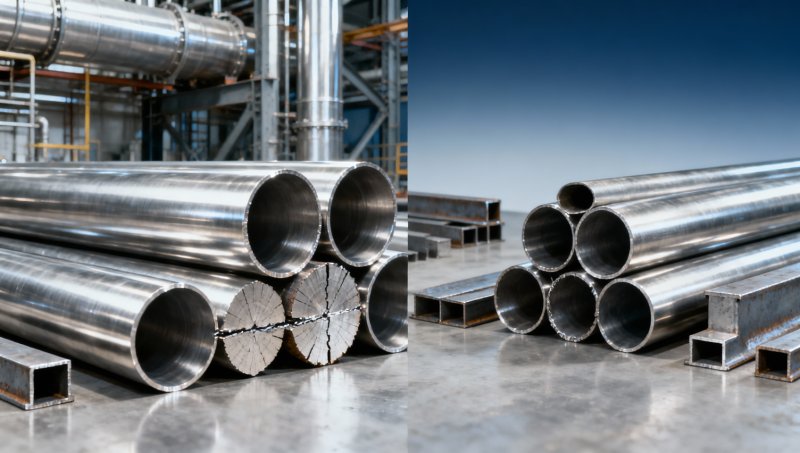
When buyers compare stainless steel pipe specifications, they often focus first on price, outer diameter, and grade. In practice, service life is shaped by a combination of 5 core factors: material grade, wall thickness, manufacturing method, surface condition, and operating environment. If one of these is mismatched, even a pipe that meets dimensional requirements may fail earlier than expected in water systems, structural frames, processing lines, or outdoor installations.
For technical evaluators and quality managers, the first question is not only “What size pipe do we need?” but also “What corrosion load, pressure load, and temperature range will it face over 3–10 years or longer?” A pipe used indoors for clean water transfer may tolerate a simpler specification than one exposed to chlorides, cyclic loading, or humid industrial air. Service life depends on suitability, not just nominal compliance.
For procurement teams and financial approvers, this matters because an under-specified pipe may look cost-effective at the quotation stage but create replacement, shutdown, or maintenance costs within 12–24 months. By contrast, a properly selected stainless steel pipe can reduce inspection frequency, extend replacement intervals, and improve total lifecycle value. This is especially important in global sourcing where consistency between batches affects project reliability.
In steel-related projects, stainless steel pipe specifications must also be reviewed in connection with adjoining structural steel members, support systems, welding procedures, and installation tolerances. A strong supply partner can help align these details early, which reduces rework during fabrication and site assembly.
The 5 specification areas that usually decide long-term performance
- Material grade: common options include 201, 304, 316, and other grades selected according to corrosion exposure, hygiene needs, and budget.
- Wall thickness and schedule: thinner walls reduce initial cost, but they lower corrosion allowance and mechanical margin.
- Welded or seamless construction: each has different implications for pressure, consistency, and fabrication requirements.
- Surface finish and passivation condition: rougher or contaminated surfaces can accelerate localized corrosion in some service conditions.
- Applicable standards and inspection scope: ASTM, EN, JIS, and GB alignment helps cross-border buyers compare quality requirements more clearly.
How Do Grade, Thickness, and Manufacturing Method Affect Stainless Steel Pipe Life?
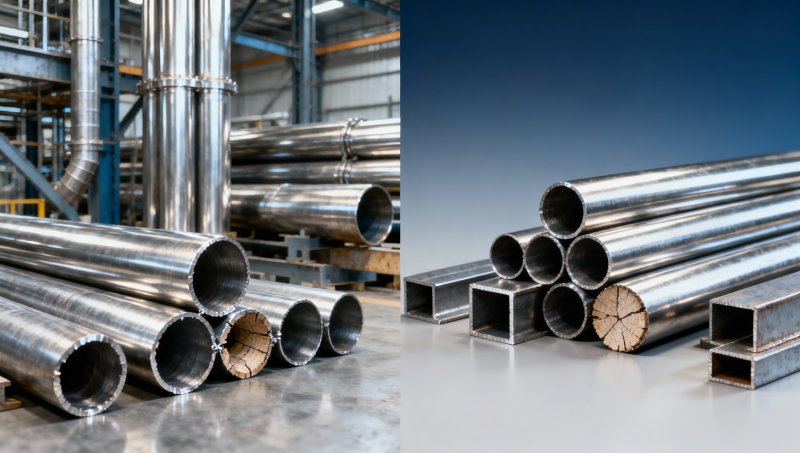
Material grade is one of the most visible stainless steel pipe specifications, but it should never be reviewed in isolation. For example, 201 stainless steel may be suitable in some decorative or lower-corrosion environments, while 304 is commonly chosen for broader industrial and water-contact applications, and 316 is often preferred where chloride resistance matters more. The wrong grade can shorten service life rapidly in coastal, chemical, or continuously wet conditions.
Wall thickness provides a practical corrosion and strength reserve. In many procurement reviews, the difference between a thinner and thicker pipe may seem minor on paper, but in real use it affects pressure tolerance, impact resistance, welding behavior, and long-term wear. For projects expected to run continuously over 8–24 hours per day, thickness selection should consider both mechanical demand and maintenance interval planning.
The manufacturing method also matters. Welded pipes are widely used and cost-efficient for many general purposes, especially when dimensional control and supply flexibility are important. Seamless pipes are often evaluated for higher pressure or more demanding process conditions. The correct choice depends on the service scenario, test requirements, and fabrication route rather than a simple “one is always better” assumption.
Surface treatment is another overlooked factor. A bright polished or properly finished surface is easier to inspect and may perform better in applications where contamination, moisture retention, or aesthetic durability are concerns. In contrast, poor post-processing, embedded iron contamination, or rough finishing may reduce corrosion performance even if the base material is acceptable.
The table below helps engineers, buyers, and project managers compare how key stainless steel pipe specifications influence service life in practical terms.
This comparison shows why price-only purchasing creates risk. A buyer may save on one specification line item yet increase maintenance labor, downtime exposure, and replacement frequency later. For B2B projects, it is usually more effective to review the full operating profile before freezing the pipe specification.
A practical note on related stainless steel bars and supporting components
Pipe systems are rarely isolated. They often connect to brackets, fabricated frames, equipment bases, and custom steel parts. In some projects, procurement teams also source stainless bar products for machining, reinforcement, or component fabrication. One example is 304 Stainless Square steel rod, which is offered with standard references such as ASTM, AISI, JIS, GB, DIN, and EN, and can be used across manufacturing, automotive, shipbuilding, decoration, and heavy equipment applications.
For teams comparing pipe and support material together, key mechanical references matter. The provided preprocessed data for this square bar range includes tensile strength of at least 520 MPa, yield strength of at least 275 MPa, elongation of about 55–60%, hardness up to 183HB or 100HRB, density around 7.8 g/cm³, and elastic modulus near 197 GPa. These figures are useful when evaluating stiffness, machinability, and forming behavior in adjacent fabricated parts.
Specification flexibility is also relevant. Available bar forms include round bar from 4 mm to 500 mm, hexagon bar from 18 mm to 57 mm, square bar from 18 mm to 47 mm, and flat steel from 2 mm to 150 mm thickness, with lengths in the 1–6 meter range and customization available. This helps project teams consolidate sourcing when both stainless steel pipe specifications and support-component dimensions must be coordinated within one procurement schedule.
Even when pipe remains the primary product, compatibility with neighboring steel items improves fabrication efficiency. That is one reason many global buyers prefer suppliers capable of both structural steel production and customized steel component support.
What Should Buyers Check Before Ordering Stainless Steel Pipe for Water Supply or Industrial Use?
Procurement errors usually happen when specifications are copied from an old project without checking medium type, installation method, local compliance rules, or fabrication details. For ss pipe for water supply, the buyer should verify not only size and grade but also cleanliness expectations, joining method, pressure class, inspection documents, and whether the water chemistry includes chloride or scaling risk. For industrial use, media temperature and cleaning chemicals can be just as important.
A practical pre-order review often includes 6 checkpoints: application medium, operating pressure, temperature range, installation environment, standard requirement, and document package. In many international projects, buyers also ask for mill test documentation, dimension tolerance confirmation, and packing requirements suitable for sea shipment over 2–6 weeks. These checks reduce disputes after arrival.
Project managers should also assess lead time reality. Standard stainless steel pipe specifications may ship faster than customized items, but schedule depends on grade, quantity, and inspection scope. Small trial orders, medium-volume replenishment, and large project lots can each follow different production sequencing. If the project has a shutdown window or milestone handover, that timeline should be confirmed before final purchase approval.
For distributors and resellers, consistency matters as much as the first batch price. Repeat orders must match previous dimensions, finish, and standard interpretation. A stable manufacturer with modern production facilities and quality control procedures can help reduce variation risk across multiple shipments.
A procurement checklist that supports faster technical and commercial approval
- Confirm the service environment: indoor dry use, humid outdoor use, water contact, chemical exposure, or marine-adjacent conditions.
- Define the specification set: outer diameter, thickness or schedule, length, end treatment, and welded or seamless requirement.
- Match standards and documents: ASTM, EN, JIS, or GB references, plus inspection reports needed for project filing.
- Review fabrication needs: cutting, bending, welding, polishing, passivation, and packaging for long-distance delivery.
- Check commercial terms: sample support, minimum order logic, delivery schedule, and quotation validity period.
The following table is useful for procurement teams balancing service life, budget, and compliance before they place an order.
This evaluation method helps both commercial and technical teams speak the same language. It turns pipe purchasing from a one-line quote comparison into a lifecycle decision tied to operating risk, installation efficiency, and budget control.
Which Standards, Inspections, and Application Scenarios Matter Most?
Standards are not paperwork only. They define how stainless steel pipe specifications are interpreted across dimensions, materials, tolerances, and test methods. Global buyers often compare ASTM, EN, JIS, and GB references because projects in North America, Europe, the Middle East, and Southeast Asia may require different documentation or acceptance language. A supplier able to work across these systems can simplify cross-border sourcing.
For quality control personnel, 3 areas usually deserve special attention: traceability, dimension verification, and surface inspection. Depending on the application, additional checks may include weld condition, straightness, end finish, and packing protection. For water supply or visible architectural use, surface quality can be as important as mechanical suitability. For industrial process lines, media compatibility and inspection records are often more critical.
Application scenario also changes the specification priority. A decorative outdoor handrail, a water transfer line, a food-related support frame, and a structural fabrication detail may all use stainless products, but they do not prioritize the same grade, finish, or thickness. In many mixed-material projects, stainless steel pipes work alongside carbon structural steel items such as angle steel, channels, steel beams, and cold formed profiles. Material coordination prevents mismatched durability across the system.
Hongteng Fengda supports this type of coordination through structural steel manufacturing and export experience, customized solutions, and quality control aligned with major international standards. For buyers managing project risk across multiple steel categories, that integration can reduce sourcing fragmentation, shorten communication cycles, and improve schedule predictability.
Typical scenarios and specification priorities
- Water supply systems: prioritize hygiene suitability, internal surface condition, pressure compatibility, and corrosion resistance.
- Outdoor decorative or architectural use: prioritize appearance retention, surface finish, weather exposure resistance, and fabrication consistency.
- Industrial lines and equipment supports: prioritize medium compatibility, wall thickness, welding quality, and inspection documentation.
- Integrated steel projects: coordinate stainless items with structural steel beams, channels, angles, and custom fabricated components to avoid assembly conflicts.
Common compliance and quality review points
A practical acceptance process often follows 4 steps: review order specification, verify documents, inspect dimensions and surface, then confirm packing and marking before shipment or site receipt. This sequence is especially useful for international buyers working with lead times of several weeks and multiple stakeholders, including engineers, procurement officers, finance teams, and installation contractors.
In projects with tight deadlines, early confirmation of standards can prevent last-minute substitution. It is more efficient to align technical data and certification expectations before production than to negotiate changes after fabrication has started.
FAQ: How Can You Avoid Common Selection Mistakes and Extend Pipe Service Life?
Many searches around stainless steel pipe specifications are really risk-control questions in disguise. Buyers want to avoid wrong grades, engineers want predictable performance, and project leaders want fewer delays. The answers below focus on practical decisions rather than theory alone.
How do I choose between lower-cost and higher-grade stainless steel pipe?
Start with the environment. If the pipe will be exposed to moisture, cleaning chemicals, chloride-containing water, or outdoor weather over long periods, a lower upfront price may not deliver the lowest lifecycle cost. Compare expected maintenance intervals, replacement difficulty, and shutdown impact over at least 1–3 budget cycles. If replacement is disruptive, a stronger corrosion margin is often worth the initial premium.
Is thicker pipe always better for longer service life?
Not always. Greater thickness improves mechanical reserve and corrosion allowance, but it also adds cost, weight, and in some cases fabrication complexity. The right approach is to match thickness to pressure, installation method, and expected wear. Over-specification can increase project cost without practical benefit, while under-specification reduces safety margin. A balanced review is better than a maximum-value assumption.
What are the most common mistakes in ss pipe for water supply procurement?
Three mistakes appear frequently: selecting grade by habit instead of water chemistry, ignoring surface and cleanliness requirements, and failing to confirm standards and documents before shipment. In addition, some buyers overlook end-use joining methods and installation environment. A pipe suitable for one building system may not be ideal for another if pressure, water quality, or maintenance conditions differ.
How long is the usual delivery cycle for steel and stainless products?
The answer depends on stock status, processing scope, quantity, and inspection requirements. Standard items can often move faster than customized components, while mixed orders involving structural steel, fabricated profiles, and stainless products may require coordinated production planning. For international projects, buyers should also account for packing preparation and sea freight time, which can extend the total schedule by 2–6 weeks depending on destination and shipment arrangement.
Why Work With a Structural Steel Manufacturer That Understands Pipe Selection, Customization, and Global Delivery?
For many projects, the challenge is not finding a single stainless steel pipe specification. The real challenge is coordinating the right material set across pipes, supports, structural members, and custom fabricated steel parts while meeting cost, quality, and schedule targets. That is where an experienced structural steel manufacturer and exporter adds value beyond basic product supply.
Hongteng Fengda provides structural steel products and customized solutions for global construction, industrial, and manufacturing projects. The company supplies angle steel, channel steel, steel beams, cold formed steel profiles, and custom structural steel components, with production and quality control aligned to commonly requested international standards such as ASTM, EN, JIS, and GB. This helps buyers reduce sourcing fragmentation and compare technical options more efficiently.
For procurement managers and project decision-makers, the benefit is practical: more consistent supply, clearer technical communication, and better coordination between standard products and OEM requirements. For distributors and contractors, dependable lead times and stable production capacity support planning across repeat orders, phased deliveries, and project milestones. For quality teams, standard-based manufacturing and inspection discipline improve confidence before shipment.
If you are evaluating stainless steel pipe specifications, related structural steel items, or custom steel components, you can request support on 6 key topics: parameter confirmation, grade and thickness selection, compliance and document requirements, delivery schedule planning, sample support, and quotation comparison. This makes consultation more efficient for both technical review and commercial approval.
What you can discuss before placing an order
- Whether your current stainless steel pipe specifications match the real operating environment and service-life target.
- How to coordinate stainless pipes with structural steel beams, channels, angles, or cold formed sections in one project package.
- Which standards, tolerances, and inspection documents are appropriate for your target market or end customer.
- Whether a customized fabrication or OEM route can reduce downstream processing time and project risk.
If your team needs a practical review rather than a generic catalog response, reach out with the application medium, size range, expected pressure or load condition, standard requirement, and target delivery window. That allows a faster discussion on suitable specifications, customization options, packing method, and commercial quotation.
Please give us a message


Please enter what you want to find