If you are comparing options for industrial tubing, understanding stainless pipe coil pressure ratings is essential before you buy or specify materials. Pressure limits affect safety, performance, and long-term reliability, especially in demanding environments. This guide explains the key factors in plain terms, helping researchers and project buyers evaluate specifications with more confidence and avoid costly sourcing mistakes.
What do stainless pipe coil pressure ratings really mean?
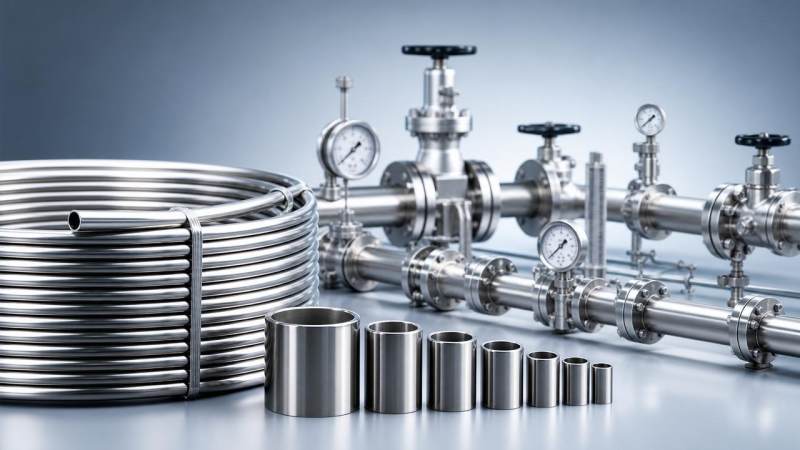
In simple terms, a pressure rating tells you how much internal pressure a stainless pipe coil can handle under defined conditions. It is not a random sales figure. It depends on material grade, wall thickness, outside diameter, temperature, manufacturing method, and the standard used for calculation.
For buyers in the steel industry, this matters because the same stainless pipe coil may perform very differently in a low-temperature water line and in a hot chemical transfer system. A coil that looks similar on paper can have a much lower safe working pressure if the wall is thinner or the operating temperature is higher.
Many sourcing mistakes begin when people compare only price, diameter, and grade name. Pressure capability is often treated as a secondary detail, but in actual use it is a first-level selection factor. If the rating is wrong, the result can be leakage, shorter service life, downtime, or expensive replacement.
- Maximum allowable working pressure is linked to code-based calculations, not visual appearance.
- Higher temperature usually reduces the allowable pressure of a stainless pipe coil.
- Weld quality, bend radius, and surface condition can also influence practical service performance.
Which factors change the pressure capacity of a stainless pipe coil?
When information researchers compare stainless pipe coil specifications, they should not rely on one dimension only. Pressure resistance is the result of several interacting variables. Understanding these variables makes supplier quotations easier to judge and helps reduce technical risk before ordering.
1. Material grade
Different stainless grades have different yield strength, corrosion resistance, and high-temperature behavior. In many industrial systems, 304 and 316/316L are common comparisons. If the medium is corrosive, pressure rating alone is not enough. Corrosion allowance and long-term wall loss must also be considered.
2. Wall thickness
This is one of the most direct factors. A thicker wall usually allows higher internal pressure, assuming the same material and outside diameter. Buyers should confirm actual thickness tolerance, because nominal thickness and delivered thickness may not be identical.
3. Outside diameter
With the same wall thickness and grade, a larger diameter typically reduces the allowable pressure. That is why a compact instrumentation coil may withstand much higher pressure than a larger process tubing coil built from the same alloy.
4. Operating temperature
As temperature rises, metal strength usually drops. This means the room-temperature pressure rating of a stainless pipe coil cannot be used blindly for hot service. Engineers often derate pressure values based on the applicable standard and the actual operating temperature range.
5. Manufacturing route and quality control
Seamless and welded products may be selected differently depending on service conditions, standards, and cost targets. In either case, dimensional accuracy, testing records, and traceability are important. Hongteng Fengda supports global buyers with stable production planning and strict quality control aligned with commonly used standards such as ASTM, EN, JIS, and GB.
The table below summarizes how the main variables influence stainless pipe coil pressure ratings during specification review.
The key takeaway is that pressure rating is not one isolated number. It is a system result. Smart sourcing means matching material, dimensions, and temperature to the real application rather than choosing the cheapest stainless pipe coil that appears close enough.
How should researchers compare stainless pipe coil options for different applications?
Application context changes everything. A stainless pipe coil used in food processing, hydraulic lines, heat exchangers, marine environments, or chemical dosing systems faces different combinations of pressure, corrosion, cleaning cycles, and installation constraints. That is why selection should begin with service conditions, not only catalog dimensions.
Common application-driven considerations
- Chemical service often needs stronger corrosion resistance and attention to pitting risk, especially if chlorides are present.
- Heat transfer systems may prioritize temperature stability, bendability, and long continuous lengths.
- Food and beverage systems usually require clean surfaces, suitable finishes, and standard-compliant material documentation.
- Marine or coastal projects must consider corrosion exposure, not only design pressure.
Researchers often ask whether related stainless flat products matter during a project review. In many cases they do. Supporting components such as brackets, covers, or fabricated assemblies may require matching corrosion performance. For example, projects involving chemical equipment or food lines may also evaluate 316L Stainless Steel Plate for welded structural or enclosure parts where low carbon content and corrosion resistance are important.
The comparison table below helps narrow down stainless pipe coil selection based on service environment rather than price alone.
This type of application-based review is useful for project teams that must justify material choices internally. It turns the stainless pipe coil discussion from a simple quote comparison into a risk-based procurement decision.
What standards, documents, and test details should you request?
Pressure rating claims are only meaningful when they are tied to recognized standards and verifiable documents. In cross-border sourcing, misunderstandings often happen because one supplier quotes based on one standard while the buyer expects another. This is especially common when projects reference ASTM, EN, JIS, or GB systems.
Essential documents to review
- Material test certificate showing grade, chemistry, and mechanical properties.
- Dimensional inspection report for OD, wall thickness, and length tolerance.
- Applicable manufacturing standard and, where relevant, testing method.
- Information on hydrostatic, eddy current, or other non-destructive testing if required by the project.
- Traceability details for heat number and production batch.
If a project also includes stainless fabricated parts, matching documentation across related products can save time during approval. For example, when buyers source tubing together with sheets or plates for welded assemblies, they often review certifications such as ISO, SGS, or BV if these are required in the supply chain. The same logic applies when checking mechanical data like tensile strength, yield strength, elongation, hardness, and density for associated materials.
Hongteng Fengda works with global construction, industrial, and manufacturing buyers that need consistent documentation, stable lead times, and customized support. This is valuable when a stainless pipe coil order is part of a larger steel procurement package involving structural sections, formed profiles, or OEM components.
How can buyers avoid common mistakes when specifying stainless pipe coil?
Most purchasing errors do not come from complex engineering equations. They come from incomplete input data. A buyer may ask for stainless pipe coil by grade and size, but omit the operating temperature, pressure peaks, corrosion conditions, or fitting method. That leaves too much room for assumption.
Frequent sourcing mistakes
- Using room-temperature pressure figures for elevated-temperature service.
- Comparing only nominal price without checking wall tolerance and standard.
- Ignoring corrosion effects that reduce effective wall thickness over time.
- Treating all stainless grades as interchangeable because they look similar.
- Failing to confirm whether the coil will be bent, flared, welded, or used with compression fittings.
A practical pre-order checklist
Before requesting a final quotation, prepare the following data. It shortens technical clarification time and reduces the chance of receiving unsuitable offers.
- Required outside diameter, wall thickness, and coil length.
- Normal operating pressure, surge pressure, and test pressure.
- Working temperature range, including short-term peaks.
- Media type, concentration, and cleaning chemicals if any.
- Applicable standards, certificate expectations, and destination market requirements.
For teams balancing budget and durability, this checklist is often more useful than chasing the lowest unit price. In steel procurement, a slightly higher upfront cost can reduce failure risk, maintenance disruption, and replacement expense over the life of the system.
FAQ: questions researchers often ask about stainless pipe coil pressure ratings
Is a higher pressure rating always the better choice?
Not necessarily. A higher-rated stainless pipe coil may have thicker walls, different forming behavior, higher material cost, or tighter installation limits. The better choice is the one that safely matches the actual service conditions with reasonable cost and compliance.
Can I compare pressure ratings across different standards directly?
Direct comparison can be misleading. Different standards may use different assumptions, tolerances, or temperature allowances. Always confirm the calculation basis and the referenced standard before deciding between suppliers.
Does 316L always mean better performance for a stainless pipe coil?
316L is often chosen for better corrosion resistance, especially in chloride-sensitive environments, but “better” depends on the medium, temperature, and budget. In some applications, another grade may be fully adequate. The right decision depends on total service conditions, not grade reputation alone.
What if my project includes tubing plus welded support parts?
Then it helps to align material strategy early. Some buyers combine stainless pipe coil with plate or profile materials for brackets, guards, or custom assemblies. In corrosion-sensitive projects, the second review may include surface finish and low-carbon stainless choices for fabrication consistency.
Why work with a supplier that understands the full steel procurement picture?
For researchers and project buyers, material selection rarely happens in isolation. A tubing requirement may be connected to structural supports, formed steel profiles, fabricated parts, or OEM assemblies. Working with a supplier that understands both specification detail and export execution can simplify procurement and reduce coordination risk.
Hongteng Fengda is a China-based structural steel manufacturer and exporter serving buyers across North America, Europe, the Middle East, and Southeast Asia. Our team supports projects that require stable production capacity, dependable lead times, and practical coordination across standard and customized steel products.
If you are reviewing stainless pipe coil options, we can help you confirm parameter ranges, compare material routes, align project standards, and discuss sourcing combinations that fit your construction, industrial, or manufacturing application. We can also support inquiry discussions related to dimensions, delivery schedules, OEM processing, documentation expectations, and linked products such as 316L Stainless Steel Plate where project assemblies require consistent stainless performance.
What you can consult us about
- Pressure-related specification review for stainless pipe coil inquiries.
- Material and dimension selection based on operating conditions.
- Lead time planning for standard and customized steel supply.
- Documentation, standard alignment, and certificate expectations.
- Sample support, quotation communication, and multi-item procurement coordination.
A clear inquiry with application details usually leads to faster evaluation and more accurate offers. If your team is still comparing options, sending the pressure range, temperature, medium, size, and destination standard is a practical first step.
Please give us a message


Please enter what you want to find