A stainless pipe coil may look strong and clean, yet hidden corrosion can start long before failure becomes obvious.
When early warning signs are missed, leaks, contamination, pressure loss, and shutdowns often follow.
In steel-related processing and fluid systems, timely inspection of a stainless pipe coil protects safety, product quality, and service life.
This guide explains how corrosion appears in different operating scenes, what each sign may mean, and what action should come next.
Why corrosion signs vary by stainless pipe coil service scene
Not every stainless pipe coil fails for the same reason.
Moisture, chlorides, heat, cleaning chemicals, and flow conditions change the damage pattern.
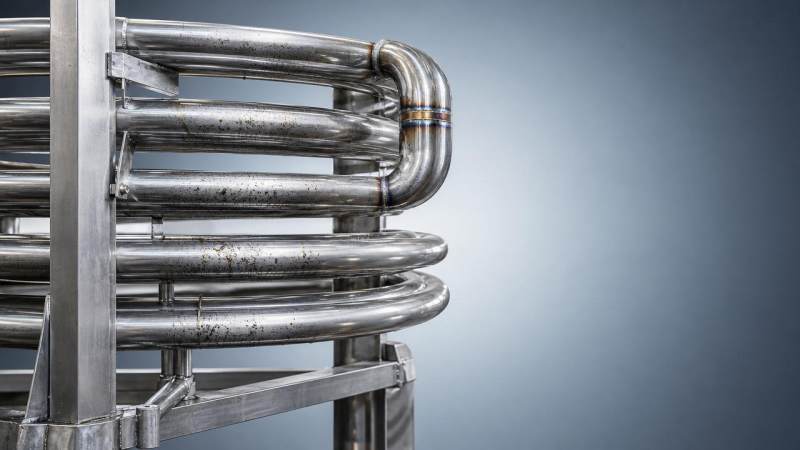
A coil used in cooling water may show pitting.
A coil used in hot process lines may show scaling, discoloration, or stress cracking around bends.
Understanding the service scene helps separate cosmetic staining from corrosion that threatens metal loss.
That is why inspection should always connect surface clues with environment, temperature, and operating history.
Scene 1: Cooling and water-transfer systems where pitting starts small
In water-handling systems, a stainless pipe coil often faces dissolved oxygen, chlorides, scale, and stagnant zones.
These conditions can trigger pitting corrosion that begins as tiny dark spots.
What to watch for
- Pinpoint holes or pepper-like marks
- Brown or orange rust staining around wet areas
- Deposits that trap moisture under the surface
- Localized roughness instead of uniform wear
Pitting is dangerous because the surface may still look mostly intact.
However, wall thickness can drop quickly at one point and lead to sudden perforation.
Scene 2: High-temperature process lines where discoloration becomes a warning
Heat exchangers, heating loops, and process transfer lines expose a stainless pipe coil to thermal cycling.
Blue, yellow, or rainbow discoloration may seem minor, but it can show overheating or damaged passive film.
Why color change matters
Heat tint reduces corrosion resistance if oxide layers are not properly removed after fabrication or repair.
In aggressive media, those tinted areas may become starting points for crevice attack or intergranular damage.
Pay close attention to welds, bends, and tight radii where stress and temperature often combine.
Scene 3: Food, chemical, or clean-service systems where contamination risk is higher
In cleaner service environments, even light corrosion on a stainless pipe coil can create major quality problems.
Small rust spots may release particles, support bacterial retention, or react with process fluids.
Key warning signals
- Tea staining near joints or external splash zones
- Fine cracks around clamps and supports
- Residue buildup that survives routine cleaning
- Surface scratches that hold chemicals or moisture
If the coil is cleaned with chloride-based products, corrosion may accelerate even when the base alloy is stainless.
Inspection records should therefore include chemical exposure, cleaning frequency, and rinse quality.
Scene 4: Outdoor or coastal installations where rust spots should never be ignored
Outdoor equipment often sees rain, salt spray, dust, and temperature swings.
A stainless pipe coil in coastal or polluted air can develop tea staining long before deep attack appears.
This staining is not always structural damage at first.
Still, it signals that the passive layer is under stress and maintenance intervals may be too long.
Drainage points, coil supports, and sheltered areas deserve extra checks because salts remain trapped there.
How to compare corrosion signs across different stainless pipe coil conditions
Practical inspection steps that improve stainless pipe coil service life
A reliable inspection routine should be simple, repeatable, and tied to operating risk.
- Check color, stains, and deposits under good lighting.
- Focus on welds, bends, supports, clamps, and low-flow sections.
- Record any pitting depth, spread, or repeated rust appearance.
- Measure wall thickness if localized attack is suspected.
- Review media composition, cleaning agents, and shutdown history.
Support structure also matters.
In many steel installations, surrounding members influence drainage, vibration, and maintenance access.
For example, properly selected framing products such as Metal C Beam can help create organized support layouts.
Galvanized, perforated C-shaped sections are widely used in purlins, wall beams, brackets, and light structural components.
With options in Q195, Q235, Q345, A36, SS400, and s235jr, they support durable steel system design.
Common misjudgments that allow stainless pipe coil corrosion to spread
Mistaking rust transfer for harmless dirt
Carbon steel contact can leave rust marks on a stainless pipe coil.
Even if the first stain is transferred contamination, it still deserves cleaning and reinspection.
Ignoring tiny pits because leak rate is still zero
Localized attack often progresses faster than expected.
A non-leaking coil today can fail suddenly under pressure tomorrow.
Assuming stainless means maintenance-free
Stainless steel resists corrosion, but resistance depends on grade, finish, fabrication quality, and service environment.
Poor cleaning or trapped chlorides can defeat that protection.
Overlooking nearby structural conditions
Bad support geometry can trap moisture or make inspection difficult.
This is why broader steel system planning should be reviewed alongside coil maintenance.
How to choose the next action after finding stainless pipe coil damage
- Clean and monitor if staining is light and no metal loss appears.
- Repassivate if heat tint or surface contamination is confirmed.
- Repair or replace sections if pitting depth threatens pressure integrity.
- Change cleaning chemistry if chlorides or residues are present.
- Improve support, drainage, and access for future inspections.
When replacement or expansion affects adjacent steel framing, matching support components to load and environment is important.
Sections produced to ASTM, EN, JIS, and GB-related requirements help maintain consistency across structural applications.
Take early corrosion signs seriously before failure becomes expensive
A stainless pipe coil rarely jumps from perfect condition to major failure without warnings.
Discoloration, pitting, rust spots, deposits, and cracks are all messages that conditions need attention.
The best results come from linking each sign to its service scene, then acting before leaks or contamination begin.
For steel systems that also require dependable structural support, working with an experienced Chinese structural steel manufacturer and exporter helps improve coordination, quality control, and long-term reliability.
Early inspection, accurate diagnosis, and suitable steel solutions are the most practical way to protect performance and reduce avoidable downtime.
Please give us a message


Please enter what you want to find