Choosing the right stainless metal plate finish can greatly affect daily cleaning efficiency, stain resistance, and long-term appearance. For operators and end users, understanding how different surface finishes respond to dirt, moisture, and frequent handling helps reduce maintenance time and improve hygiene. This guide explains the finish options that make a real difference in practical cleaning results.
Why finish selection is becoming a more practical issue
Across construction, food processing, public facilities, industrial workshops, and residential projects, users are paying closer attention to how a stainless metal plate behaves after installation, not just how it looks on the day of purchase. This is an important shift. In the past, many buying decisions were led mainly by price, thickness, or corrosion grade. Today, cleaning labor, hygiene expectations, visible fingerprints, water spotting, and long-term surface consistency are becoming stronger decision factors.
For operators, this change matters because finish directly affects daily work. A surface that traps grease, shows wipe marks, or scratches easily can increase cleaning frequency and create the impression of poor maintenance even when the material itself is durable. In sectors connected to steel use, this trend is pushing buyers to ask a more practical question: which stainless metal plate finish reduces effort while keeping a clean appearance under real conditions?
This growing focus also reflects wider market expectations. End users now want steel surfaces that combine durability with easier upkeep. As a structural steel manufacturer and exporter serving global projects, Hongteng Fengda has seen that buyers increasingly compare not only standards such as ASTM, EN, JIS, and GB, but also finish performance in handling, washing, and exposure environments.
Current signals showing how cleaning priorities are changing
Several market signals explain why finish choice is receiving more attention. First, labor costs and maintenance planning are under pressure, especially in facilities where stainless steel is cleaned many times per day. Second, hygiene control has become stricter in many user environments, from shared buildings to industrial processing zones. Third, visual standards have changed. A surface may still be structurally sound, but if it looks streaked, fingerprinted, or uneven, users often view it as lower quality.
These signals are changing how users evaluate a stainless metal plate. The discussion is moving from “Is it stainless?” to “How will it perform after six months of touching, splashing, wiping, and chemical cleaning?” That is a more useful standard for real-world operation.
Which stainless metal plate finishes are affecting cleaning results most
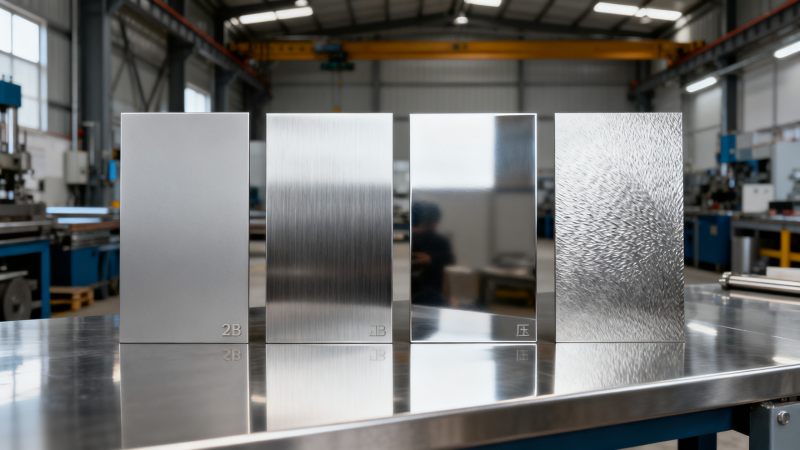
Not all finishes behave the same during daily cleaning. While exact names can vary by supplier and standard, operators usually encounter several common surface categories. Each one changes how dust, oil, moisture, and fingerprints appear and how easily they can be removed.
No. 2B: practical and widely used
A 2B finish is generally smooth, muted, and industrial in appearance. It is often chosen because it offers a good balance between cost and cleanability. For many work surfaces and enclosed equipment parts, 2B is easier to maintain than rougher finishes because it does not trap dirt as easily. However, it may still show smudges under strong lighting.
No. 4 brushed finish: popular but more directional in cleaning
Brushed stainless metal plate surfaces are common in decorative and semi-industrial environments. They can hide minor random marks better than mirror finishes, but they also have a grain direction. If operators wipe across the grain with dirty cloths or abrasive pads, residue can remain visible. This means cleaning method matters as much as the finish itself.
Mirror or highly polished finish: attractive but unforgiving
Highly reflective surfaces offer a premium look, yet they reveal fingerprints, water spots, and streaks quickly. In spaces with frequent hand contact, they often require more frequent wiping to maintain a clean appearance. Operators should view this finish as appearance-led rather than labor-saving.
Embossed or textured finish: useful in some applications
Textured finishes can reduce the visibility of fingerprints and minor scratches, but cleaning results depend on texture depth. If the surface pattern is too pronounced, dirt can collect in recesses. This makes textured options suitable only when appearance benefits outweigh the need for quick wipe-down performance.
The main drivers behind this shift in finish preference
The move toward easier-cleaning stainless metal plate options is not random. It is being driven by practical operating realities and by technical expectations in steel applications.
- More frequent touchpoints on doors, panels, elevator areas, machine covers, and exposed architectural components.
- Broader use of stainless surfaces in mixed environments where both function and appearance are important.
- Greater use of cleaning chemicals, which makes surface consistency and stain release more important.
- Stronger lifecycle thinking, where maintenance effort is treated as part of total ownership cost.
In other words, the preferred finish is no longer just a design decision. It is becoming an operating decision. That shift is especially relevant in steel-related industries where surfaces are exposed to dust, moisture, process residue, or repeated human contact.
How different users are being affected
The impact of finish selection varies by role. Procurement teams may focus on initial cost, but operators experience the daily consequences. Maintenance teams track labor time. Project managers deal with complaints if installed stainless metal plate surfaces look dirty too quickly. End users judge the environment by what they see.
A related signal: users are also favoring stainless products that clean consistently in specialized applications
This preference is not limited to flat sheet surfaces. In filtration, sieving, architectural detailing, and chemical or mining environments, buyers are also evaluating how stainless components resist rust, corrosion, chemical exposure, and buildup during maintenance. One example is 306 Stainless Steel Welded Mesh, which is offered in grades such as SS 201, 304, 304L, 316, 316L, and 430 for applications including filters, sieve systems, chemical industry, mine industry, architecture, and residences.
With stainless steel wire construction, diameter options from 0.0008″ to 0.12″, mesh ranges from 2 to 635 mesh, open area from 25 to 84.6, and roll dimensions up to 240″ in width and 2000′ in length, this kind of product reflects a broader trend in the steel market: users want stainless materials that deliver not only strength and durability, but also cleaner operation, corrosion resistance, and stable performance under demanding maintenance conditions.
What finish choices mean for real cleaning performance
When comparing a stainless metal plate, operators should avoid judging only by showroom appearance. Practical cleaning results depend on five factors working together: surface smoothness, grain direction, reflectivity, exposure type, and cleaning method. A finish that looks ideal in a catalog may perform poorly in a wet or high-touch setting.
For example, in dry industrial interiors with moderate contact, a 2B finish may provide efficient wipe-down cleaning and lower visual maintenance. In decorative public zones, a brushed finish may be acceptable if staff follow the grain during cleaning. In splash-prone areas, highly polished surfaces can become labor-intensive because every water mark remains visible. These differences are why finish choice should be linked to operating conditions rather than personal preference alone.
How to judge finish options more effectively before purchase
A better buying approach is to test a stainless metal plate using the same cloths, detergents, and handling conditions found in actual operation. This is more useful than relying on visual samples alone. Buyers and operators should also ask suppliers practical questions: Will the finish show fingerprints easily? Does the surface grain require directional cleaning? Is the finish intended for decorative use or for high-frequency maintenance environments?
For global steel sourcing, consistency between batches is another important signal. Even when the base grade meets standards, inconsistent finishing can create uneven appearance after installation. A reliable manufacturing partner with stable production, quality control, and export experience helps reduce that risk, especially for projects that require repeat orders or multiple installation phases.
Key signals to watch in the next stage
Looking ahead, several trends are likely to shape finish demand further. Users will continue to prefer surfaces that balance appearance and easy maintenance. Requests for anti-fingerprint treatments or low-visibility finish options may rise in commercial and public projects. More buyers will compare stainless metal plate choices by total cleaning effort, not just by material grade. At the same time, industrial users will keep favoring stainless solutions that combine corrosion resistance with stable wash-down performance.
Another likely direction is earlier involvement of maintenance teams in material selection. This can improve decision quality because the people who clean and inspect the surface every day understand which finishes create avoidable work and which ones support efficient upkeep.
Practical recommendations for operators and project decision-makers
- Match finish to contact level, moisture exposure, and lighting conditions.
- Do not assume a more decorative finish gives better cleaning results.
- Test samples with real cleaning methods before approving large orders.
- Compare lifecycle maintenance effort, not only purchase price.
- Work with steel suppliers that can maintain finish consistency and standard compliance.
Final judgment: the best finish is the one that performs cleanly in use
The most important industry change is clear: stainless surface decisions are becoming more use-oriented. For operators and end users, the right stainless metal plate is not simply the one with the best first impression, but the one that stays cleaner with less effort over time. As maintenance expectations rise across construction, industrial, and manufacturing environments, finish selection is becoming part of quality control, cost control, and user satisfaction.
If your team is evaluating stainless metal plate options for a new project or replacement plan, focus on a few practical questions: How often will the surface be touched? What kind of dirt or moisture will it face? Which cleaning method is actually used on site? How visible is the surface to end users? The answers to those questions will do more to improve cleaning results than choosing by appearance alone.
Please give us a message


Please enter what you want to find