Choosing between stainless coil pipe and tube can directly affect installation efficiency, pressure performance, and long-term maintenance in real projects. For project managers and engineering leaders, the right choice is not just about dimensions, but also bending needs, welding demands, compliance standards, and total procurement cost. This guide explains what matters in practical use so you can make more reliable sourcing and project decisions.
Why does the stainless coil pipe vs tube choice create problems on site?
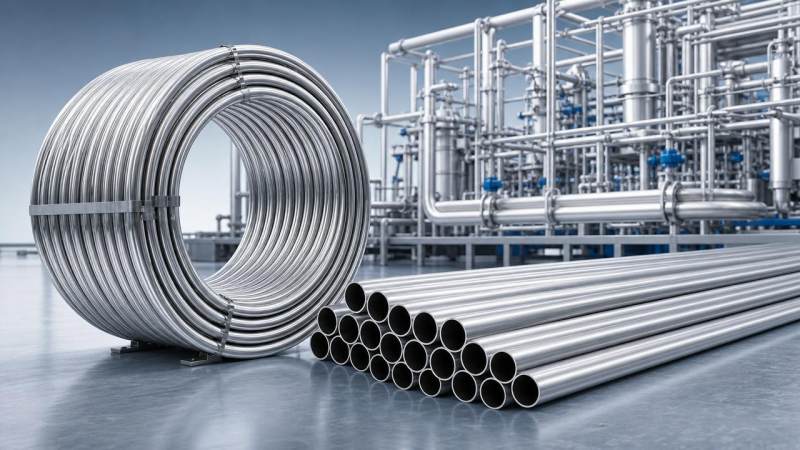
In procurement documents, pipe and tube are often treated as interchangeable terms. In actual steel projects, they are not. The difference affects how a line is fabricated, how many welds are needed, what tolerances are acceptable, and whether the material will fit the operating pressure and routing layout.
For project managers, the issue is practical rather than theoretical. A wrong specification can slow prefabrication, increase fittings consumption, extend inspection time, and create avoidable maintenance points. When teams compare stainless coil pipe with tube, they should focus on field performance, not only on catalog naming.
- Pipe is usually specified by nominal pipe size and schedule, making it common in fluid transport and pressure systems.
- Tube is usually defined by exact outside diameter and wall thickness, making it common where dimensional precision and cleaner fit-up matter.
- Coiled form changes the equation because long continuous lengths reduce joints, but they also demand proper handling, straightening, and bending control.
In stainless applications, especially process lines, instrumentation, compact routing, and corrosion-sensitive environments, stainless coil pipe may be selected to reduce site welding and speed up installation. Tube may be preferred when exact tolerances, neat appearance, or precision fittings are more important.
What is the real difference between stainless coil pipe and tube?
The following comparison helps clarify how stainless coil pipe and stainless tube differ in terms that matter to engineering teams, fabricators, and buyers working under delivery pressure and compliance requirements.
The key takeaway is simple: stainless coil pipe tends to support faster field routing with fewer joints, while tube tends to support tighter dimensional expectations and controlled assembly. The right choice depends on the project’s pressure class, installation method, bending radius, and inspection standard.
Which applications are better suited to stainless coil pipe?
Not every project benefits equally from coiled material. Stainless coil pipe is most useful when the route is long, the layout includes multiple bends, and the cost of welding, NDT, and shutdown risk is significant. In those cases, fewer connections can mean measurable savings in labor and future maintenance.
Typical use cases where coiled material adds value
- Instrumentation and impulse lines where long continuous runs reduce leak points and simplify routing around equipment frames.
- Process piping in corrosive or washdown environments where stainless material is chosen for durability and easier maintenance planning.
- Compact mechanical assemblies where pre-bent sections save space and reduce fitting congestion.
- Remote or elevated installation areas where each extra weld increases access cost and inspection complexity.
If the installation involves repeated spool fabrication, complex straightness control, or critical exact OD fitment with compression fittings, tube may still be the better answer. The decision should match the assembly method and not just the material family.
What should project managers compare before buying?
When evaluating stainless coil pipe for a project, purchasing teams should compare more than price per ton or price per meter. Total installed cost is driven by fabrication time, weld count, scrap risk, packaging method, transport efficiency, and conformance to project standards.
This selection table is useful when project managers need a practical decision framework for stainless coil pipe versus tube in procurement meetings.
For many industrial buyers, this comparison changes the result. A slightly higher material price can still be economical if coiled supply reduces welding, scaffold time, shutdown exposure, and installation delays.
How do pressure, bending, and welding affect real use?
In real projects, material form only works when it fits the operating conditions. Stainless coil pipe must be assessed against wall thickness, service pressure, minimum bend radius, temperature, media compatibility, and joining method. Procurement mistakes often happen when teams focus only on corrosion resistance and ignore fabrication limits.
Three technical checks that should not be skipped
- Confirm the design pressure and match it to the actual wall specification, not only to the outside diameter or trade name.
- Verify whether the required route can be bent without flattening, wrinkling, or exceeding the allowable bend radius.
- Review the joining plan. Fewer welds can be a major advantage of stainless coil pipe, but only if fittings, end preparation, and inspection methods are clearly defined.
This is also where experienced steel suppliers add value. A supplier that understands both manufacturing and field fabrication can help buyers avoid overspecification on one hand and underperformance on the other.
How can mixed-material projects improve sourcing efficiency?
Many construction and industrial packages do not rely on stainless products alone. They combine stainless lines, carbon steel transmission sections, structural members, supports, and customized fabricated components. In those mixed-material projects, supplier coordination becomes a major cost factor.
For example, some projects that compare stainless coil pipe for process routing may also need standard carbon steel lines for less corrosive services or structural support packages. In those cases, buyers often evaluate complementary options such as Carbon Steel Pipe Supplier solutions for construction, machinery, chemical engineering, municipal works, fluid pipe, boiler pipe, drill pipe, hydraulic pipe, gas pipe, oil pipe, chemical fertilizer pipe, and structure pipe.
Available grades such as Q345B, Q345e, and ASTM A106 Gr.B are commonly considered in broader steel procurement programs where welding, punching, cutting, bending, and decoiling support are required. Thickness ranges such as 2.0mm to 80mm, tolerance around ±1%, and certifications including ASTM, API, JIS, GS, and ISO9001 are practical checkpoints when standardizing purchases across several project sections.
This matters because project leaders rarely manage only one line item. Coordinating stainless coil pipe with structural steel, carbon steel pipe, and fabricated steel components can reduce communication gaps, simplify documentation review, and improve delivery planning across the full bill of materials.
What standards and compliance points should buyers verify?
For stainless coil pipe and tube, compliance is not just a paperwork issue. Standards influence dimensional acceptance, material traceability, pressure suitability, and inspection records. If the project serves international markets, the approval path often includes cross-checking purchaser requirements against ASTM, EN, JIS, or GB references.
Before issuing a purchase order, buyers should request clear confirmation of the following items.
- Material grade and applicable standard for the specific service environment.
- Wall thickness, outside diameter, coil length, and tolerance limits.
- Heat number traceability and inspection document availability.
- Surface condition, end finish, and packaging suitable for transport and installation.
- Compatibility with the specified joining method, whether orbital welding, manual welding, or mechanical fittings.
Hongteng Fengda supports global buyers with stable production capacity, strict quality control, and supply coordination across structural steel and related steel products. For projects involving multiple standards and export destinations, that coordination can reduce sourcing risk and prevent document mismatches late in the schedule.
What cost factors are often missed in stainless coil pipe evaluation?
The quoted material price is only one part of the decision. Project managers should compare the installed cost and the maintenance cost over time. Stainless coil pipe may appear more expensive than a basic alternative, but the difference can narrow quickly when labor and leakage risk are included.
The table below highlights common cost drivers that affect stainless coil pipe selection in practical procurement reviews.
This wider view helps prevent a common procurement error: selecting the lowest purchase price while creating a more expensive installation package. In real use, total project value matters more than initial material cost alone.
Common mistakes and FAQ for stainless coil pipe selection
Is stainless coil pipe always better because it has fewer joints?
Not always. Fewer joints are beneficial, but the material must still meet pressure, bend radius, support spacing, and installation method requirements. If the project needs very tight dimensional control or specific fitting compatibility, tube may be the better option.
Can I replace tube with stainless coil pipe in any instrumentation system?
Only after checking the exact OD tolerance, wall thickness, pressure rating, and fitting type. Instrumentation systems can be sensitive to dimensional variation, so substitution should be reviewed by engineering, not decided only by purchasing.
What should be confirmed before placing an order?
Confirm grade, dimensions, coil length, surface finish, standard, inspection documents, packaging, and end-use environment. Also confirm whether the supplier can support coordinated delivery with structural steel items if your project requires mixed steel sourcing.
How do lead time and export experience affect the decision?
They matter when your project runs on fixed installation windows. Export experience helps with documentation, packaging, and standard matching. Stable production capacity helps avoid partial shipments that disrupt site planning and contractor sequencing.
Why choose us for steel sourcing and project support?
For project managers handling global construction, industrial, and manufacturing packages, supplier reliability is as important as product specification. Hongteng Fengda is a professional structural steel manufacturer and exporter from China, supplying angle steel, channel steel, steel beams, cold formed steel profiles, and customized structural steel components with support for standard and OEM requirements.
Our strength is not limited to manufacturing. We help buyers align product selection, quality documentation, compliance expectations, and delivery planning across different steel categories. That is especially useful when a project includes stainless coil pipe decisions alongside structural steel or conventional pipe procurement.
You can contact us for practical support on
- Parameter confirmation, including dimensions, thickness range, tolerance, and applicable standards.
- Product selection advice for stainless coil pipe, structural steel, and related steel components in one project package.
- Delivery schedule review, export packaging discussion, and coordinated shipment planning.
- Customized solutions for OEM fabrication, special project layouts, and mixed-material procurement.
- Certification and documentation checks based on ASTM, EN, JIS, GB, or buyer-specific requirements.
- Sample support and quotation communication for current tenders or future supply planning.
If you are comparing stainless coil pipe with tube for an upcoming project, share your service conditions, target standards, routing constraints, and delivery timeline. We can help you review the specification, reduce sourcing risk, and build a more practical steel procurement plan.
Please give us a message


Please enter what you want to find