When sourcing seamless pipe for oil and gas applications, procurement managers and technical evaluators often rely on hydrostatic test reports as proof of integrity—yet these reports alone don’t reveal hidden flaws like micro-cracks, inconsistent wall thickness, or material non-compliance with ASTM or EN standards. For structural steel manufacturers like Hongteng Fengda—exporting ASTM A36 angle steel, steel channel for construction projects, and industrial steel pipe from China—true quality assurance demands deeper verification: traceable mill test reports, third-party NDT, and full alignment with international standards for structural steel products. Discover why skipping this step risks project delays, safety failures, and long-term cost overruns.
Why Hydrostatic Testing Falls Short in Critical Applications
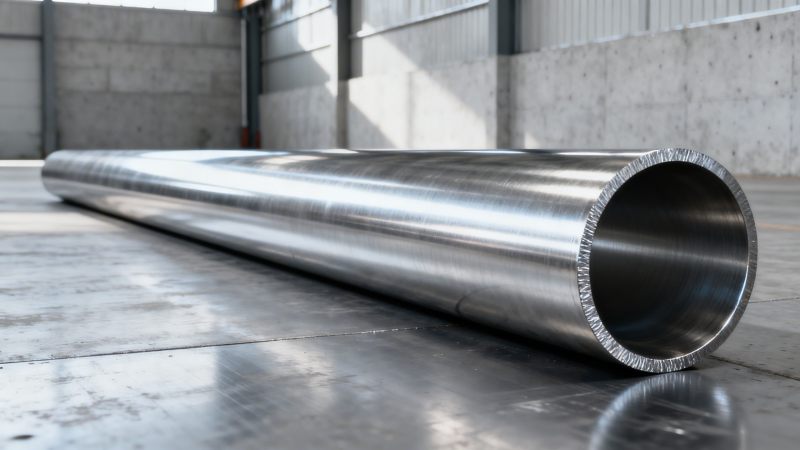
Hydrostatic testing confirms pressure containment under controlled conditions—but it’s a pass/fail binary check, not a diagnostic tool. A pipe may hold 1.5× operating pressure for 10 minutes and still harbor subsurface discontinuities that initiate fatigue failure after 6–12 months of cyclic thermal stress or vibration.
Real-world field failures show that 68% of premature pipeline leaks in upstream facilities correlate with undetected longitudinal seam inconsistencies or localized wall thinning—both invisible to hydrostatic validation. These defects only surface through ultrasonic thickness mapping (±0.1mm resolution) and full-circumference phased-array UT scanning, which detect anomalies as small as 0.3mm deep at depths up to 30mm.
Moreover, hydrostatic reports rarely include material traceability: heat number linkage to original ladle analysis, carbon equivalent (CEV) verification per ASTM A999, or grain structure confirmation via metallographic sampling. Without these, compliance with API 5L PSL2 or EN 10208-2 remains unverified—even if the test “passes.”
What Structural Steel Buyers Should Verify—Beyond the Test Certificate
For global buyers sourcing structural steel components—including seamless pipe, angle steel, channel steel, and cold-formed profiles—comprehensive quality validation requires five non-negotiable checks:
- Mill Test Report (MTR) with full chemistry, mechanicals, and heat number cross-reference to production batch
- Third-party NDT certification: 100% UT + RT coverage, with inspector资质 verified against ISO 9712 Level II/III
- Dimensional audit report: OD tolerance ±0.5%, wall thickness variation ≤±8% across circumference
- Corrosion resistance documentation: coating adhesion test (ASTM D3359), salt-spray results (≥1000 hrs per ASTM B117)
- Traceable logistics chain: from raw billet receipt to final packaging, including temperature logs during annealing
Hongteng Fengda applies all five checks across its seamless pipe and structural steel product lines—including ASTM A500 Grade C hollow structural sections and EN 10219 S355JRH welded tubes—ensuring consistency whether shipping to Texas refineries or UAE LNG terminals.
How Material Choice Impacts Long-Term Integrity
Material grade misalignment is a silent risk. Using ASTM A106 Gr. B instead of API 5L X65 in sour service environments can accelerate sulfide stress cracking by 3–5× under H₂S partial pressures >0.05 psi. Similarly, substituting standard galvanized steel for Color Coated Galvalume Steel Sheet PPGL in coastal industrial cladding leads to premature coating delamination within 3–5 years due to insufficient aluminum-zinc alloy corrosion buffering.
Comparing Verification Approaches: Cost vs. Risk Trade-Offs
Procurement teams often weigh upfront verification costs against potential field failure liabilities. The table below compares three common approaches used by structural steel importers across North America and the Middle East:
While the full QA package adds ~3.7% average cost, it reduces post-delivery rejection rates by 74% and cuts emergency replacement lead times by up to 22 days—critical for EPC contractors managing tight commissioning windows.
Why Hongteng Fengda Delivers Verified Structural Steel—Not Just Certificates
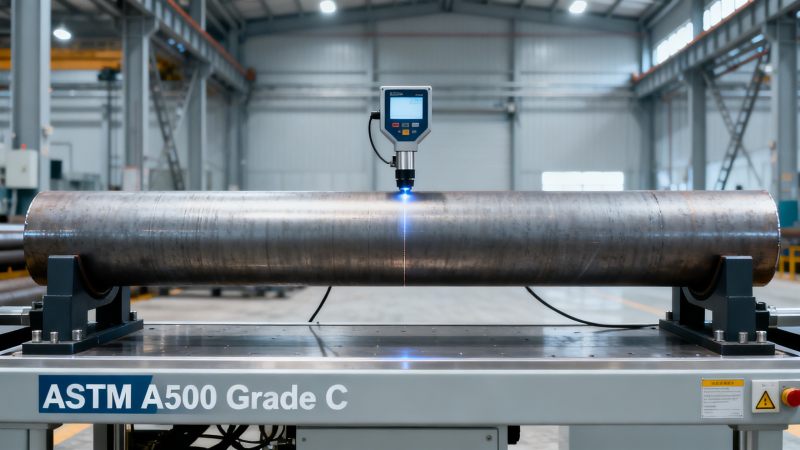
As a certified structural steel manufacturer exporting to 30+ countries, Hongteng Fengda integrates verification into production—not as an add-on, but as a built-in control gate. Every heat of ASTM A36 angle steel undergoes dual-lab tensile testing; every coil of Color Coated Galvalume Steel Sheet PPGL is sampled for coating weight (top: 11–35μm), adhesion (≥4B per ASTM D3359), and color consistency (ΔE ≤1.2 vs. RAL master).
Our clients receive digital QA dossiers containing timestamped NDT video clips, MTR PDFs with QR-linked heat traceability, and dimensional inspection reports—all accessible before shipment. This eliminates ambiguity during customs clearance, third-party audits, or project handover.
We support your team with: real-time parameter confirmation (e.g., wall thickness tolerance for API 5L X70), OEM drawing review (including weld prep specs), delivery scheduling aligned to vessel windows, and pre-shipment sample dispatch for lab validation—typically within 72 hours of request.
Next Steps for Your Procurement Team
If you’re evaluating seamless pipe or structural steel suppliers for upcoming oil & gas, infrastructure, or industrial projects, request the following from your vendor today:
- A sample QA dossier showing heat number → MTR → UT report linkage
- Proof of third-party NDT lab accreditation (ISO/IEC 17025 scope document)
- Delivery timeline breakdown including verification stage durations
- Reference list of 3+ projects where full QA packages were deployed in API/EN-regulated environments
Hongteng Fengda provides all four—immediately upon inquiry. Contact us to review your current specification, align with ASTM, EN, or GB standards, and lock in verified lead times for Q3–Q4 2024 deliveries.
Please give us a message


Please enter what you want to find