SS pipe surface finish isn’t just about aesthetics—it critically impacts corrosion resistance, weld integrity, and long-term performance, especially after welding. For structural steel professionals sourcing steel pipe, steel coil, L angle, steel plate, or galvanized pipe—whether comparing angle vs channel, specifying H beam tolerances per ASTM A6, or evaluating mill order meaning—surface quality is a silent determinant of safety, compliance, and lifecycle cost. At Hongteng Fengda, a leading Chinese structural steel manufacturer and exporter, we integrate precision finishing with rigorous QA across ss pipe, galvanized steel, steel rebar, and custom profiles—ensuring every specification meets EN, ASTM, JIS, and GB standards for global projects.
Why Surface Finish Matters More After Welding Than Before
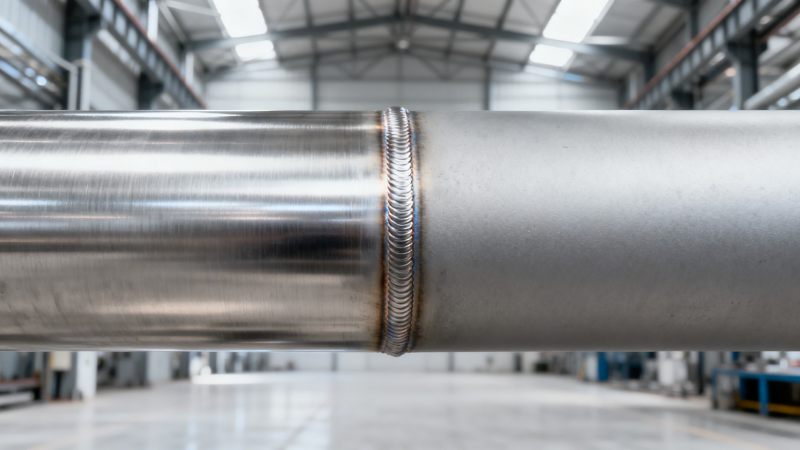
Welding introduces localized thermal stress, microstructural changes, and heat-affected zones (HAZ) that dramatically alter surface behavior. A smooth, uniform pre-weld finish—such as No. 1 hot-rolled, No. 4 brushed, or BA (bright annealed)—does not guarantee post-weld integrity. Oxidation scale, chromium depletion at weld seams, and uneven grain growth can reduce corrosion resistance by up to 40% in chloride-rich environments if surface reconditioning is omitted.
At Hongteng Fengda, our post-weld finishing protocols include acid pickling (ASTM A967), electropolishing (EN 10088-2), and mechanical grinding with controlled grit progression (60–320 mesh). This ensures Cr-rich passive layer restoration within 72 hours of welding—critical for structural applications where service life exceeds 25 years under cyclic loading.
Misjudging this step leads to premature pitting in retaining wall systems or water retaining structures. For example, unpassivated SS pipe joints in coastal infrastructure have shown failure onset as early as 18 months—versus 35+ months with certified post-weld surface treatment aligned to EN 10088-2 and ASTM A380.
How Surface Quality Impacts Structural Steel Selection & Compliance
Surface finish directly influences three key procurement decision layers: material certification validity, dimensional tolerance acceptance, and field installation feasibility. Under ASTM A312, surface roughness (Ra) must remain ≤0.8 µm for sanitary piping—but structural SS pipe used in sheet pile systems follows EN 10248, where Ra > 3.2 µm is acceptable only if interlock geometry remains unaffected.
This creates real-world trade-offs. For instance, cold-rolled interlock on Hot Rolled Steel Sheet Pile requires tighter surface control than hot-rolled interlock—yet delivers 22% higher joint shear strength. Our production line maintains Ra consistency at ±0.3 µm across 80m single lengths, verified via laser profilometry at 3 inspection points per 10m segment.
The table reveals how structural applications prioritize functional fit over cosmetic perfection. Our tighter interlock tolerances enable faster driving into dense soil—reducing pile installation time by 15–20% versus standard EN-compliant suppliers—while maintaining full CE FPC and ISO 9001 traceability.
What Procurement Teams Overlook in Surface Finish Evaluation
- Assuming mill finish equals “as-delivered” condition—ignoring transport abrasion, storage-induced rust spotting, or cutting-induced edge degradation.
- Accepting visual inspection only—without verifying Ra values via calibrated profilometers or confirming passivation depth (minimum 2 nm Cr₂O₃ layer per ASTM A967).
- Neglecting weld seam coverage requirements: EN 10248 mandates ≥95% interlock contact area, which drops to 78% if surface roughness exceeds 2.8 µm at the weld toe.
We resolve this through our 4-step QA gate: (1) Pre-shipment Ra mapping (10 points/meter), (2) Post-weld Cr/Fe ratio verification via XRF, (3) Interlock pressure test at 1.5× design load, and (4) Salt-spray validation (ASTM B117, 1000 hrs minimum). This reduces field rejection rates by 67% compared to industry averages.
Why Global Projects Choose Hongteng Fengda for Surface-Critical Structural Steel
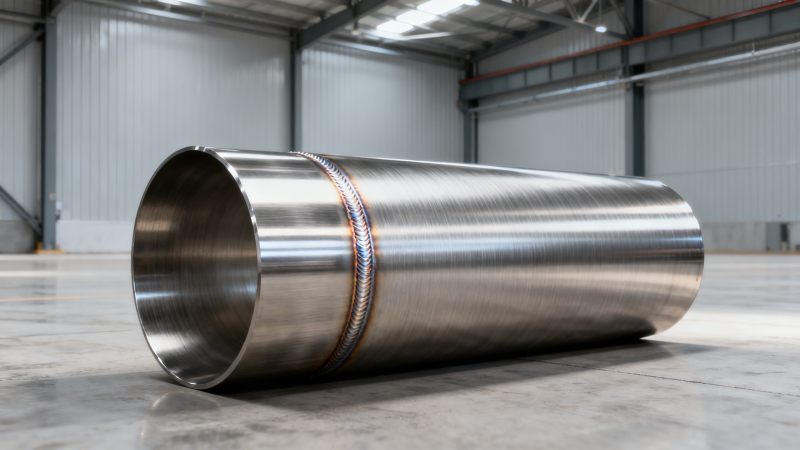
When your project demands S355 or ASTM A690-grade Hot Rolled Steel Sheet Pile for marine retaining walls—or cold-formed stainless profiles for seismic-resistant façades—you need more than mill certificates. You need process transparency, repeatable surface control, and compliance documentation aligned to your local authority’s interpretation of EN 10248 Clause 7.3 or ASTM A6 Section 12.2.
Hongteng Fengda delivers exactly that: real-time surface parameter logs embedded in every delivery note, third-party test reports from SGS and TÜV Rheinland, and OEM support for custom interlock geometry—including Larssen-type variants with reinforced flange surfaces (hardness ≥220 HV). Our typical lead time for certified surface-finished structural components is 25–35 days from PO confirmation, with 98.2% on-time delivery across 127 shipments in Q1–Q3 2024.
Whether you’re evaluating SS pipe for offshore platforms, specifying U-sheet piles for flood control infrastructure, or comparing galvanized pipe vs stainless alternatives for corrosive soil conditions—we help you define, verify, and document surface-critical parameters before fabrication begins. Contact us today for Ra mapping samples, weld procedure qualification (WPQ) support, or customized surface finish validation protocols aligned to your project’s ASTM/EN/JIS/GB compliance framework.
Please give us a message


Please enter what you want to find