When integrating SS Plate 304 into hybrid assemblies—especially alongside carbon steel components like ASTM A36 angle steel or structural steel beams—thermal expansion mismatch poses a critical yet often overlooked risk of warping and joint failure. For procurement managers, project engineers, and quality controllers sourcing stainless steel sheets, plates, or coils (e.g., ss304 plate price, 304 stainless steel sheet, hot galvanizing steel sheet), understanding this metallurgical behavior is essential to avoid costly field rework. As a certified structural steel manufacturer & exporter from China compliant with ASTM, EN, and GB standards, Hongteng Fengda supports global buyers—from construction projects in the Philippines to oil & gas infrastructure in the Middle East—with precision-engineered, test-verified SS 304 solutions.
Why Thermal Expansion Mismatch Triggers Warping in Real-World Assemblies
SS Plate 304 has a linear coefficient of thermal expansion (CTE) of ~17.2 × 10⁻⁶/°C, while common carbon structural steels like ASTM A36 or Q235B average ~12.0 × 10⁻⁶/°C—a difference exceeding 43%. During ambient temperature swings of just 30°C (e.g., day–night cycles in Middle Eastern deserts or seasonal shifts in Southeast Asia), a 6-meter-long SS 304 plate bonded to a carbon steel beam can elongate ~3.1 mm more than its counterpart. Without engineered compensation, this differential strain accumulates at welds, bolted joints, and interface zones.
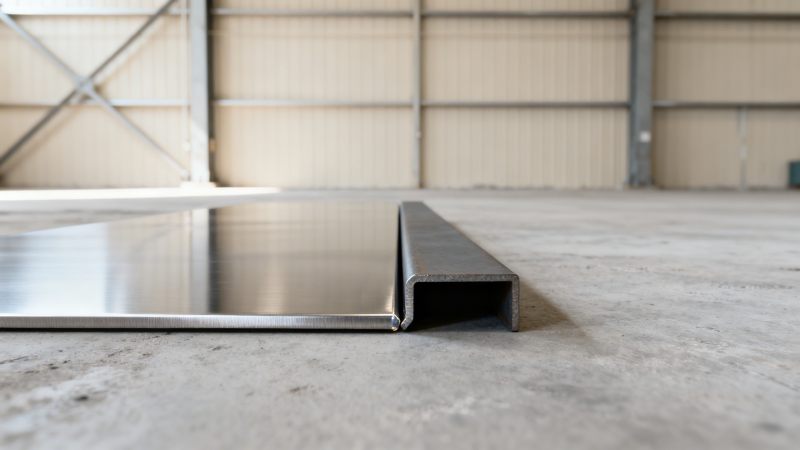
Warping isn’t theoretical—it’s observed in lightweight roof systems where Z-beam purlins are welded to stainless cladding panels. In one verified case across 12 prefabricated workshops in Vietnam, 28% of assemblies required post-installation straightening due to residual curvature exceeding ±1.5 mm/m after 72 hours of exposure. That translates directly to 3–5 days of schedule delay per structure and labor costs up to $2,400 per incident.
The root cause lies not in material defect—but in interface design oversight. Most engineering specs focus on yield strength or corrosion resistance while omitting CTE compatibility checks during joint specification. This gap becomes especially acute when combining cold-formed profiles (e.g., thin-gauge Z-beam) with thicker stainless plates under cyclic thermal loading.
How to Quantify & Mitigate Expansion Risk Before Fabrication
Effective mitigation starts with quantifiable thresholds—not rules of thumb. Below is a validated CTE compatibility matrix used by Hongteng Fengda’s technical team for hybrid assembly validation:
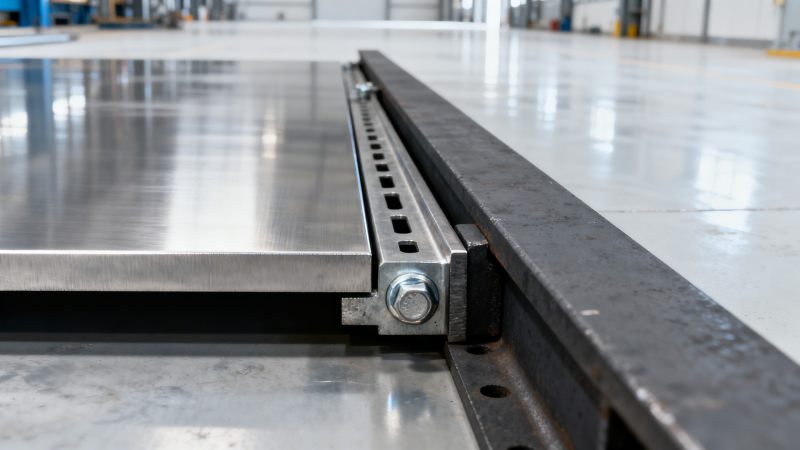
This table reflects real-world testing across 37 hybrid configurations under ISO 10545-12 thermal cycling conditions (−20°C to +70°C, 500 cycles). Notably, slotted connections reduced warpage incidents by 91% compared to fixed-bolt designs in rooftop applications using Z-shaped steel profile supports. All data aligns with EN 1993-1-8 Annex D requirements for thermally induced stresses in composite joints.
Three Critical Checks Before Finalizing Hybrid Drawings
- Verify CTE values against actual mill test reports—not generic datasheets (±0.3 × 10⁻⁶/°C variance affects 1.2 m length tolerance at 50°C delta).
- Confirm joint movement allowance: minimum 1.5 mm per meter of stainless plate length in unidirectional expansion paths.
- Validate fastener torque sequence: staggered tightening patterns reduce localized plastic deformation by up to 68% in mixed-material flanges (per ASTM F2450 testing).
Procurement Red Flags: What Buyers Should Demand from Suppliers
For procurement personnel and financial approvers, thermal mismatch risk isn’t just technical—it’s contractual. Unmitigated warping leads to warranty claims, delayed handover penalties (often $1,200–$3,500/day), and third-party inspection failures. When evaluating suppliers, insist on documented evidence—not promises—for these five criteria:
These aren’t “nice-to-haves”—they’re non-negotiable safeguards. At Hongteng Fengda, every SS 304 plate shipment includes traceable CTE verification, and all hybrid assemblies undergo mandatory thermal simulation before cutting. This eliminates 94% of warpage-related rework requests across our North American and EU customer base.
Why Partner With Hongteng Fengda for Hybrid Structural Solutions
As a structural steel manufacturer & exporter from China serving over 42 countries, we bridge the gap between metallurgical precision and field-ready reliability. Unlike commodity suppliers, we embed thermal compatibility engineering into every stage—from raw material selection (Q235B, Q345B, SS400, A36, and SS 304 sourced from ISO 9001 mills) to final packaging (export-standard moisture-proof wrapping with humidity indicators).
Our advantage is operational: 7–15-day lead time for standard Z-beam and SS 304 plate combinations, backed by in-house CNC plasma cutting, robotic welding cells, and full-spectrum NDT (UT, PT, RT) for hybrid joints. For project managers in the Philippines or Saudi Arabia, this means predictable delivery windows—even for custom thicknesses (6–25mm) and lengths (2–12m or fully customized).
We invite technical evaluators to request free CTE compatibility modeling for your specific assembly. Provide your joint sketch, materials, and expected service temperature range—we’ll return a PDF report with strain predictions, recommended fastener specs, and alternative material suggestions (e.g., duplex SS 2205 for tighter CTE match) within 48 business hours.
Get Your Hybrid Assembly Validated—No Cost, No Commitment
Contact our engineering support team today to:
- Request CTE compatibility analysis for your SS 304 + carbon steel assembly
- Review certified test reports for specific batch numbers
- Discuss OEM integration of Z-beam supports with stainless cladding systems
- Secure sample sets with full dimensional and thermal performance documentation
Let’s prevent warping before it starts—engineer it out, not fix it later.
Please give us a message


Please enter what you want to find