When comparing SPCC steel vs SECC, the real difference lies in coating, corrosion resistance, formability, and end-use performance. For buyers evaluating steel sheet supplier options, can making machine applications, or corrosion-resistant pipe and Steel Coil Supplier requirements, understanding what changes between these two materials helps reduce sourcing risks, control costs, and select the right steel for manufacturing and project demands.
In practical sourcing, the choice between SPCC and SECC is not only about surface appearance. It affects stamping results, storage life, coating compatibility, downstream welding, and total lifecycle cost. For procurement teams, quality inspectors, project managers, and technical evaluators, a wrong material choice can lead to rust complaints, paint adhesion problems, or unnecessary cost increases within 30 to 90 days after delivery.
For global buyers working with Chinese steel manufacturers, it is also important to connect material selection with standards, batch consistency, and processing capability. Hongteng Fengda supplies structural and processed steel products for construction, industrial, and manufacturing use, helping customers match steel grade, surface condition, and production requirements to real project needs rather than generic catalog descriptions.
Understanding SPCC and SECC at the Material Level
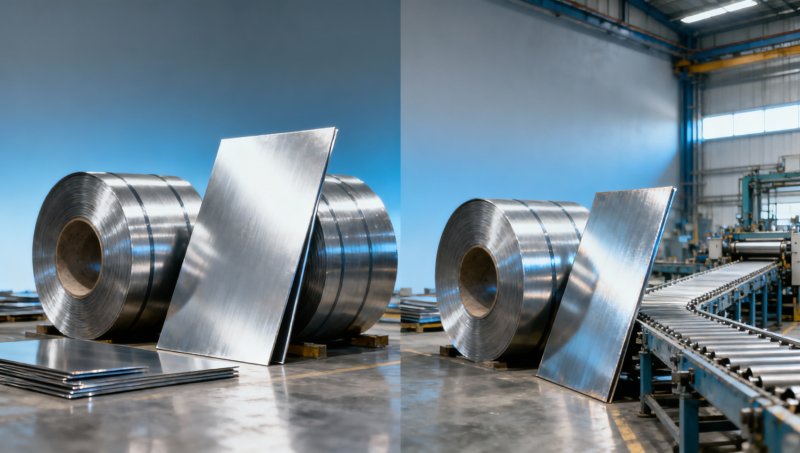
SPCC is a common designation for commercial-quality cold rolled steel sheet under JIS practice. It is typically supplied without zinc coating and is valued for smooth surface quality, stable thickness, and good formability. SECC, by contrast, is electro-galvanized cold rolled steel. The base steel is similar in many cases, but the added zinc layer changes corrosion performance, surface behavior, and downstream application suitability.
The most important change is surface protection. SPCC has no metallic anti-corrosion layer, so it usually needs painting, oiling, indoor storage, or further processing soon after delivery. SECC includes an electro-galvanized coating, often selected when manufacturers need cleaner appearance and better resistance to moisture exposure in indoor or semi-protected environments. That difference matters in warehouse storage periods of 15 to 60 days and in products exposed to humidity above typical indoor levels.
Another key distinction is process behavior. SPCC is often preferred for deep drawing, stamping, bending, and applications where bare cold rolled steel will later be painted, laminated, or welded under controlled conditions. SECC still offers good formability, but the zinc layer can influence friction, die wear, and weld settings. In high-volume production lines, even a small setup difference can affect scrap rate by 1% to 3%.
For many buyers, confusion starts because both materials may appear similar in thickness range and base sheet quality. However, the final use is what separates them. SPCC is frequently used in indoor fabricated parts, appliance components, enclosures, and painted panels. SECC is selected for electrical cabinets, office equipment housings, automotive interior metal parts, and general products requiring a more corrosion-resistant surface before painting or in lightly exposed conditions.
Core Difference Overview
The table below highlights the most relevant technical and procurement differences between SPCC steel and SECC for engineers, sourcing teams, and quality control personnel.
The key conclusion is straightforward: SPCC and SECC may share a cold rolled steel base, but the coating changes service expectations, storage tolerance, and end-product reliability. Buyers should compare them by use condition, not by name alone.
What Changes in Performance, Processing, and Cost
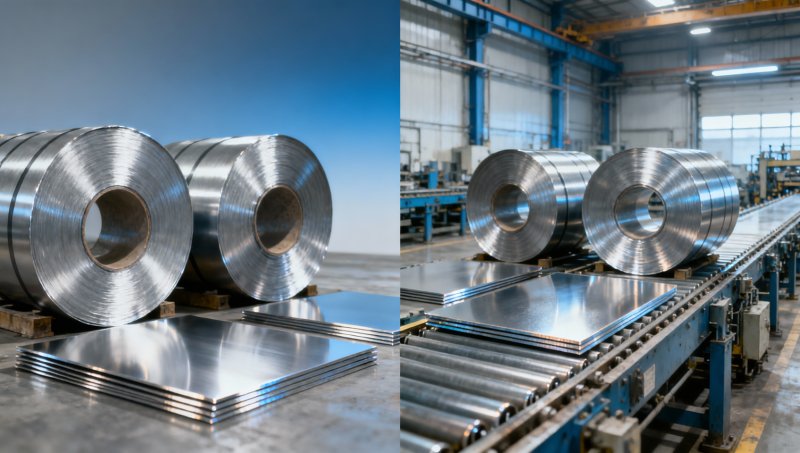
From a manufacturing standpoint, the shift from SPCC to SECC changes more than anti-rust capability. Surface conductivity, paint preparation, passivation condition, and weldability behavior can all vary. If the product will be stored in a coastal warehouse, transported for 20 to 45 days, or assembled in a humid factory, SECC often reduces short-term rust risk compared with bare SPCC.
However, SECC is not automatically the better choice in every production line. If the part will be deeply drawn, heavily welded, or fully powder coated after fabrication, SPCC may remain more economical and simpler to process. The real decision should balance 4 factors: environment, forming complexity, finishing method, and target cost. For example, a coated sheet that lowers corrosion claims may still raise tooling adjustments and per-ton material cost.
A common procurement mistake is focusing only on purchase price per ton. In reality, the total cost should include rework, storage protection, packaging, scrap, and finishing. If SPCC requires extra oiling, indoor humidity control, and faster turnover within 7 to 15 days, those measures add operational cost. If SECC reduces repaint defects and post-storage rust, its higher material price can be offset by lower handling risk.
This is especially relevant for OEM manufacturing, electrical enclosures, machine covers, and fabricated steel parts shipped across regions. The longer the logistics cycle and the greater the risk of condensation, the more valuable zinc-coated material becomes. For inland dry applications with immediate fabrication, SPCC may still deliver the best cost-performance ratio.
Operational Changes Buyers Should Expect
- Storage requirements change: SPCC usually needs stricter dry storage and quicker processing, while SECC provides a wider buffer against light moisture exposure.
- Surface treatment sequence changes: SPCC often moves directly to painting or oiling, whereas SECC may be used as-is or with lighter finishing depending on appearance needs.
- Tooling and welding parameters may need adjustment: zinc-coated surfaces can influence contact resistance, weld spatter, and die lubrication behavior.
- Quality inspection checkpoints increase: SECC orders often require confirmation of coating uniformity, surface defects, and passivation consistency in addition to sheet thickness tolerance.
Decision Matrix for Common Use Cases
To make selection easier, the following matrix compares which material generally fits typical manufacturing and project conditions.
This matrix is a practical starting point, but final selection should also consider thickness, forming radius, storage period, and customer surface requirements. Even within the same product category, one application may favor SPCC while another needs SECC.
How to Choose for Industrial, Structural, and Fabrication Projects
For project teams and industrial buyers, the right question is not “Which one is better?” but “Which one fits the operating condition?” SPCC is typically suited to controlled manufacturing environments where the steel is quickly cut, formed, welded, and coated. SECC is usually better where moisture exposure, storage time, or appearance stability create additional risk. A sound decision can be made using 5 checkpoints: environment, process route, storage duration, finish requirement, and inspection standard.
In construction machinery, building structures, and pressure vessel-related fabrication support, cold rolled products may be used for secondary fabricated parts, covers, brackets, formed components, or precision sheet sections. At this point, material consistency matters as much as grade designation. Buyers needing higher strength cold rolled supply for downstream forming can also evaluate Steel Cold Rolled Coil options for applications that require good workability together with higher strength characteristics.
For example, Q355 carbon steel cold rolled coil is often selected when users need a combination of high strength, enhanced toughness, and good weldability. Typical size ranges include thickness from 0.12 mm to 12 mm, width from 600 mm to 2000 mm, and coil weight from 3 to 20 tons. Available surface conditions can include black, galvanized, coated, oiled, or painted, which gives buyers more flexibility when matching fabrication routes to project schedules.
From a processing perspective, common functions such as bending, welding, decoiling, cutting, punching, perforating, flatness correction, and special-size cutting are often just as important as the base material itself. This is why experienced exporters support both standard specification supply and OEM processing. A supplier that can deliver ASTM, EN, JIS, and GB-aligned production with stable lead times often helps reduce sourcing risk more effectively than one offering only a low quoted price.
Selection Checklist for Buyers
- Confirm whether the product will remain indoors, face intermittent humidity, or be exposed during shipping for more than 2 to 4 weeks.
- Check if the part needs deep drawing, repeated bending, spot welding, or direct decorative finishing.
- Define thickness tolerance, surface class, and acceptance criteria before issuing the purchase order.
- Ask for compliance with relevant standards such as ASTM A36/A36M-08, JIS G3101-2004, EN 10025-2, or GB/T 700-2006 where applicable to the product type.
- Review whether MTC, ISO, SGS, or BV documentation is needed for project approval, customs, or internal quality release.
Why Supplier Capability Matters
The material decision between SPCC and SECC becomes much easier when the supplier can clarify coating condition, tolerance range, packaging method, and downstream processing compatibility. Hongteng Fengda supports global buyers with structural steel products, cold formed profiles, and customized steel components, helping customers align specification, compliance, and delivery schedules across North America, Europe, the Middle East, and Southeast Asia.
In real procurement projects, communication quality often determines whether a material performs as expected. A detailed inquiry that includes thickness, width, coil weight, application, standard, and surface finish can prevent many quality disputes before production starts.
Common Risks, Inspection Points, and Procurement Mistakes
One of the most common mistakes is treating SPCC and SECC as interchangeable simply because both are cold rolled sheet materials. In practice, mismatched material can lead to visible rust, poor paint uniformity, or process instability. For quality control teams, the inspection plan should differ between the two. SPCC orders often emphasize thickness tolerance, flatness, and surface cleanliness, while SECC orders also need coating-related checks.
Another risk appears during packaging and shipping. If SPCC is exported without adequate oiling, moisture barrier packaging, or dry container conditions, oxidation can occur during a 20 to 35 day sea transit. SECC lowers this risk, but does not eliminate the need for proper packaging. Condensation, edge damage, and handling scratches still matter, especially for products with visible surface requirements.
Procurement teams should also avoid over-specifying corrosion protection where it is not needed. Using SECC in a fully indoor, fast-turnover, painted application may increase cost without delivering meaningful value. On the other hand, selecting SPCC for semi-humid assembly conditions just to reduce upfront cost can create rework, claim handling, and delivery delays. The better approach is to define service condition first, then select the steel.
For distributors and resellers, documentation clarity is equally important. Orders should state whether the requirement is bare cold rolled, electro-galvanized, oiled, painted, or further processed. Ambiguous descriptions create supply chain disputes, especially when multiple factories and intermediate processors are involved.
Inspection Focus by Material Type
The following table can be used by buyers, QC staff, and project managers as a simple acceptance reference during order review and inbound inspection.
A disciplined inspection routine reduces dispute risk and improves process predictability. In many cross-border steel purchases, a clear pre-shipment checklist is just as important as the mill test certificate.
Frequent Buyer Misjudgments
- Assuming corrosion resistance is unnecessary because the product is “indoor,” without considering warehouse humidity and shipment duration.
- Ignoring downstream paint or weld requirements when choosing a coated sheet.
- Comparing price per ton only, instead of total process cost over the full manufacturing cycle.
- Failing to define whether replacement material must meet JIS, ASTM, EN, or GB requirements.
FAQ and Practical Buying Guidance
Below are common questions from information researchers, technical evaluators, operators, purchasers, and project decision-makers comparing SPCC steel vs SECC in real supply scenarios.
Is SECC always better than SPCC?
No. SECC is better when corrosion resistance and cleaner pre-finished surface performance matter. SPCC is often the better option for tightly controlled indoor processing, deep drawing, and projects where the part will be painted immediately after fabrication. The right choice depends on at least 4 variables: environment, process route, storage time, and finish requirement.
Which one is more suitable for long shipping cycles?
For shipping cycles of 20 to 45 days, SECC generally offers more safety against moisture-related surface deterioration, provided packaging is still adequate. SPCC can be shipped successfully, but it usually needs stricter anti-rust measures such as oiling, sealed wrapping, and controlled storage after arrival.
What should buyers ask a steel sheet supplier before ordering?
Ask for material designation, thickness range, width, coil weight, tolerance reference, surface finish, coating condition, packing method, test documentation, and expected lead time. It is also useful to confirm whether the supplier can provide cut-to-length, slitting, punching, or OEM fabrication if your project needs more than simple coil supply.
Can SPCC and SECC be substituted in machine fabrication?
Sometimes yes, but only after checking forming difficulty, weld parameters, coating compatibility, and final environment. In can making machine or equipment enclosure applications, the substitution decision should be tested on trial parts first, especially when appearance, conductivity, or coating adhesion are critical.
How can buyers reduce sourcing risk from overseas suppliers?
Use a supplier that can support technical clarification, consistent production, and documentation aligned with major standards. Define requirements in writing, request inspection points before shipment, and confirm packaging details for sea transport. A structured order process usually reduces quality disputes far more effectively than relying on the cheapest quotation.
SPCC steel vs SECC is a practical material decision with direct impact on corrosion resistance, processing stability, storage tolerance, and overall procurement cost. SPCC fits many controlled indoor fabrication and painted applications, while SECC adds protection for products facing humidity, longer logistics cycles, or higher surface reliability requirements.
For buyers seeking dependable steel supply, customized processing, and standards-based production support, Hongteng Fengda helps match material selection to real project conditions across industrial and structural steel applications. If you need guidance on sheet selection, OEM processing, or cold rolled coil supply, contact us now to get tailored recommendations, product details, and a sourcing solution aligned with your project goals.
Please give us a message


Please enter what you want to find