Rebar grade confusion is more than a labeling issue—it can directly increase structural risk, inspection failures, and long-term safety concerns. In today’s steel and construction environment, projects are under stronger pressure to meet code, shorten lead times, and control cost at the same time. That makes correct Rebar identification increasingly important. When the wrong Rebar grade enters a project, the result may be hidden under concrete for years before performance problems appear. Understanding grade differences, traceability requirements, and practical verification methods is now essential for safer, standards-compliant construction.
Why Rebar grade confusion is becoming a bigger structural risk
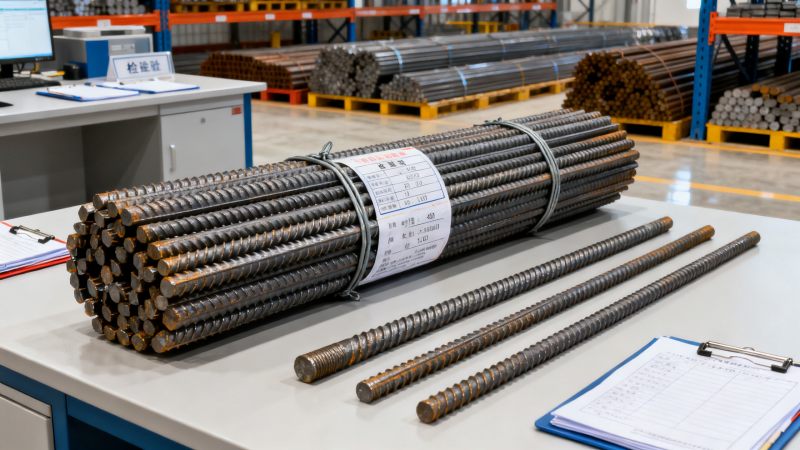
Across global steel supply chains, Rebar is sourced from multiple mills, traders, and regions with different standards such as ASTM, BS, EN, JIS, and GB. Although many products may look similar in diameter, rib pattern, or surface condition, their yield strength, tensile strength, ductility, weldability, and chemical composition can differ significantly. A grade mix-up can happen during production, warehouse storage, loading, customs relabeling, or site distribution. In many cases, the problem is not obvious until testing or installation.
This trend matters because modern structural design often uses tighter tolerances and more optimized material calculations. Engineers may reduce section size or reinforcement quantity based on the expected performance of a specified Rebar grade. If lower-grade material is substituted, the structure may lose part of its safety margin. If higher-strength material with different ductility or bendability is used without review, crack control, anchorage behavior, or seismic performance may also be affected. In other words, Rebar confusion is no longer a minor documentation issue; it is a project risk multiplier.
Market signals show stricter expectations for Rebar traceability and compliance
Several industry signals show that Rebar verification is moving from a basic receiving task to a broader risk-control requirement. More projects now require mill test certificates, third-party inspection, heat number tracking, and standard-specific marking checks before acceptance. Cross-border procurement has also increased the need to compare “equivalent” grades carefully instead of assuming they perform the same.
At the same time, regulators, insurers, and quality auditors are paying closer attention to material records. A mismatch between design documents and delivered Rebar can trigger non-conformance reports, schedule delays, and rework. Where seismic or high-load performance is involved, the review can become even stricter. This means steel buyers and project teams need stronger internal controls not only for Rebar strength class, but also for origin, certification, and standard alignment.
Key forces behind the rise in Rebar grade confusion
How different Rebar grades affect structural performance and project outcomes
Not all Rebar differences are visible. Grade changes influence how reinforced concrete behaves under service loads, overload events, and long-term environmental exposure. Yield strength affects the point at which steel begins to deform permanently. Tensile strength influences ultimate resistance. Ductility determines how the Rebar behaves before failure, especially in seismic or dynamic applications. Chemical composition can affect weldability and bending performance. Even when diameter is correct, the wrong Rebar grade may still cause serious design deviation.
The impact extends beyond structural behavior. A Rebar mismatch can lead to failed inspections, delayed concrete pours, expensive material segregation, and disputes over responsibility. It may also affect downstream steel items that support safe movement and industrial use. For example, in facilities where reinforced concrete interfaces with access platforms, machine bases, or anti-slip flooring systems, material control should be equally disciplined. In such environments, products like SS440 Patterned steel plate are often selected for transportation, construction, decoration, machinery zones, shipbuilding, and floors around equipment because they combine anti-skid performance, bending resistance, and stable dimensional control. While this is a different steel product category from Rebar, the sourcing lesson is the same: standard compliance, clear grade identification, and certificate verification reduce operational risk.
Common consequences of using the wrong Rebar grade
- Lower load-bearing capacity than assumed in design calculations
- Reduced crack control or anchorage performance
- Poorer ductility in seismic or impact-sensitive structures
- Welding problems due to unsuitable chemistry or carbon equivalent
- Bending fractures or fabrication defects during processing
- Inspection rejection, project delays, and additional testing costs
- Long-term liability tied to hidden non-conforming Rebar installation
Where Rebar grade confusion usually starts in the supply chain
Most Rebar mistakes do not begin at the point of concrete placement. They begin earlier, often when grade names are treated as equivalent without checking the actual standard requirements. A common example is assuming one country’s nominal high-strength Rebar automatically matches another country’s ductility, elongation, or weldability requirements. Another source of confusion is overreliance on commercial descriptions rather than mill markings and certified test data.
Storage and handling also matter. When Rebar bundles are opened, cut, or separated for fabrication, traceability can disappear quickly. If partial lengths are returned to stock without durable identification, the chance of mixing increases. On fast-moving job sites, visual checks alone are often not enough, especially when multiple diameters and grades arrive together.
High-risk sourcing and handling mistakes
- Accepting “equivalent Rebar” without engineering review
- Comparing strength only, while ignoring ductility and chemistry
- Using incomplete or generic mill test certificates
- Failing to match heat numbers between documents and bundles
- Mixing stock from different mills under one internal label
- Removing tags during cutting, blasting, or site redistribution
- Skipping random sampling because the supplier is familiar
What should be checked now to reduce Rebar risk
A practical control plan for Rebar should combine document review, physical inspection, and testing discipline. This is especially important when material is imported, substituted, or allocated across multiple work fronts. The goal is not just to confirm that Rebar arrived, but to confirm that the delivered grade matches design intent and standard requirements.
Priority control points
- Verify the specified Rebar standard, grade, and intended application before ordering
- Require full mill test certificates with mechanical and chemical results
- Check bundle tags, embossed markings, and heat numbers on arrival
- Separate different Rebar grades physically in storage areas
- Use color coding or durable internal labels after cutting or rebundling
- Conduct random tensile, bend, and chemical verification for critical lots
- Document any proposed grade substitution and obtain formal approval
- Train teams to distinguish between appearance similarity and grade compliance
Recommended decision framework
The next step is stronger material discipline, not just faster supply
The steel industry is moving toward tighter compliance expectations, more international sourcing, and less tolerance for undocumented substitutions. In that environment, Rebar grade control becomes a strategic part of structural safety. The most effective response is to treat Rebar verification as a full-cycle process: clear specification at purchase, traceable handling during delivery and storage, and documented validation before installation.
Reliable steel supply also depends on working with partners that understand international standards, maintain consistent production quality, and support traceable documentation. Hongteng Fengda, a structural steel manufacturer and exporter from China, supplies structural steel products and customized solutions aligned with ASTM, EN, JIS, and GB requirements. For projects that need dependable steel sourcing, stable lead times, and quality-focused support, a structured review of Rebar specifications, certificates, and related steel components is a practical next move to reduce risk before it reaches the structure.
Please give us a message


Please enter what you want to find