Perforated steel sheet balances ventilation, weight reduction, and visibility against the structural demands of strength and durability. For buyers comparing perforated steel with other Steel Construction Material options, understanding open area, hole pattern, thickness, and Corrosion Resistant Steel performance is essential. This guide explains the key trade-offs that matter to engineers, procurement teams, and project managers seeking reliable, cost-effective solutions from a qualified Shandong supplier.
Why open area matters in perforated steel sheet selection
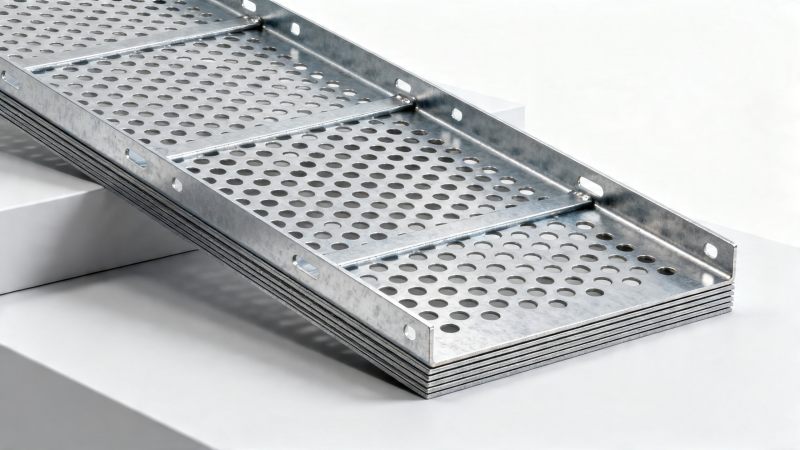
In steel fabrication and project sourcing, open area is one of the first technical indicators that shapes the performance of a perforated steel sheet. It refers to the percentage of the total sheet surface occupied by holes. In many industrial and architectural applications, buyers usually compare open area ranges such as 10%–20%, 20%–40%, and above 40% because these ranges directly affect airflow, drainage, visibility, acoustic behavior, and weight.
However, a higher open area does not automatically mean a better material choice. As the percentage of removed steel increases, the sheet generally loses stiffness and load-bearing capacity. This trade-off becomes especially important in walkways, machine guards, screening panels, cladding systems, and protective covers where both function and structural integrity must be considered together rather than separately.
For technical evaluators and project managers, the practical question is not simply how many holes are needed, but how much strength can be retained after perforation. A sheet with a 3 mm thickness and moderate open area may perform better than a thinner sheet with the same hole pattern. That is why perforated steel sheet selection should always consider thickness, hole diameter, pitch, support span, and expected service load as a combined system.
For procurement teams and financial approvers, this also affects total project cost. A design that chases very high open area may require thicker base material, extra framing, or tighter support spacing to recover strength. In many projects, the better decision is not the lightest panel, but the panel that meets service requirements with balanced fabrication cost, installation efficiency, and long-term durability.
- Low open area is often preferred when impact resistance, stiffness, or load retention is the top concern.
- Medium open area usually suits general industrial panels, filters, enclosures, and façade elements with balanced requirements.
- High open area is often selected for ventilation, acoustic absorption backing, and visibility-driven applications, but requires more attention to span and support design.
How hole pattern changes strength behavior
Hole pattern is not a cosmetic detail. Round holes in staggered arrangement generally provide a higher open area than straight-line layouts while preserving better sheet continuity. Square and slotted holes may be chosen for screening or directional drainage, but they can change stress distribution and create different deformation behavior under bending or vibration. In practice, the same sheet thickness can perform very differently depending on whether the pattern is round, slot, square, or decorative.
In factory supply planning, engineers often review three basic variables together: hole size, center-to-center pitch, and margin distance from the edge. If the hole diameter becomes too large relative to pitch, the metal bridges between holes narrow significantly. This usually improves openness but reduces remaining steel section. For many load-related applications, the bridge width becomes a critical check point during design review and quality inspection.
Typical trade-off logic used by buyers
A practical way to judge perforated steel sheet is to define the primary requirement first. If the panel is designed for air passage, a higher open area may justify additional support. If the panel is intended to resist foot traffic, impact, or equipment contact, retained strength often takes priority. Experienced buyers usually review 3 core indicators before confirming the order: open area target, mechanical demand, and environmental exposure level.
What affects the strength of a perforated steel sheet in real projects
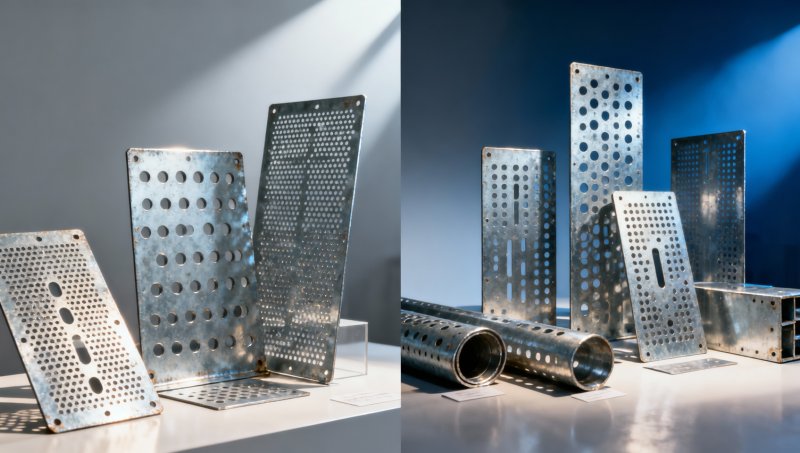
In real construction and industrial use, strength is influenced by more than material grade alone. Thickness is a major factor, but span length, support method, edge reinforcement, and loading type all matter. A perforated panel used as infill within a rigid frame behaves differently from a free-spanning platform insert. This is why design assumptions should be aligned with installation reality before final purchasing decisions are made.
For example, a sheet in the 1.0 mm–1.5 mm range may be suitable for lightweight covers or decorative cladding, while 2.0 mm–3.0 mm or thicker options are more commonly evaluated for demanding industrial environments. These are typical working ranges rather than universal rules. The correct choice depends on load condition, support spacing, hole geometry, and whether the panel will face repeated vibration, abrasion, or occasional impact.
Corrosion also influences long-term strength retention. In outdoor, coastal, humid, or chemically exposed areas, a perforated steel sheet may lose performance over time if surface protection is not matched to the environment. For this reason, Corrosion Resistant Steel solutions and suitable coatings should be considered early, not after installation issues appear. A lower initial material price can become a higher lifecycle cost if corrosion shortens maintenance intervals.
At Hongteng Fengda, global buyers often ask how to reduce sourcing risk when requirements are not fully standardized. The answer usually starts with clarifying 4 points: end use, span or fixing method, service environment, and applicable standard. With modern manufacturing facilities and quality control aligned with ASTM, EN, JIS, and GB frameworks, a professional structural steel manufacturer can help narrow the specification before production begins.
The table below summarizes common variables that influence the balance between open area and strength in steel project applications.
This comparison shows why a perforated steel sheet should never be judged by hole percentage alone. Engineers, QC staff, and buyers should assess it as a fabricated component with real loading and service conditions. In many cases, small changes in thickness or support design bring better performance than simply reducing or increasing open area aggressively.
Where corrosion resistance becomes part of the strength discussion
Projects exposed to rainwater, condensation, salt-laden air, or frequent washdown cycles need more than base strength calculations. Surface protection affects how well the perforated panel keeps its performance over 12 months, 24 months, and longer service intervals. Galvanized materials are widely used because zinc coating helps isolate steel from moisture and slows corrosion progression in many conventional environments.
When buyers review related supply chains for steel processing or compatible material options, it is also useful to look at upstream corrosion-protection products. For projects requiring anti-corrosion planning across multiple steel components, Galvanized Steel Coil Manufacturers can be relevant in procurement discussions because galvanized coil is a common base material for fabricating corrosion-resistant steel parts, panels, and secondary components.
Typical galvanized coil specifications used in broader steel manufacturing supply include thicknesses from 0.12 mm to 3.5 mm, widths from 600 mm to 1500 mm, and zinc coating ranges such as 60–275 g/m² for hot galvanizing. These figures do not replace project-specific perforated sheet design, but they help procurement teams understand what corrosion protection ranges are common when comparing material routes and lifecycle expectations.
How to compare perforated steel with other steel construction material options
Many buyers do not choose perforated steel sheet in isolation. They compare it with expanded metal, welded mesh, plain steel plate, grating, or cold formed components depending on the project objective. The correct material is often the one that best matches the combination of visibility, airflow, structural demand, fabrication convenience, and maintenance cycle. This is where comparison analysis helps both technical and commercial teams make faster decisions.
Perforated steel sheet is often preferred when appearance consistency and controlled hole geometry are important. Expanded metal can provide high rigidity-to-weight performance in some applications, while welded mesh may suit guarding or partitioning where open visibility is more important than flat-sheet aesthetics. Plain plate offers the highest retained section but gives no airflow or drainage. Grating works well for heavier duty foot traffic, but it creates a different surface behavior and visual effect.
From a procurement perspective, the decision is usually based on 5 evaluation points: functional purpose, loading condition, fabrication route, coating requirement, and installed cost. A lower sheet price may not mean lower project cost if processing, reinforcement, and maintenance become more demanding. This is especially true in export projects where shipping efficiency, packaging, and replacement risk also matter.
The table below gives a practical comparison for common steel construction material choices used in industrial and architectural environments.
This comparison helps project teams avoid a common mistake: specifying perforated steel sheet when the project actually needs a heavier-duty load platform, or rejecting perforated steel when airflow, visual control, and weight reduction are the real priorities. The right decision comes from matching the material to the operating scenario, not from choosing by habit.
Which applications benefit most from balanced open area
Balanced open area is often ideal in 4 project categories: façade cladding, safety enclosures, ventilation covers, and screening panels. In these uses, the panel must perform more than one job at the same time. It may need to reduce weight, permit air movement, hide internal equipment, and still remain durable through handling, transport, and service exposure.
- Façade systems often prioritize appearance, light filtering, and weather resistance, so pattern consistency and coating quality matter.
- Machine guards usually require visibility and ventilation, but also need adequate rigidity and safe edge finishing.
- Screens and partitions may prioritize privacy or debris control, which changes the preferred hole size and open area range.
- Industrial covers exposed to outdoor conditions need corrosion planning, coating review, and realistic maintenance expectations.
What procurement teams should check before ordering
Ordering perforated steel sheet without a structured review often leads to rework, delivery delays, or specification mismatch. For B2B buyers, the best practice is to confirm both product data and application data before issuing a purchase order. This is especially important in export supply where revisions after production can affect packaging plans, shipping schedules, and installation sequencing on site.
A practical sourcing process usually has 4 steps. First, define the application and required function. Second, confirm key dimensions such as thickness, hole pattern, panel size, and edge condition. Third, match surface treatment to the environment. Fourth, verify standards, tolerance expectations, packing method, and lead time. For many custom orders, a sample or drawing confirmation stage is also advisable before full production begins.
Procurement personnel and business evaluators should also assess the supplier’s manufacturing range, quality control discipline, and ability to support customized steel solutions. Hongteng Fengda serves global construction, industrial, and manufacturing projects with structural steel products and OEM support. For buyers who need stable production capacity and dependable lead times, this matters as much as the unit price because delayed delivery can disrupt project schedules by 2–4 weeks or more.
Quality and compliance teams should request clear confirmation of the applicable standard framework, inspection scope, and material traceability route where relevant. Common reference systems in steel procurement include ASTM, EN, JIS, and GB. These are not interchangeable by default, so technical review should clarify whether the project requires equivalent performance, a specific grade route, or market-specific compliance documentation.
A useful pre-order checklist
- Confirm 3 essential dimensions: thickness, hole size, and pitch. These determine both open area and remaining metal section.
- Check panel format and installation method, including span direction, frame support, and edge treatment.
- Select the corrosion protection route based on indoor, outdoor, humid, coastal, or chemical exposure conditions.
- Review commercial details such as MOQ, lead time, export packing, and whether sampling or OEM customization is needed.
- Align inspection items in advance, including dimensional tolerance, hole pattern accuracy, coating condition, and surface defects.
Lead time and customization expectations
For standard specifications, lead times are often shorter than for custom perforation layouts or formed components. In export-oriented manufacturing, buyers usually plan for drawing confirmation, production scheduling, and packing coordination. Depending on quantity and complexity, a typical supply cycle may fall within 2–6 weeks. Tighter schedules are possible in some cases, but should be checked against raw material availability and finishing requirements.
If your project includes other structural steel items such as angle steel, channel steel, steel beams, or cold formed profiles, consolidating sourcing through one capable manufacturer may simplify coordination. It can reduce communication gaps between components, improve packaging consistency, and help project managers keep procurement under one review path.
Common questions, risks, and final decision guidance
Even experienced buyers can underestimate the technical impact of perforation. The most common risk is assuming that the sheet will behave like a plain steel plate of the same thickness. It will not. Once material is removed, stiffness and load response change. Another common issue is choosing an attractive pattern first and checking strength later, which can lead to redesign, thicker material, or added framing costs.
The right way to decide is to balance 3 objectives: functional openness, retained strength, and service durability. If one of these is over-prioritized, the total project result can suffer. Engineers may face performance issues, procurement may face cost escalation, and project managers may face delivery pressure. Clear specification alignment at the beginning is the most efficient way to reduce these risks.
Below are practical answers to frequent questions raised by global buyers, distributors, and end users when comparing perforated steel sheet solutions.
How much open area is too much?
There is no single threshold that fits every project. In general, once open area moves into higher ranges such as 40% and above, strength retention becomes more sensitive to thickness, hole pattern, and support spacing. For non-load-bearing screens this may be acceptable. For covers, guards, or impact-prone panels, a moderate open area often gives a safer balance. The application should decide the limit, not appearance alone.
Is galvanized material always the best option for perforated steel sheet?
Not always, but galvanized steel is a common and practical choice for many environments where moisture protection is needed at controlled cost. The correct decision depends on exposure conditions, maintenance expectations, and whether post-processing affects coating continuity. Buyers comparing corrosion routes should review coating type, zinc layer range, fabrication sequence, and the actual service environment rather than relying on a one-size-fits-all assumption.
What should distributors and project buyers ask suppliers first?
Start with six points: material grade, thickness range, hole pattern capability, panel size limit, surface treatment option, and applicable standards. Then ask about packaging, export experience, production stability, and whether the supplier can support OEM drawings. This approach helps both technical and commercial teams identify fit early and avoids delays caused by incomplete RFQs.
Why choose a manufacturer with broader structural steel capability?
A broader structural steel manufacturer can support not only the perforated component itself but also related project needs such as channel steel, beams, cold formed profiles, and customized assemblies. This is useful when your project has mixed steel demand and a tight delivery window. It can improve coordination, reduce sourcing fragmentation, and make technical communication more efficient from inquiry to shipment.
Why choose us for technical review and sourcing support?
Hongteng Fengda combines structural steel manufacturing experience, export supply capability, and customized solution support for global buyers across North America, Europe, the Middle East, and Southeast Asia. We understand that the real challenge is not only supplying steel, but matching material performance, compliance expectations, lead time, and cost control within one workable sourcing plan.
If you are evaluating perforated steel sheet or related steel construction material options, you can contact us for parameter confirmation, hole pattern discussion, thickness selection, corrosion protection review, customization feasibility, sample support, lead time planning, and quotation comparison. For projects that involve multiple steel components, we can also help align structural steel products under a more coordinated procurement process.
Please give us a message


Please enter what you want to find