Metal pipe black is widely used in structural, industrial, and manufacturing applications for its durable finish, practical appearance, and reliable performance. In this article, we explore what the black finish means, where it is commonly used, and its key limitations so you can better evaluate whether it fits your project needs.
What People Usually Mean by “Metal Pipe Black”
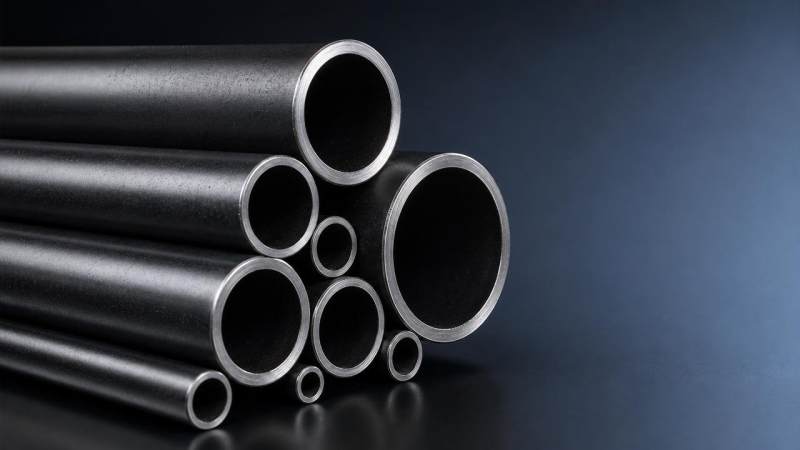
When users search for metal pipe black, they are usually not looking for a color trend alone. In most cases, they want to understand a black steel pipe finish, its purpose, and whether it suits a real project.
The short answer is this: black metal pipe is often valued for appearance, basic surface protection during storage and handling, and practical use in structural or industrial systems. However, it is not automatically the best choice for corrosion-heavy environments.
The term can refer to black steel pipe, black-coated pipe, or mill-finished pipe with a dark oxide scale. Because the meaning varies by supplier and standard, buyers should always confirm the exact finish, base material, and intended service conditions.
What Creates the Black Finish on Metal Pipe
A black finish on metal pipe may come from mill scale formed during hot rolling, from black oxide treatment, or from a protective coating applied after production. These are different finishes, and they do not perform in the same way.
Mill scale is the dark surface layer created when steel is heated and processed. It gives pipe a recognizable industrial appearance, but it is not a long-term corrosion barrier. If exposed to moisture for extended periods, rust can still develop.
Black oxide is a conversion coating that changes the top surface of the metal. It improves appearance and can provide mild protection, but it still usually needs oil or sealing treatment to improve performance in service.
Some pipes are also painted or coated black for identification, branding, or temporary surface protection. In these cases, the word black describes the exterior appearance, not necessarily the manufacturing route or corrosion resistance level.
Why Black Metal Pipe Is So Common in Industrial and Structural Use
One reason metal pipe black remains popular is practicality. It offers a clean, uniform industrial look and is often more economical than heavily finished decorative tubing or corrosion-resistant alloy products for standard indoor applications.
Another reason is supply familiarity. Contractors, fabricators, and industrial buyers are used to black pipe in many systems, especially where the pipe will later be welded, cut, threaded, painted, or integrated into larger assemblies.
For structural and manufacturing work, a black finish can also make inspection, marking, and downstream processing straightforward. It fits project environments where function matters more than polished appearance and where additional finishing may happen later.
In many sourcing situations, black pipe is selected because it balances availability, fabrication convenience, and cost control. That makes it attractive for projects that need dependable steel products without paying for unnecessary surface treatments.
Where Metal Pipe Black Is Commonly Used
The most common uses depend on pipe grade, wall thickness, manufacturing standard, and whether the product is seamless or welded. The finish alone does not determine suitability. Actual performance always depends on the full product specification.
In construction, black metal pipe may be used for structural frames, support members, railing systems, protective barriers, and general fabricated components. In these applications, buyers often value weldability, strength, and supply consistency more than decorative finish.
In industrial settings, black pipe is often found in fluid transport systems, mechanical assemblies, machine bases, process supports, and utility lines. It can be suitable where service conditions are controlled and where external corrosion is not the primary design risk.
In manufacturing, it is commonly chosen for jigs, fixtures, equipment structures, storage racks, and OEM steel components. The dark finish is acceptable in many factory environments, especially when the pipe will be painted, powder coated, or otherwise processed.
Some black pipe products are also used in heat transfer and pressure-related systems, but this must be evaluated by grade and standard, not by color. Application matching should always come before appearance-based decisions.
How to Tell Whether It Is the Right Choice for Your Project
If you are researching metal pipe black, the key decision is not whether black looks right. The more important question is whether the finish and steel grade match your environment, fabrication method, compliance requirements, and service life expectations.
Start with the operating environment. Indoor dry conditions are very different from coastal exposure, chemical plants, humid warehouses, or buried service. A black finish that performs acceptably indoors may fail quickly in aggressive environments without extra protection.
Next, consider fabrication. Will the pipe be welded, bent, threaded, machined, or coated later? Some black finishes are easier to process than others, and some may need cleaning or surface preparation before painting or further treatment.
You should also review structural or process requirements. Load-bearing use, pressure service, temperature range, and code compliance can all affect material selection. A visually similar black pipe may still differ greatly in chemistry, tolerances, and mechanical performance.
Finally, think about maintenance expectations. If the installation must remain presentable and low-maintenance for years, a simple black finish alone may not be enough. In that case, galvanizing, painting, or another protective system may be more suitable.
The Main Limitations Buyers Should Understand
The biggest limitation of metal pipe black is corrosion resistance. Many buyers assume the black surface means the pipe is protected for long-term outdoor use. In reality, that assumption often leads to premature rust, rework, and avoidable replacement cost.
Another limitation is inconsistency in terminology. Different suppliers may use black pipe to describe different products. One may mean hot-rolled pipe with mill scale, while another may mean painted pipe or pipe intended for specific fluid applications.
Surface quality can also vary. Some black-finished pipes have a rougher or more irregular appearance than buyers expect, especially if the product is produced for industrial function rather than architectural presentation. This matters when appearance affects end-user acceptance.
In addition, the black surface may interfere with downstream coating if not properly prepared. Painting over mill scale or contamination without suitable pretreatment can reduce coating adhesion and shorten service life in demanding applications.
There are also limits related to design assumptions. The finish does not tell you whether the pipe is seamless, welded, pressure-rated, or compliant with a specific standard. Buyers must avoid using surface appearance as a shortcut for technical qualification.
A Practical Product Example for Specialized Applications
For buyers comparing black-finished pipe options with more application-specific tubing, it helps to look beyond the surface. In some projects, the better choice is a product selected for exact service demands rather than general-purpose visual characteristics.
One example is A36 Steel Pipe, which can be supplied across a broad dimensional range, including Diameter10mm~914.4mm, Thickness1mm~100mm, and multiple unit lengths based on project requirements.
Its available standards may include ASTM A106, A53, A179, A192, A333, A519, A795, A335, A500, API 5L, API 5CT, JIS, DIN, EN, and GB specifications, depending on the required market and application context.
For more specialized industrial uses, this product family may also cover seamless cold-drawn low-carbon steel tubes intended for tubular heat exchangers, condensers, and similar heat transfer equipment, where wall control and application matching matter more than surface color.
This comparison highlights an important sourcing principle: buyers should choose pipe by service requirement, dimensional tolerance, grade, and standard compliance first, then consider finish as one part of the overall specification.
Questions Buyers Should Ask Before Ordering
To avoid confusion, ask suppliers what the black finish actually is. Is it mill scale, black oxide, painted coating, or another treatment? This one question can immediately clarify expected performance and whether secondary finishing will be necessary.
Also confirm the base material and standard. Ask for grade, manufacturing process, size tolerance, wall thickness, and test documentation. For international sourcing, it is especially important to verify compliance with ASTM, EN, JIS, GB, or project-specific requirements.
Ask where and how the pipe will be used. A reliable supplier should be able to discuss whether the product is intended for structural use, mechanical fabrication, fluid transport, or heat-related service, and whether another option would perform better.
It is equally useful to ask about surface preparation before painting, galvanizing, or fabrication. This can save time during production and reduce quality issues later, especially when the pipe will become part of a larger manufactured system.
Finally, discuss logistics and consistency. Stable production capacity, clear communication, and dependable lead times matter just as much as technical details when pipe is being sourced for ongoing projects or international delivery schedules.
How Global Buyers Can Make Better Sourcing Decisions
For importers, distributors, and project buyers, black metal pipe should be evaluated as part of a full procurement decision. Price matters, but so do quality consistency, documentation, dimensional reliability, and the supplier’s ability to support custom requirements.
Working with an experienced structural steel manufacturer can reduce sourcing risks, especially when your order includes multiple steel products or mixed standards. It becomes easier to align technical needs, delivery planning, and total project cost.
Suppliers with strong quality control and export experience are usually better positioned to support buyers across North America, Europe, the Middle East, and Southeast Asia, where standards, application expectations, and inspection requirements can differ.
For many projects, the smartest buying decision is not simply choosing the lowest-cost black pipe. It is choosing the pipe that will perform as expected, integrate smoothly into production, and avoid expensive failures after installation.
Conclusion
Metal pipe black is popular because it is practical, widely available, and suitable for many structural, industrial, and manufacturing applications. But the black finish itself does not guarantee corrosion resistance, pressure suitability, or long-term performance.
If you are evaluating metal pipe black, focus first on what the finish actually is, what environment the pipe will face, and which standards and grades your project requires. That approach leads to better technical decisions and fewer sourcing mistakes.
In short, black metal pipe can be an efficient and reliable choice when matched correctly to the job. The real value comes not from the color alone, but from selecting the right steel product for the right service conditions.
Please give us a message


Please enter what you want to find