Many fabrication and procurement mistakes start with incorrect L angle steel dimensions shown in common drawings. For engineers, buyers, and project managers, even small sizing errors can affect load performance, material selection, and total cost. The practical answer is simple: do not trust a drawing just because it looks standard. Always verify leg size, thickness, root radius, length tolerance, and the applicable standard before production or purchasing. This guide explains where common drawings fail, how to check dimensions correctly, and what to compare when evaluating related material costs such as steel plate for construction, steel rebar cost, and galvanized steel price.
Why common L angle steel drawings cause real project problems
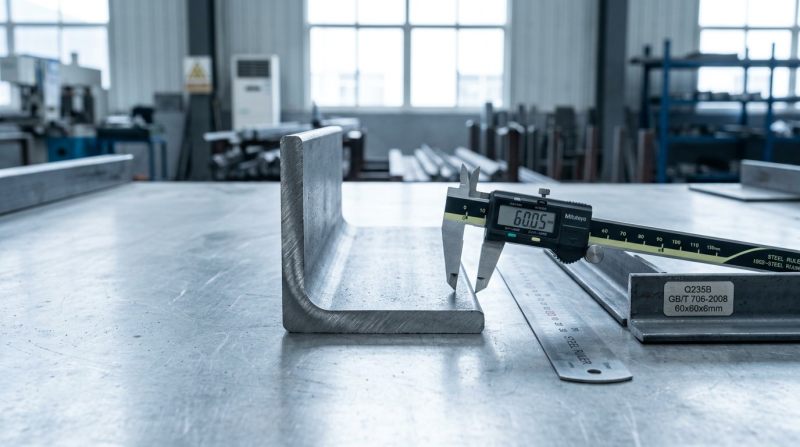
Searchers looking up L angle steel dimensions usually are not looking for a textbook definition. They want to avoid mistakes that lead to rejected material, rework, fit-up issues, structural uncertainty, or supplier disputes. In practice, many drawings simplify angle steel too much. They may show two equal legs and a thickness callout, but ignore critical details that affect manufacturing and installation.
The most common issue is assuming that a drawn shape matches an actual standard section. In reality, angle steel dimensions depend on the governing standard, such as ASTM, EN, JIS, or GB. Two angles that appear identical on a drawing may have different tolerances, root radii, mass per meter, and corner geometry. That difference matters when the angle must fit against plates, anchor points, bolted assemblies, or welded frames.
For project teams, the risk is not only technical. A wrong assumption in the drawing stage can trigger:
- incorrect quotations from suppliers,
- unexpected material substitutions,
- delays in fabrication,
- higher waste and cutting loss,
- site installation conflicts,
- quality or safety non-conformance.
If the angle is part of a load-bearing assembly, even a small dimensional mismatch can change connection behavior and reduce confidence during inspection.
Which L angle steel dimensions are most often shown incorrectly
When drawings get angle steel wrong, the problem usually falls into a few repeat patterns. These are the checks that matter most for engineering review, purchasing, and fabrication control.
1. Leg length is assumed, not specified clearly
Many drawings label angle steel only by a general size, without confirming whether it is an equal angle or unequal angle. For example, one team may read “L50x50x5” while another interprets a similar sketch as a generic 50 mm angle. If the leg relationship is unclear, downstream errors are very common.
Always confirm:
- whether the section is equal or unequal angle,
- both leg dimensions,
- whether dimensions are nominal or actual standard dimensions.
2. Thickness is treated as the only controlling dimension
Thickness affects strength, welding, and weight, but it does not tell the full story. In many drawings, teams focus on thickness while overlooking root radius and toe shape. This becomes a problem when the angle must sit flush against another component or fit within a tight assembly.
3. Root radius and toe radius are ignored
This is one of the biggest reasons fabricated parts do not fit as expected. The inside corner of angle steel is not a perfect sharp 90-degree edge. It has a root radius created during rolling. If a base plate, gusset, bracket, or backing part is designed as if the corner is sharp, interference can occur.
That means the drawing may look correct, but the fabricated connection may require grinding, shimming, redesign, or field modification.
4. Hole location is dimensioned from the wrong reference surface
For bolted angle connections, hole spacing must reference the actual leg geometry and edge distance rules. Drawings sometimes dimension holes from an idealized outside corner instead of a practical datum line. This can create tolerance stacking and poor alignment during erection.
5. Length tolerance and straightness are omitted
Many procurement drawings mention section size but say little about cut length tolerance, twist, camber, or straightness. For decorative or light-duty work this may be manageable, but for structural assemblies or automated production, this omission creates inspection disputes.
6. Standard mismatch between design and sourcing
An engineer may design to one standard while a buyer sources to another based on local market availability. If cross-standard substitution happens without technical review, the delivered angle may differ in section properties or allowable tolerance range.
How to verify dimensions correctly before buying or fabricating
The safest way to use L angle steel is to verify it in three layers: drawing logic, standard data, and physical acceptance criteria.
Start with the drawing logic
- Confirm equal or unequal angle designation.
- Check leg dimensions and thickness.
- Review whether hole positions, welds, and mating parts account for radii.
- Make sure section orientation is clear in the assembly.
Then match it to the governing standard
Ask which standard controls the material: ASTM, EN, JIS, or GB. Then verify:
- nominal dimensions,
- permitted tolerances,
- section weight,
- mechanical properties,
- surface or coating requirements.
This step is essential for global sourcing. A supplier may offer a technically close size, but “close” is not always acceptable for the project.
Finally define what inspection will accept
Before order confirmation, establish measurable acceptance points such as:
- leg size tolerance,
- thickness tolerance,
- length tolerance,
- straightness and twist,
- surface condition,
- coating thickness if galvanized.
This is especially important for procurement teams and quality managers, because many disputes happen not due to poor steel quality, but due to unclear acceptance criteria.
What buyers, engineers, and project managers should check first
Different readers care about different risks, but the first-check priorities are often predictable.
For engineers and technical evaluators
Focus on whether the angle shown in the drawing reflects real section geometry and real standard properties. If the design depends on close-fit connections, include root radius clearance in the detail.
For buyers and procurement teams
Do not compare quotations only by price per ton. Confirm exact section designation, standard, coating condition, tolerance expectations, and whether substitutions are allowed. A cheaper quote may be based on a different standard or looser dimensional control.
For project managers
Pay attention to schedule risk. A minor angle mismatch can stop fabrication or delay site installation. The cost of rework usually exceeds the savings from fast but poorly controlled sourcing.
For quality and safety personnel
Verify that the delivered angle matches both structural requirements and dimensional assumptions used in the assembly. If field adjustments are needed because of wrong dimensions, safety exposure often increases.
How dimension mistakes affect cost beyond the angle steel itself
One reason this topic matters so much is that incorrect L angle steel dimensions can distort total project cost in ways that are not obvious at quotation stage.
For example, if an angle detail is wrong, teams may need extra plate inserts, larger holes, added weld metal, or replacement hardware. This can also affect comparisons with related materials. A project manager evaluating steel plate for construction may assume plate costs are the main budget driver, while angle-related fit-up errors actually create the bigger site cost. Likewise, teams comparing steel rebar cost or galvanized steel price may miss that fabrication inefficiency is consuming more money than raw material differences.
In corrosion-sensitive projects, coating strategy adds another layer. If angle steel interfaces with lifting, marine, utility, or exposed assemblies, buyers often compare several galvanized components together. In those cases, it is useful to source from suppliers that can explain coating classes, dimensional control, and service environment clearly.
For related applications involving lifting, marine, mining, agriculture, cranes, railways, photovoltaics, or drilling environments, buyers may also review corrosion-resistant accessories such as Galvanized Steel Wire Rope. Typical options include plain, electro galvanized, and hot dipped galvanized finishes, with diameters from 1.0 mm to 22 mm and common constructions such as 6x7, 6x19, and 8x19S. Where corrosion level varies, zinc coating groups and standard compliance such as GB/T 20116-2008, DIN, EIPS, ISO 9001, and ABS can be part of the same sourcing review logic used for structural steel components.
How to reduce sourcing risk when drawings are incomplete
Incomplete drawings are common, especially in early-stage procurement, distributor inquiries, or multi-country projects. The best response is not to guess. It is to create a short technical clarification list before placing the order.
A practical checklist includes:
- section type: equal or unequal angle,
- full size callout: both legs and thickness,
- material grade,
- applicable standard,
- required length and tolerance,
- surface finish: black, primed, or galvanized,
- critical fit-up areas affected by root radius,
- inspection documents and test requirements.
For import buyers and distributors, this step also helps align communication with overseas manufacturers. A capable structural steel supplier should be able to confirm standard compliance, section details, production capability, and customization limits before production begins.
A simple rule for reading L angle steel drawings more safely
If a drawing for L angle steel looks too simple, it probably hides a decision that someone has not made yet. That hidden decision may involve standard selection, radius allowance, tolerance expectation, or connection geometry. The safest rule is this: never approve, buy, or fabricate angle steel based only on a sketch-like section symbol and a nominal size.
Instead, verify the actual dimensions against the intended application. For routine uses, that may only take a few minutes. For structural, export, or high-volume work, it can prevent expensive downstream problems.
Conclusion
Common drawings often get L angle steel dimensions wrong not because the section is complicated, but because the details that matter in production are left out. The biggest mistakes usually involve unclear leg sizes, ignored root radii, omitted tolerances, and standard mismatches. For engineers, buyers, and project managers, the best approach is to verify the drawing against a real standard and define inspection criteria before ordering.
That one step improves fit, reduces sourcing risk, protects schedule, and makes cost comparisons more meaningful across related materials and galvanized products. If the goal is fewer surprises in fabrication and procurement, dimensional verification is not a minor check. It is one of the highest-value checks in the entire steel purchasing process.
Please give us a message


Please enter what you want to find