Choosing the right l angle steel dimensions is critical for project managers balancing structural performance, budget, and procurement efficiency. This guide explains how dimensions affect load capacity, installation, and compliance, helping you compare specifications with confidence. Whether you are sourcing for construction, industrial fabrication, or OEM steel projects, understanding these basics can reduce selection risks and support smoother project execution.
For project leaders, dimensional selection is rarely just a technical calculation. It affects material weight, welding time, drilling compatibility, transport planning, and even whether a delivery can move directly from port to site without rework. In angle steel procurement, a difference of 2 mm in thickness or a mismatch in leg size can influence both structural behavior and total installed cost.
As a structural steel manufacturer and exporter from China, Hongteng Fengda supports buyers across construction, industrial manufacturing, and OEM fabrication with angle steel, channel steel, beams, cold formed profiles, and customized steel components produced to ASTM, EN, JIS, and GB requirements. For project managers comparing suppliers and specifications, understanding l angle steel dimensions is one of the most practical ways to reduce sourcing risk before production starts.
Why L Angle Steel Dimensions Matter in Site Selection
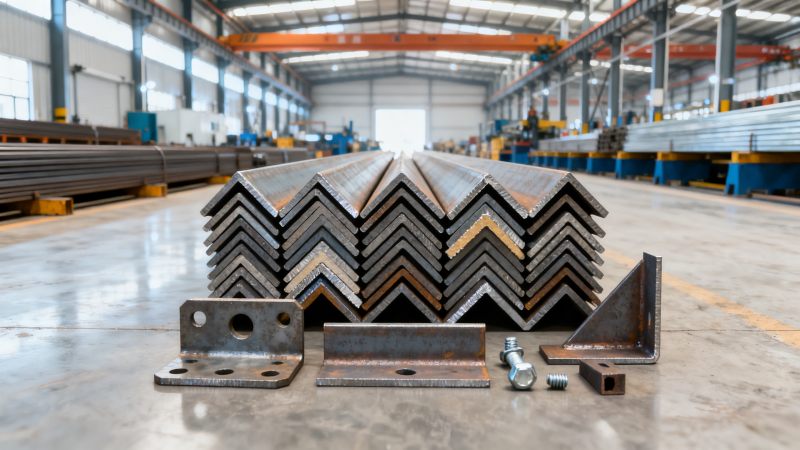
L angle steel is defined by two legs joined at 90 degrees. In practice, project teams evaluate at least 4 basic dimensional factors: leg size, thickness, length, and equal or unequal configuration. These values determine how the section performs under compression, tension, bracing loads, and connection demands.
During site selection and project planning, angle dimensions also influence logistics. A standard 6 m length is easier to handle for many fabrication shops, while 9 m to 12 m lengths can reduce field joints but require more careful transport and lifting arrangements. The right choice depends on the project schedule, crane access, and fabrication capacity.
Key dimensional elements project managers should review
- Leg size, such as 50 × 50 mm, 75 × 75 mm, or 100 × 75 mm
- Thickness, commonly from 3 mm to 12 mm for many structural and industrial uses
- Section type: equal angle or unequal angle
- Length supply options, often 6 m, 9 m, 12 m, or cut-to-size
- Tolerance control and compliance with ASTM, EN, JIS, or GB standards
How dimensions affect site execution
If the selected section is undersized, the result may be deflection issues, connection redesign, or reinforcement added later in the project. If it is oversized, material cost rises, dead load increases, and downstream tasks such as cutting, galvanizing, and installation may take longer. On multi-building sites, these small differences can multiply across 100 to 500 pieces.
This is why l angle steel dimensions should be reviewed early, not only by structural engineers but also by procurement and project control teams. A coordinated decision can prevent schedule loss of 7 to 14 days caused by drawing revisions, stock mismatch, or replacement orders.
Typical decision priorities
In most B2B projects, the selection sequence follows 3 priorities: structural adequacy first, procurement availability second, and fabrication efficiency third. When one supplier can provide standard sections with ±1% tolerance and stable lead times, overall project predictability improves significantly.
The table below shows how common dimensional choices affect planning concerns for project managers.
The main takeaway is that no single size is universally best. The correct l angle steel dimensions depend on where the steel will be used, how it will be connected, and how efficiently it can move through fabrication, shipping, and installation.
How to Choose the Right Dimensions for Construction and Industrial Projects
Project managers usually evaluate angle steel through 5 linked questions: What load must the member carry? What connection method will be used? What standard applies? What lengths are practical? And what lead time is acceptable? These questions help narrow dimensional options quickly.
1. Match dimensions to the application
For light framing, equipment supports, and secondary bracing, smaller sections such as 40 × 40 mm to 63 × 63 mm may be sufficient depending on thickness and span. For heavier supports, platform framing, or structural reinforcement, project teams often review larger ranges such as 75 × 75 mm to 100 × 100 mm or unequal sections where one leg needs a larger bearing face.
Unequal angles are especially useful when bolt layout, weld position, or attachment geometry is not symmetrical. In retrofit projects, this can reduce the need for extra plates and save 1 to 2 fabrication steps per connection.
2. Check grade and standard together with dimension
Dimensions alone do not define performance. Material grade such as Q235, Q345, A36, SS400, or S235JR changes yield strength and affects whether a thinner or thicker section is appropriate. A section that works in one standard system may require verification if drawings are converted between ASTM, EN, JIS, and GB references.
For international procurement, buyers should request mill documentation, dimensional tolerances, and surface treatment details in the same quotation package. This reduces comparison errors between 2 or 3 shortlisted suppliers.
3. Consider fabrication and downstream processing
If the project requires punching, welding, cutting, or galvanizing, dimensions should support those processes efficiently. Very thick sections may improve capacity but increase processing time. Very thin sections can lower weight but may be less suitable where repeated bolting, edge drilling, or heavy welding is required.
This is also where related profiles become relevant. In secondary structural systems, angle steel is often specified together with channel-type sections for purlins, wall members, and light framing. For example, C-beam products are widely used in purlins and wall beams of steel structure buildings, lightweight roof trusses, brackets, and mechanical light industry components.
A typical specification for that profile may include Q195, Q235, Q345, A36, SS400, or S235JR material; thickness from 1 mm to 12 mm; standard lengths of 6 m, 9 m, and 12 m; galvanized coated surfaces; and processing services such as bending, welding, punching, decoiling, and cutting. For project managers, this matters because mixed-profile procurement from one manufacturer can simplify coordination across steel packages.
Practical screening checklist
- Confirm design load, support spacing, and connection type.
- Verify leg size and thickness against drawings and local code requirements.
- Check stock length versus required cutting plan.
- Review steel grade, coating, and tolerance.
- Align delivery schedule with fabrication and site sequence.
The comparison table below can help when evaluating l angle steel dimensions for different project conditions.
In most cases, the best buying decision is not the lightest section or the cheapest unit price. It is the option that meets design requirements, limits fabrication waste, and keeps the project on schedule without hidden processing cost.
Common Risks When Comparing L Angle Steel Dimensions Across Suppliers
Comparing quotes from multiple mills or traders can be difficult because the same description may hide different dimensional assumptions. One supplier may quote equal angles by nominal size only, while another may include thickness tolerance, edge condition, and coating in the specification.
Risk 1: Confusing nominal size with actual purchasing scope
A quotation for 75 × 75 × 6 mm angle steel should ideally state grade, standard, length, quantity, tolerance, and surface condition. If only the section size is listed, procurement teams may later face disputes over mass per meter, delivery format, or acceptable tolerance range.
Risk 2: Ignoring connection and installation constraints
Some dimensions work well structurally but create site problems. A thicker section may require larger drill capacity, more welding heat input, or revised bolt edge distances. On fast-track projects, this can slow installation by several shifts and affect adjacent trades.
Risk 3: Focusing only on tonnage price
Project managers should compare 3 cost layers: material price, processing cost, and schedule impact. A lower ex-works price may not be competitive if the steel requires more site cutting, extra connection plates, or replacement due to non-compliance. Total installed cost is the better metric.
Supplier evaluation points
- Can the supplier produce to ASTM, EN, JIS, and GB standards?
- Is tolerance clearly stated, for example ±1% where applicable?
- Are standard and custom lengths available?
- Can the supplier support OEM or processed components?
- Are lead time and inspection requirements confirmed before production?
For global buyers, manufacturers with stable production capacity and quality control can reduce the uncertainty between approved drawings and delivered steel. This is particularly important for projects in North America, Europe, the Middle East, and Southeast Asia where specification alignment and dependable lead time directly affect project execution.
A Practical Selection Framework for Project Managers
A reliable selection process does not need to be complicated. In many steel packages, a 4-step framework is enough to screen l angle steel dimensions and prepare a cleaner RFQ for suppliers.
Step 1: Define the use case clearly
State whether the angle steel is intended for bracing, support frames, edge protection, platform structure, equipment mounting, or fabricated assemblies. Include design load, span, connection type, and environment if corrosion protection is required.
Step 2: Shortlist dimensions by engineering and fabrication logic
Review 2 to 3 suitable leg sizes and thickness options rather than requesting overly broad quotations. This gives suppliers a more accurate basis for production planning and helps buyers compare like-for-like commercial offers.
Step 3: Confirm compliance and processing scope
Check the required standard, steel grade, coating, and any processing services such as cutting, punching, or welding preparation. If parts are part of an OEM assembly, include dimensional drawings and tolerance expectations with the inquiry.
Step 4: Align delivery with the project timeline
Ask for realistic lead times based on tonnage, processing depth, and destination. For many export projects, the effective cycle includes production, inspection, packing, inland transport, and sea shipment. A well-coordinated supplier can help prevent bottlenecks between factory completion and site demand.
When project managers treat dimensional selection as part of a broader steel supply strategy, procurement becomes more predictable. This reduces late-stage design clarification, lowers mismatch risk, and supports smoother installation in the field.
Understanding l angle steel dimensions is not just about reading a size chart. It is about connecting section size, thickness, grade, processing, and delivery to real project outcomes. For construction, industrial fabrication, and OEM steel packages, the right specification can improve structural reliability, simplify installation, and reduce avoidable procurement delays.
Hongteng Fengda provides structural steel products and customized solutions for global buyers, with experience in angle steel, channel steel, steel beams, cold formed profiles, and processed structural components manufactured to major international standards. If you are evaluating steel sections for a current project, contact us to discuss your drawings, required l angle steel dimensions, processing needs, and delivery schedule. Get a customized solution and more sourcing confidence before you place the order.
Please give us a message


Please enter what you want to find