When comparing I beam vs H beam strength in real structural applications, engineers and buyers need more than theory—they need practical load performance, cost insight, and standard compliance. From rebar for beam support to steel angle for construction, the right steel choice affects safety and efficiency. This guide helps project teams evaluate beam sections with real-world perspective for construction and industrial use.
How does I beam vs H beam strength differ in real projects?
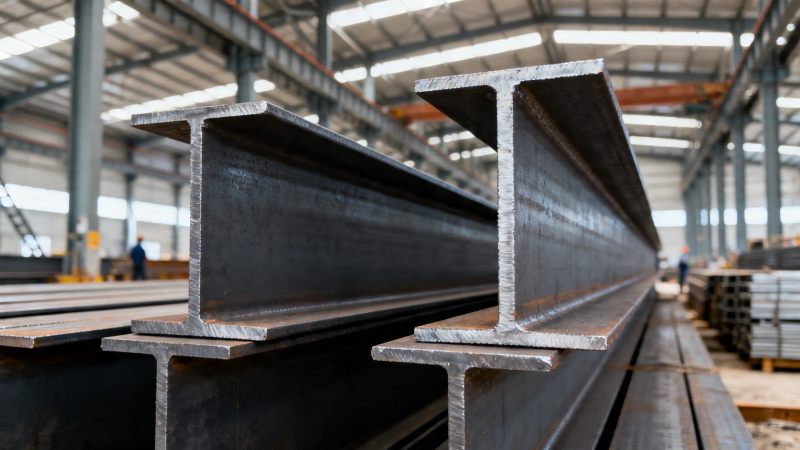
In structural steel work, the difference between I beam vs H beam strength is not only a matter of shape. It directly affects bending resistance, axial load capacity, connection design, fabrication efficiency, and transport cost. An I beam usually has a narrower flange and a deeper web profile, while an H beam commonly has wider flanges and a section shape that distributes load more evenly under many practical conditions.
For project managers and technical evaluators, the key question is simple: which section performs better under the actual load path? In low- to medium-rise steel framing, an I beam may work well when bending is dominant and weight control matters. In columns, transfer beams, heavy industrial frames, and long-span support systems, H beams are often preferred because they provide stronger flange support and better stability in multi-directional loading scenarios.
In day-to-day procurement, beam selection is rarely based on geometry alone. Buyers also compare section availability, lead time, standard compliance, fabrication tolerances, and welding requirements. A wrong beam choice can increase reinforcement demand, add secondary bracing, or create delays of 2–4 weeks if non-standard sizes need resourcing. That is why structural steel manufacturers with ASTM, EN, JIS, and GB production experience can reduce both technical and commercial risk.
For distributors, contractors, and enterprise decision-makers, beam strength should be judged in context: span length, support condition, live load fluctuation, connection type, corrosion environment, and installation sequence. A section that looks economical on paper may become costly after considering welding hours, coating area, transport constraints, and on-site crane handling. Real applications always reward balanced section design rather than headline weight alone.
What strength means beyond a simple section label
When engineers discuss strength, they usually separate 3 core indicators: bending capacity, shear capacity, and buckling resistance. For columns and heavily loaded supports, local and overall buckling often becomes as important as nominal yield strength. In practical beam procurement, section modulus, flange width, web thickness, and moment of inertia must all be checked against the design load combination rather than reviewed in isolation.
- Bending-dominant applications: deeper sections can improve moment resistance over medium spans.
- Compression-dominant applications: wider flanges and balanced geometry can improve stability.
- Complex connections: flange width and thickness influence bolt layout and weld accessibility.
- Service life planning: coatings, corrosion allowances, and tolerances also affect usable performance.
Quick comparison for searchers, buyers, and engineers
The table below summarizes how I beam vs H beam strength is usually assessed in real structural applications. The exact result still depends on section size, steel grade, design code, and loading method, but these distinctions help non-design stakeholders make faster first-round decisions.
The practical takeaway is clear: H beams are not automatically “stronger” in every case, and I beams are not automatically “cheaper” once total project cost is measured. The right answer depends on load direction, span range, support conditions, and fabrication strategy. Early coordination between designer, fabricator, and supplier can prevent section changes late in the project cycle.
Which applications favor I beams, and where do H beams perform better?
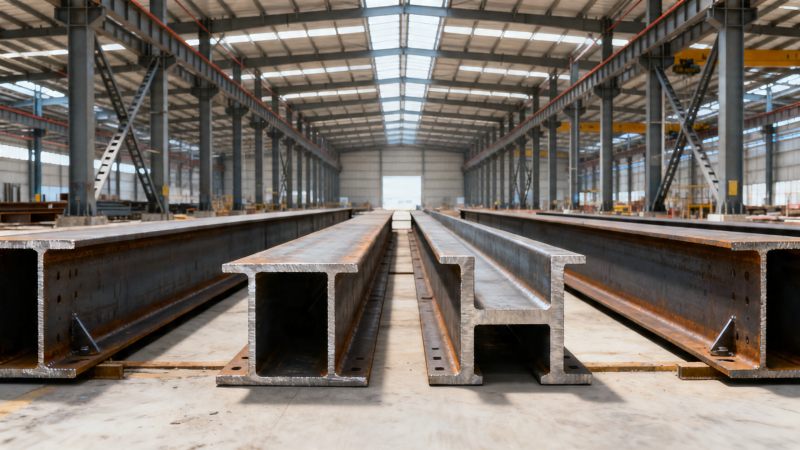
In real structural applications, section selection follows the load case. Warehouses, equipment platforms, mezzanines, portal frames, machinery bases, and pipe rack systems all create different performance demands. For example, a beam supporting a repetitive floor load over a moderate span may favor an I beam if lateral restraint is sufficient. A heavily loaded industrial support carrying vertical and lateral effects may justify an H beam for safer reserve capacity.
Construction teams also need to think about handling and assembly. On sites with limited lifting capacity, reducing member weight can help speed installation. On the other hand, if a section requires extra stiffeners, added plates, or more complicated connections, the labor savings may disappear. This is why project owners often compare not only section price per ton, but also the 4-step impact chain: fabrication, transport, erection, and inspection.
For procurement officers and commercial evaluators, application fit matters because overspecification increases steel consumption, while underspecification triggers redesign risk. A balanced sourcing strategy uses standard beam sizes whenever possible, checks stock availability, and verifies whether the project demands ASTM, EN, JIS, or GB compliance. In export-oriented supply chains, standard matching can save 7–15 days compared with changing material grades or non-standard profiles late in production.
Hongteng Fengda supports buyers who need more than a catalog answer. As a structural steel manufacturer and exporter from China, the company supplies steel beams, angle steel, channel steel, cold formed steel profiles, and customized structural components for global construction and industrial use. This matters when the beam decision affects adjacent steel items such as bracing angles, support channels, or welded assemblies delivered under one project schedule.
Typical scenario-based selection
The table below helps technical teams and buyers compare common scenarios. These are practical tendencies rather than design substitutions, but they align with how many construction and manufacturing projects screen beam options before detailed engineering review.
This comparison shows why “stronger” cannot be separated from “where used.” A beam section should be evaluated within the full structural system, including connection plates, stiffeners, support spacing, and service load variation. Buyers who request a project-based recommendation instead of a generic beam type usually reduce revision cycles and avoid unnecessary material substitutions.
Related products often matter in the same package
Beam performance is often linked to surrounding steel components. In industrial projects, support systems may include structural pipe, braces, channels, and custom-fabricated steel parts. For example, a pipe rack or equipment support frame may require seamless pipe sections for load transfer, process routing, or protective structural detailing alongside beams and angle steel.
A practical option for such assemblies is a106 gr b Seamless Pipe, which is available in A106 Gr B with thickness from 0.5–75mm/customized, outer diameter from 10–3048mm, and length from 1–12m. Its stated tolerances include outer diameter ±0.5mm, thickness ±0.05mm, and length ±5mm, with tests such as squash test, extended test, water pressure test, crystal rot test, and heat-related inspection procedures.
For project teams working in low-temperature or strength-demanding environments, the product positioning highlights high strength and good low-temperature toughness, while also serving as a replacement for traditional Q235 steel pipes in some engineering applications. When beams, pipes, and connection materials are sourced together, the procurement process becomes easier to control in terms of compatibility, lead time, and documentation matching.
What should buyers check before choosing between I beam and H beam?
Buyers often receive drawings with limited detail, especially in early budgeting or tender stages. At that point, the decision between I beam vs H beam strength should be translated into a procurement checklist. Technical strength is one part of the decision, but commercial readiness also matters: available size range, mill route, test documents, coating needs, fabrication complexity, and destination compliance standards all influence the final purchase outcome.
A practical review starts with 5 checks. First, confirm whether the member acts mainly as a beam, column, or combined-load section. Second, verify span and support conditions. Third, check whether the section is standard under the required code family. Fourth, review welding, drilling, or galvanizing impact. Fifth, match lead time with the project schedule. In many export orders, production plus documentation plus shipping planning can span 2–6 weeks depending on quantity and finishing scope.
Quality control personnel and safety managers should also confirm dimensional tolerance, material traceability, and inspection scope. For structural steel, consistency is often more valuable than a nominally low unit price. If flange thickness varies beyond expected tolerances, or if section straightness is not controlled, field fit-up costs rise quickly. This is especially important in bolt-connected systems where hole alignment and plate seating affect assembly efficiency.
Hongteng Fengda supports this stage by combining modern manufacturing facilities with strict quality control and supply experience across North America, Europe, the Middle East, and Southeast Asia. For buyers managing multi-country projects, that means more predictable communication around standards, section substitution feasibility, OEM requirements, and shipment readiness rather than isolated price quotations without engineering context.
Procurement checklist for faster approval
- Confirm whether the section will face mainly bending, mainly compression, or a combined load case.
- Review steel grade, standard system, and whether substitution between ASTM, EN, JIS, or GB is acceptable.
- Check if beam size is a regular production item or needs customization, which may extend lead time by 7–15 days.
- Evaluate fabrication details such as welded plates, drilling pattern, end preparation, and coating or pickling requirements.
- Ask for inspection scope, dimensional tolerance confirmation, and packing method before final PO approval.
Cost is more than the tonnage price
Finance approvers and business evaluators often focus on the price per ton first, but total installed cost tells a more accurate story. A heavier H beam may still be economical if it reduces stiffeners, secondary supports, rework, or erection time. A lighter I beam may appear efficient, yet require more bracing, more connection detailing, or a tighter installation tolerance that raises labor cost.
This is why many industrial buyers compare 3 layers of cost: material supply cost, processing and logistics cost, and field installation cost. In projects with repeated frames or large quantities, even a small reduction in connection hours across dozens of members can outweigh a modest increase in steel weight. Good suppliers help buyers compare these trade-offs before the order is locked.
How do standards, compliance, and quality control affect beam selection?
In international steel procurement, standards are part of structural performance. A beam that meets the wrong standard may create design approval issues, inspection disputes, or import documentation problems. When comparing I beam vs H beam strength, engineers must also confirm which section tables, tolerances, and material properties apply under the design code. The section may look similar in profile, yet differ in dimensional series or documentation requirements.
For quality teams, the practical process usually includes 4 control points: raw material verification, dimensional inspection, production traceability, and final documentation review. These controls are especially important for export projects where the beam may be fabricated in one country, coated in another, and installed in a third. Without clear documentation flow, even a technically acceptable section can face project acceptance delays.
Hongteng Fengda manufactures structural steel products in alignment with major international standards including ASTM, EN, JIS, and GB. This flexibility helps project teams that need standard specifications or OEM solutions across beam systems, angle steel, channel steel, cold formed profiles, and customized structural components. For distributors and EPC buyers, one coordinated source often simplifies supplier qualification and reduces interface problems.
Compliance also affects safety management. If the project environment includes corrosive exposure, low-temperature conditions, or repeated service loading, the beam selection review should extend beyond shape and weight. Coating compatibility, weldability, material toughness, and inspection scope should be matched to the service environment. That is where manufacturers with disciplined quality control offer real value, especially for projects with tight delivery windows and low tolerance for replacement risk.
Standards and verification priorities
The table below shows what many technical and procurement teams review before approving structural beam supply for construction and industrial use.
If these review points are handled early, project teams reduce approval friction and make beam selection more reliable. Compliance is not separate from performance; it is part of how performance is verified, accepted, and maintained across the supply chain.
Common questions, risks, and when to ask for a custom recommendation
Many searchers begin with a simple question about I beam vs H beam strength, but most purchase decisions become more complex after reviewing span, load, code, and budget. To avoid costly changes, it helps to address common misconceptions directly. Below are the questions most relevant to technical evaluators, procurement teams, distributors, and project owners deciding between standard and customized structural steel supply.
Is an H beam always stronger than an I beam?
No. H beams often provide better overall stability for columns and heavy-duty members, but “stronger” depends on the exact section size, material grade, span, restraint condition, and load direction. For a bending-controlled member with proper bracing, an I beam can be the more efficient choice. Designers should compare section properties and code checks, not just the profile name.
What are the most common procurement mistakes?
Three errors appear frequently. First, selecting by weight alone without considering connection and installation cost. Second, treating section similarity as standard equivalence across ASTM, EN, JIS, and GB systems. Third, delaying tolerance and inspection confirmation until after production. These issues can create rework, site delay, or documentation rejection, especially in export projects with multiple approval stakeholders.
When is a custom structural steel solution worth considering?
A custom solution is worth reviewing when the project includes non-standard spans, unusual connection geometry, integrated beam-and-pipe supports, OEM fabrication, or special delivery packaging requirements. It is also useful when the project bundles beams, angle steel, channel steel, and cold formed sections under one delivery plan. In these cases, a coordinated manufacturing approach can reduce sourcing fragmentation and speed up approval.
How long does beam sourcing usually take?
Lead time varies by section standard, order quantity, processing scope, and export destination. Regular production items may move faster, while customized beams, extra fabrication, or mixed-product orders can extend the cycle. As a practical planning range, buyers often budget 2–6 weeks for production coordination and documentation before shipment, with additional time for ocean or inland transport depending on route.
Why work with a supplier that covers beams and related steel products?
Because structural efficiency is not created by one member alone. Projects often require beam sections, support angles, channels, cold formed profiles, and customized steel components to function as one system. Working with a manufacturer-exporter that understands cross-product compatibility helps buyers reduce sourcing risk, align documentation, and control total project cost more effectively than managing many disconnected vendors.
Why choose us for structural steel beam evaluation and supply?
If your team is comparing I beam vs H beam strength for a real construction, industrial, or manufacturing project, the best next step is to turn the discussion into a project-specific review. Hongteng Fengda provides structural steel products and customized solutions from China for global buyers who need stable production capacity, consistent quality, and dependable lead times. The focus is not only on supplying steel, but on reducing sourcing risk and improving project execution.
You can consult us for practical topics that directly affect procurement and engineering decisions: beam section comparison, steel grade confirmation, standard matching, OEM processing, tolerance review, surface treatment options, packaging method, and delivery scheduling. If your project includes beams together with angle steel, channel steel, cold formed profiles, or customized components, we can help align the solution under one coordinated supply plan.
For technical teams, we can discuss load scenario fit, section availability, and whether standard or customized production is more practical. For buyers and finance approvers, we can review quotation structure, quantity planning, and lead-time impact. For quality and safety managers, we can clarify inspection scope, documentation needs, and compliance expectations for ASTM, EN, JIS, or GB-related orders.
If you are preparing a quotation request, send the drawing, target standard, size list, quantity range, and delivery destination. If you are still in the evaluation stage, send the application scenario, span estimate, loading direction, and preferred schedule. We can support parameter confirmation, product selection, delivery cycle review, customized solutions, certification requirements, sample support, and quotation communication based on your actual structural steel project.
Please give us a message


Please enter what you want to find