When sourcing structural steel—whether you're buying angle steel online, evaluating ASTM A36 angle steel price per ton in the Philippines, or verifying compliance with international standards for structural steel products—on-site quality verification is critical. Without lab equipment, procurement managers and field engineers still need reliable, field-ready methods to test structural steel quality. This guide reveals practical, non-destructive techniques to spot common defects in steel beams, distinguish angle steel vs channel steel differences, and ensure materials meet ASTM, EN, or GB specs—empowering technical assessors, project managers, and quality control teams to make confident decisions before installation.
Why Field Testing Matters for Structural Steel Procurement
In global steel supply chains—especially for buyers across North America, Europe, the Middle East, and Southeast Asia—delayed lab testing can stall site readiness by 7–15 days. Structural steel components like Z-beam are often shipped under tight delivery windows (typically 2–4 weeks from PO), making pre-installation verification essential to avoid rework, safety incidents, or cost overruns.
Hongteng Fengda’s export-standard quality control includes 100% visual inspection, dimensional checks at ±1% tolerance, and batch-specific mill test reports (MTRs) aligned with ASTM A6/A6M, EN 10025, and GB/T 700. But even with certified documentation, field validation remains the last line of defense—particularly when receiving cold-formed profiles such as Z-shaped steel profile used in purlins, wall beams, or lightweight roof systems.
This isn’t about replacing lab analysis—it’s about deploying rapid, repeatable checks that align with real-world constraints: no power source required, minimal tools, and interpretable results within 5 minutes per piece.
5 Field-Ready Methods to Verify Structural Steel Quality
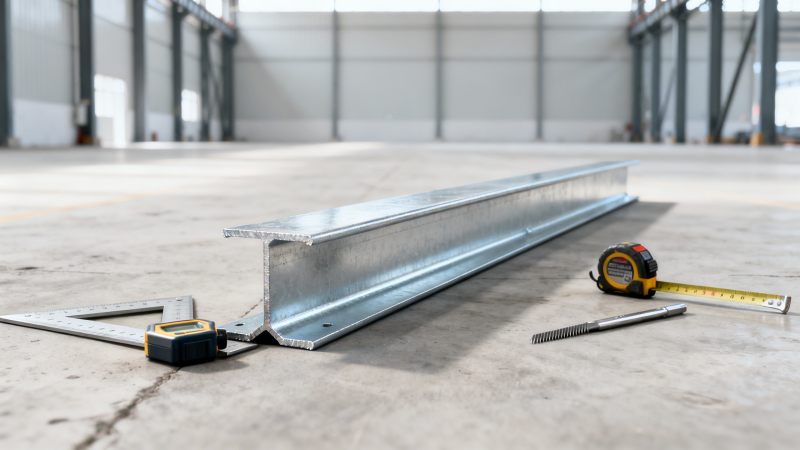
These techniques require only a calibrated tape measure, straightedge, magnet, file, and visual reference—no electricity, calibration lab, or destructive sampling. Each method targets one of five critical failure modes: dimensional deviation, surface defect propagation, material grade mismatch, coating integrity loss, and residual stress-induced warpage.
- Visual Surface Inspection: Scan for laminations, scale residue, or rolling cracks under natural light—especially on flange edges and web junctions. Acceptable defect depth ≤0.2mm per EN 10025-2 Clause 10.2.
- Magnetic Permeability Check: Use a rare-earth magnet (≥0.4T strength) to test for austenitic stainless contamination or low-carbon substitution. Q235B, Q345B, and ASTM A36 all show strong attraction; SS304 or duplex grades do not.
- File Test for Hardness Proxy: Apply consistent pressure with a medium-cut mill file. Genuine carbon structural steels (e.g., Q235B, S235, A36) produce continuous, fibrous chips. Over-hardened or quenched substitutes yield brittle, granular filings.
- Dimensional Consistency Audit: Measure thickness at 3 points per flange (start/mid/end) and web center. Tolerance must hold within ±1% of nominal value—critical for load-bearing applications like mechanical columns or brackets.
- Coating Adhesion Scratch Test: For galvanized Z-beam, use a sharp blade to cut a 10mm × 10mm grid. No flaking beyond 15% of squares indicates compliant zinc layer adherence per ISO 2063.
What Each Method Reveals About Compliance
Unlike lab tests measuring tensile strength or impact toughness, these field checks validate *conformance to specification intent*. For example, ASTM A572 Grade 50 requires minimum yield strength of 345 MPa—but if the steel fails the file test or shows inconsistent magnetism, it likely falls outside chemical composition limits (e.g., Mn/C ratio) that govern strength development during rolling.
How to Interpret Results Against International Standards
Field verification doesn’t replace certification—but it validates whether documentation matches physical reality. Below is how key parameters map across major standards:
Note: Hongteng Fengda’s Z-beam production adheres to the strictest of these tolerances—±1% thickness control applies across all grades (Q235B to Q460C, A36 to G61), with CE, SGS, and BV-certified packaging ensuring traceability from mill to port. This consistency enables buyers to rely on field checks without second-guessing spec alignment.
Common Pitfalls & When to Escalate to Lab Testing
Three scenarios demand immediate escalation beyond field methods: (1) inconsistent magnet response across a single bundle (>15% variance), (2) visible micro-cracks after bending or cutting, and (3) dimensional drift exceeding ±1.5% on more than 5% of sampled units. In such cases, request MTR cross-check or initiate third-party lab testing—most accredited labs deliver tensile/chemical reports in 3–5 business days.
Also beware of “spec-matching” substitutions: a supplier may quote ASTM A36 but ship S235JR with identical dimensions and appearance. The file test and magnetic check catch this instantly—saving potential liability in seismic zones or high-wind regions where yield strength margins are non-negotiable.
For buyers managing multiple projects across ASEAN, GCC, or EU markets, Hongteng Fengda provides pre-shipment dimensional audits, batch-specific MTRs, and optional witnessed testing at independent labs (BV, SGS)—all coordinated within standard 2–4 week lead times.
Why Global Buyers Choose Hongteng Fengda for Structural Steel Assurance
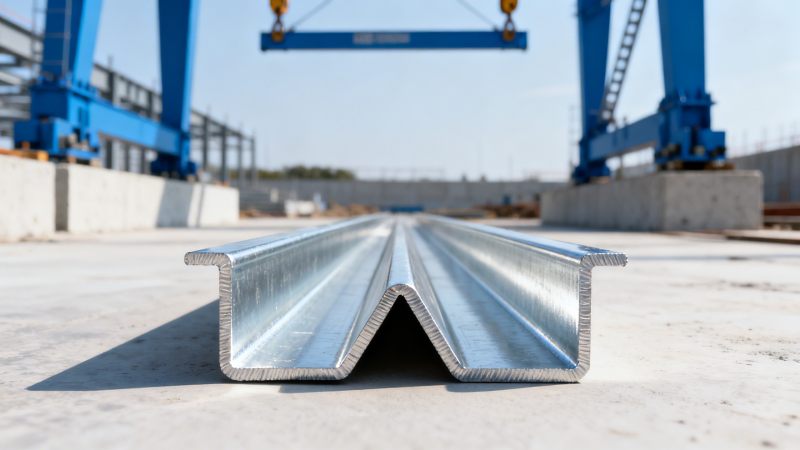
We don’t just ship steel—we deliver verified structural integrity. Every order includes: (1) ISO 9001-certified QC records, (2) EN/ASTM/GB-compliant MTRs with heat number traceability, (3) roll-formed Z-beam with galvanized coating tested to ≥460 g/m², and (4) packaging designed for sea freight stability and on-site handling efficiency.
Whether you’re validating angle steel vs channel steel for warehouse racking, specifying Z-shaped steel profile for a solar farm purlin system, or comparing ASTM A36 angle steel price per ton in the Philippines against landed cost—including customs, inspection, and logistics—our team supports your technical, procurement, and financial due diligence with documented data—not assumptions.
Contact us today for: dimensional tolerance confirmation, mill test report review, custom length or perforation options for Z-beam, sample coordination, or FOB/CIF pricing with certified compliance documentation.
Please give us a message


Please enter what you want to find