Decoding Load-Bearing Requirements and Structural Dynamics
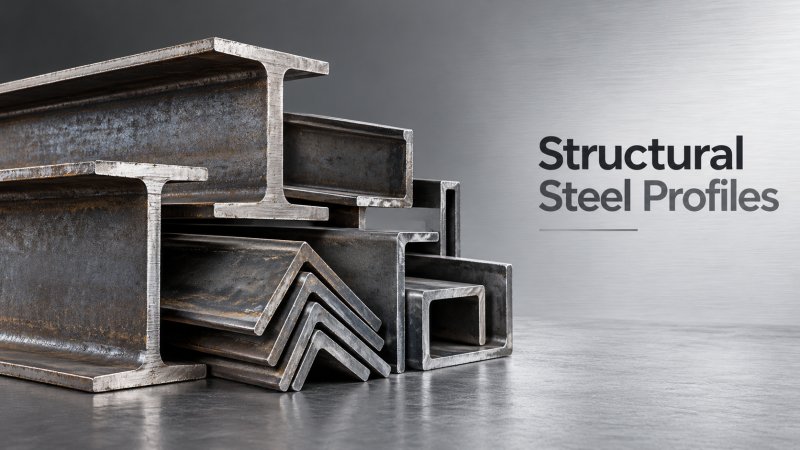
When procurement professionals evaluate a structural project, the first step is always to map the mechanical demands. A steel profile is not just a shape; it is a calculated response to stress, shear, and torsion. For instance, angle steel is highly effective for bracing and framing, while channel steel excels in structural support and purlins. Steel beams, particularly I-beams and H-beams, are the backbone of heavy-load structures.
Understanding the specific yield strength and tensile strength required for your project is non-negotiable. If you are sourcing from a professional structural steel manufacturer and exporter from China, you should expect detailed mill test certificates that verify these mechanical properties. At Hongteng Fengda, we ensure that every batch of angle steel, channel steel, and steel beams undergoes strict quality control to meet the exact load-bearing specifications of global construction and industrial projects. The selection must always begin with the structural engineer's calculations, translating theoretical loads into tangible material specifications.
Hot Rolled vs. Cold Formed Profiles: Choosing the Right Process
The manufacturing process of the profile significantly influences its mechanical properties and cost-effectiveness. Hot rolled profiles are formed at high temperatures, which makes the steel more malleable and allows for the creation of massive, thick-section beams. They are the default choice for primary structural frameworks where high load-bearing capacity is paramount. The cooling process at room temperature results in a scaled surface, which is perfectly fine for structural applications where aesthetics are secondary.
On the other hand, cold formed steel profiles are shaped at room temperature. This process increases the yield strength of the steel due to strain hardening and allows for much tighter dimensional tolerances and smoother surface finishes. Cold formed profiles are ideal for secondary structures, purlins, and applications where precise geometry and lighter weight are required. Additionally, the residual stresses introduced during the cold forming process must be considered in the structural design, as they can affect the buckling behavior of the profiles. Procurement teams should work closely with their engineering departments to ensure that the chosen manufacturing process aligns perfectly with the structural design assumptions.
Environmental Exposure and Surface Treatment Strategies
The environment where the steel will operate dictates its longevity. A structure in a dry, inland facility has vastly different requirements compared to a coastal bridge or a chemical plant. Corrosion is the silent killer of structural integrity. Therefore, selecting the right surface treatment is as critical as choosing the base metal.
Options like hot-dip galvanizing provide a robust zinc coating that offers sacrificial protection, making it ideal for outdoor or high-moisture environments. For indoor applications or specific aesthetic requirements, treatments such as passivation, oiling, lacquer sealing, or phosphating might be sufficient. In some cases, untreated or black-finished steel is preferred for subsequent on-site painting. It is also worth noting that the choice of surface treatment can impact the welding process. Galvanized steel, for instance, requires specific welding techniques and adequate ventilation to prevent the release of toxic zinc fumes. Factoring in these on-site processing realities during the procurement phase can prevent unexpected safety and operational hurdles during the construction phase.
Navigating the Complexity of International Standards
One of the most common pitfalls in global steel procurement is misaligning material grades with regional standards. A profile that meets the GB standard in China might have a direct equivalent in ASTM (USA), EN (Europe), or JIS (Japan), but the chemical composition and mechanical tolerances can vary slightly. Procurement teams must explicitly state the required standard in their inquiries to avoid costly substitutions.
To simplify this, here is a quick reference for common structural steel grade equivalents. EN 10025 S235JR is generally equivalent to ASTM A36 and GB Q235B. EN 10025 S355JR aligns closely with ASTM A572 Grade 50 and GB Q345B. For pipe and tube applications, ASTM A53 and A106 have specific chemical and mechanical boundaries that must be strictly adhered to when substituting from other standards. Relying on a manufacturer with modern facilities and strict adherence to major international standards—including ASTM, EN, JIS, and GB—eliminates the guesswork. Hongteng Fengda specializes in supplying both standard specifications and OEM solutions that strictly comply with these global benchmarks, ensuring that your materials are legally and structurally compliant in your target market.
Integrating Secondary and Specialized Components
While primary beams and columns get the most attention, the success of a structural project often hinges on secondary components. Elements used for decoration, water supplying systems, handrails, railings, staircases, doors, windows, balconies, fences, and benches require specific profiles that balance strength with formability.
This is where versatile carbon steel products come into play. For instance, a high-quality Hot rolled Carbon Steel Round Bar is frequently utilized in these secondary applications due to its excellent strength and wear resistance. Available in diameters ranging from 5mm to 2500mm and lengths of 2m, 5m, 6m, or 12m, these round bars can be easily machined, welded, and finished to suit intricate architectural details. When sourcing such components, it is crucial to verify the material grade—such as 10#, 20#, 45#, or Q235—and ensure the supplier offers flexible minimum order quantities to optimize your project budget without compromising on delivery timelines.
Assessing Supply Chain Reliability and Lead Times
Selecting the right profile on paper is only half the battle; getting it delivered on time is the other. Construction delays caused by material shortages can escalate costs exponentially. Therefore, evaluating a supplier's production capacity and logistical capabilities is a critical part of the selection process.
A reliable partner should offer stable production capacity and dependable lead times. For example, a standard delivery window of 7-15 workdays after receiving a deposit or L/C is a strong indicator of a well-organized supply chain. Furthermore, the packaging must be designed for international transit. Standard export seaworthy packaging ensures that the steel profiles arrive at the site without transit damage, suitable for all kinds of transport, whether by sea or rail. Hongteng Fengda supports global buyers by maintaining consistent quality and predictable lead times, helping partners reduce sourcing risks and complete projects efficiently across North America, Europe, the Middle East, and Southeast Asia.
Quality Assurance and Documentation Requirements
In international steel trade, the physical product is only as good as the paperwork that accompanies it. Procurement professionals must ensure that the supplier provides comprehensive documentation, including Mill Test Certificates (MTC) that detail the chemical composition and mechanical properties of each heat number.
Furthermore, third-party inspections from recognized bodies like SGS, BV, or TÜV should be available upon request. This level of transparency is crucial for large-scale infrastructure projects where regulatory compliance is strictly monitored. A professional manufacturer will have no issue providing these documents and will often have in-house quality control labs to perform preliminary testing before the material leaves the factory. Ensuring that your supplier has robust quality assurance protocols protects you from receiving substandard materials that could lead to catastrophic project delays or structural failures.
Finalizing the Procurement Strategy
The decision-making process for selecting a steel profile should never be based on price alone. The total cost of ownership includes the initial purchase price, transportation, on-site processing, maintenance, and the potential cost of structural failure. Procurement professionals must adopt a holistic view. Start by defining the exact mechanical and environmental requirements. Next, verify the material standards and ensure they align with local building codes. Then, evaluate the manufacturer's quality control processes, customization capabilities, and supply chain reliability.
Before finalizing your next purchase order, take a moment to review your technical specifications against the supplier's capabilities. Ensure that every profile, from the primary load-bearing beams to the smallest secondary components, is backed by verifiable certifications and a proven track record of successful global delivery. By partnering with a dedicated structural steel manufacturer committed to delivering value through quality, reliability, and professional service, you secure more than just metal; you secure the foundational integrity and long-term success of your project.
Please give us a message


Please enter what you want to find