Understanding a steel wire gauge chart is essential for anyone comparing wire sizes, selecting the right material, or reviewing product specifications. This guide explains how to read a steel wire gauge chart correctly, helping you avoid costly mistakes and choose the proper steel wire gauge for construction, manufacturing, and industrial applications.
Why a Checklist Approach Works Better Than Guessing
A steel wire gauge chart looks simple at first glance, but many buyers, engineers, and sourcing teams misread it because they focus on the gauge number alone. In practice, wire selection should be based on a short checklist: gauge system, actual diameter, unit of measure, tolerance, coating condition, and intended application. This matters because the same gauge number may be interpreted differently if the chart standard is unclear, and even a small diameter difference can affect strength, flexibility, weight, weldability, and cost.
For information researchers in the steel industry, using a checklist method improves speed and accuracy. Instead of asking only “What gauge is this wire?”, the better question is “What does this gauge mean in actual millimeters or inches, and does it match the application requirement?” That change in approach reduces procurement risk and helps compare offers from different suppliers more effectively.
First Checks to Make Before Reading Any Steel Wire Gauge Chart
Before you read any steel wire gauge chart, confirm the following points first. These checks prevent the most common interpretation errors.
- Identify the gauge standard being used, such as SWG, BWG, or AWG-related references. Not all charts follow the same system.
- Check whether the chart shows bare wire diameter or coated wire diameter.
- Confirm the unit: millimeters, inches, or both.
- Review tolerance limits, because actual production dimensions may vary within standard ranges.
- Match the wire size to the end use, such as binding, reinforcement, mesh, spring production, fencing, or industrial forming.
- Check whether the material grade or surface treatment affects the final performance requirement.
If one of these points is missing, the steel wire gauge chart may still be useful as a reference, but not enough for a final purchase decision.
How to Read a Steel Wire Gauge Chart Step by Step
1. Start with the gauge number, but do not stop there
The gauge number is only an index. In most steel wire gauge chart formats, a lower gauge number usually means a thicker wire, while a higher gauge number means a thinner wire. However, you should never rely on that relationship alone when comparing products across suppliers or standards.
2. Read the actual diameter column
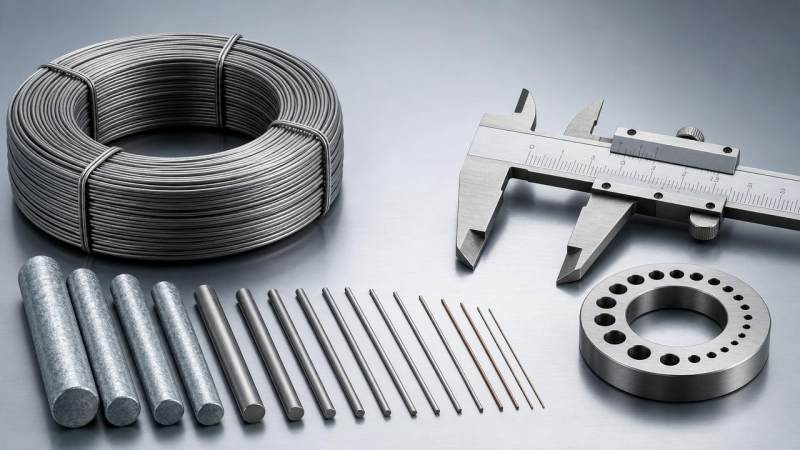
The actual diameter is the most important value on the chart. It is typically shown in millimeters and sometimes inches. For engineering, fabrication, and international sourcing, the actual diameter matters more than the gauge label because machinery settings, design calculations, and quality checks all depend on physical size.
3. Verify the chart standard
A steel wire gauge chart only makes sense when the standard is identified. Different regions and industries may use different naming habits. If a quotation says “12 gauge steel wire” but does not show the actual diameter, ask for the equivalent metric size immediately. This is especially important in export trade, where buyers from North America, Europe, the Middle East, and Southeast Asia may use different reference habits.
4. Check if the wire is plain, galvanized, or otherwise processed
Surface treatment can change how the wire should be evaluated. For example, galvanized steel wire may have different final dimensions depending on whether the chart refers to core wire diameter or finished coated diameter. This affects fit, weight, and performance in corrosion-prone environments.
5. Match size to application requirements
Once you know the actual diameter, compare it with the required strength, bending radius, tensile needs, and fabrication process. A correct reading of the steel wire gauge chart is not complete until the wire size is linked to real use conditions.
Core Judgment Standards When Comparing Wire Sizes
If you are reviewing multiple suppliers or technical sheets, use these judgment standards instead of comparing gauge numbers only.
Application-Based Reading: What Changes by Use Case
Construction and reinforcement
In construction, a steel wire gauge chart is often used for tying wire, welded mesh, and reinforcement-related products. Here, practical priorities include tensile strength, consistency, and ease of handling on site. Thicker wire may improve strength, but if the wire is too rigid, it can slow installation or complicate shaping.
Manufacturing and forming
In manufacturing, diameter precision becomes more critical because wire may pass through automated machinery, cutters, rollers, or forming tools. Even if the steel wire gauge chart looks acceptable, poor tolerance control may cause downtime, tool wear, or dimensional defects.
Outdoor and corrosive environments
For fencing, agricultural use, coastal areas, or exposed infrastructure, gauge reading must be combined with corrosion protection. Buyers often focus on wire diameter first, but long-term service life depends equally on coating quality and environmental fit.
This is also a useful reminder when comparing broader steel solutions. In many projects, wire products are only one part of the specification package, and buyers may also need coated sheet or coil materials for roofing, wall systems, equipment housings, or fabricated parts. For example, Color Coated Galvalume Steel Coil PPGL is widely used in construction, transportation, appliances, furniture, and other industries where corrosion resistance, weather resistance, heat reflectivity, and appearance all matter. With thickness options from 0.13mm to 0.8mm, widths from 600mm to 1250mm, customizable length, RAL-based color options, and paint systems such as PE, SMP, HDP, and PVDF, it shows how steel selection often goes beyond size alone and must include coating structure, processing performance, and final application needs.
Common Mistakes People Make with a Steel Wire Gauge Chart
- Assuming every gauge chart uses the same standard.
- Comparing gauge numbers without checking actual diameter.
- Ignoring whether the measurement refers to bare or coated wire.
- Skipping tolerance data when reviewing quotations.
- Choosing the smallest acceptable diameter to reduce cost without evaluating performance risk.
- Using a steel wire gauge chart as the only decision tool, without checking grade, tensile strength, or coating.
These mistakes are common because gauge charts look authoritative. In reality, they are starting points, not complete specifications.
A Practical Checklist for Buyers and Sourcing Teams
- Request the steel wire gauge chart together with actual metric diameter.
- Ask which standard or chart system the supplier follows.
- Confirm material grade, coating type, and finish condition.
- Check diameter tolerance and test method.
- Match the wire to the real application, not just the catalog description.
- Review packaging, coil weight, and handling needs if the wire will be processed automatically.
- Compare supplier data with project drawings, standards, or internal approval criteria.
FAQ: Quick Answers About Steel Wire Gauge Reading
Is a lower gauge always thicker?
Usually yes within a given chart system, but you should still verify the actual diameter on the steel wire gauge chart before making a decision.
Why is actual diameter more important than gauge number?
Because machinery, engineering calculations, and quality inspection rely on measurable size, not naming conventions.
Can two suppliers use the same gauge term but mean different sizes?
Yes. That is why every quotation should include the actual wire diameter and the reference chart standard.
Final Decision Guide: What to Confirm Before You Move Forward
To read a steel wire gauge chart correctly, prioritize the facts that affect execution: chart standard, actual diameter, tolerance, coating, and use case. This checklist-based method is faster and safer than relying on gauge labels alone. For researchers, buyers, and project teams in the steel sector, the goal is not only to understand the chart, but to convert chart data into a reliable sourcing or specification decision.
If you need to move from research to supplier communication, prepare these questions first: What exact diameter is required in millimeters? Which steel wire gauge chart standard is being referenced? What tolerance is acceptable? Is the wire bare or coated? What mechanical properties are required? What packaging, lead time, and quantity range fit the project? Clear answers to these points will help you compare offers confidently and reduce downstream risk.
Please give us a message


Please enter what you want to find