Understanding structural steel properties is essential for improving safety, durability, and project performance in modern construction. Whether selecting lightweight structural steel for efficient designs, high strength structural steel for demanding loads, or rebar for retaining wall applications, the right material choice directly affects risk control, compliance, and long-term value. This article explores how steel performance influences safer decisions for engineers, buyers, and project stakeholders.
For contractors, engineers, procurement teams, and quality managers, safety is not determined by design drawings alone. It depends on whether the selected steel can carry the required load, tolerate fabrication, resist environmental exposure, and remain stable over a service life that may extend 20, 30, or even 50 years.
In global sourcing, the challenge is greater. Buyers must compare specifications, standards, lead times, and processing options while controlling cost and reducing supply risk. A structural steel manufacturer with stable production, strict quality control, and compliance with ASTM, EN, JIS, and GB standards can help project teams avoid delays, rework, and safety failures.
Why Structural Steel Properties Matter for Safety
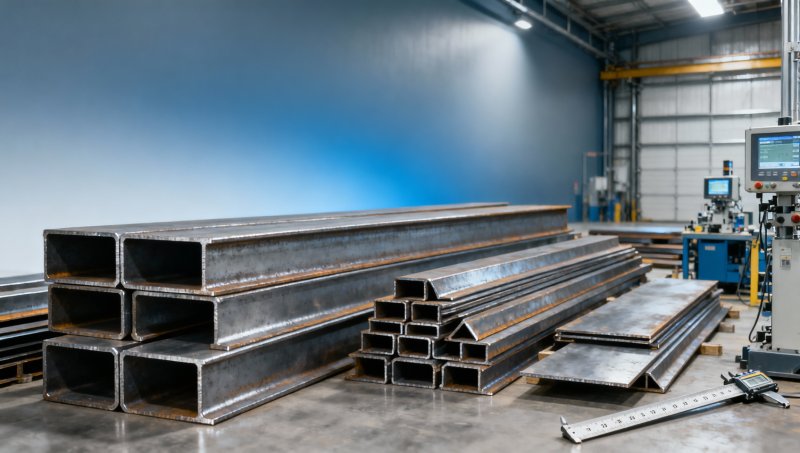
Structural steel safety begins with material behavior under real operating conditions. A beam, channel, angle, or cold formed profile must perform not only in static calculations but also during welding, transport, installation, and service. If one key property is mismatched to the application, the result may be excessive deflection, local buckling, cracking, or accelerated corrosion.
The most safety-critical properties usually include yield strength, tensile strength, ductility, hardness, toughness, dimensional accuracy, and corrosion resistance. In practical terms, engineers often look at whether steel can keep deformation within acceptable limits such as span deflection criteria, whether thickness tolerance stays within a narrow range such as ±0.3 mm to ±1.0 mm depending on section type, and whether the material can absorb impact without brittle failure in low-temperature conditions.
For project managers and procurement personnel, the material decision affects more than structural calculations. It influences fabrication speed, waste rate, installation efficiency, and compliance documentation. A lower-cost option that lacks consistent chemistry or mechanical properties can increase hidden costs through failed inspection, rejected batches, or additional reinforcement work.
In industrial plants, warehouses, bridges, equipment supports, and modular buildings, safety margins must account for repeated loading, vibration, weather, and long service intervals. Selecting steel based on one headline parameter alone, such as “high strength,” is rarely sufficient. The correct decision requires matching multiple properties to the exact structural duty.
Key Properties That Directly Influence Risk
The following comparison shows how common steel properties relate to safety outcomes in structural applications. This is especially useful for technical evaluators, safety managers, and purchasing teams reviewing alternatives from different suppliers.
The key conclusion is that structural safety depends on a balanced property profile. A steel grade with high hardness but poor ductility may work in one forming process but create risk in another. This is why reliable manufacturers verify both chemistry and mechanical performance, not just nominal grade labels.
Common Safety Questions During Selection
- Will the steel maintain dimensional stability after cutting, punching, welding, or bending?
- Does the grade meet the required standard, such as ASTM, EN, JIS, or GB, for the destination market?
- Is the section suitable for dynamic load, repetitive use, or outdoor exposure over 10 to 25 years?
- Can the supplier provide traceable inspection records, mill test data, and batch consistency?
How Strength, Ductility, and Toughness Work Together
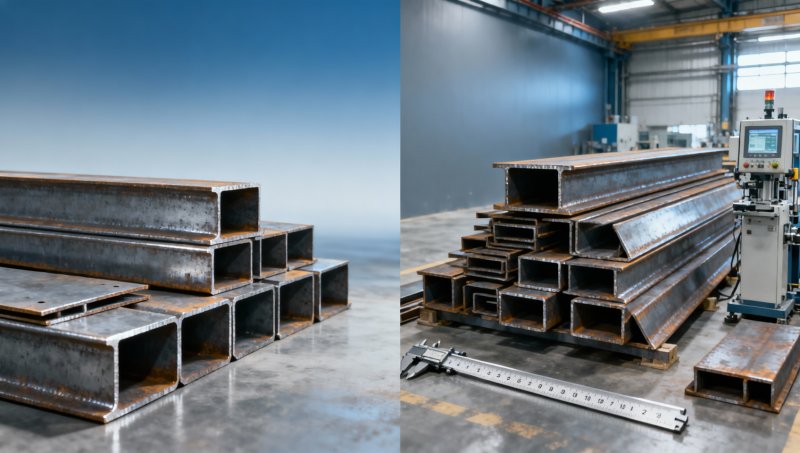
A common mistake in steel procurement is to focus only on strength. In reality, safe structural design requires a combination of strength, ductility, and toughness. These three properties interact in ways that affect not only load capacity but also failure mode, fabrication behavior, and long-term reliability.
High strength structural steel is valuable when reducing section weight or increasing load-bearing capacity. For example, in long-span platforms or heavy industrial frames, higher tensile performance can lower material usage and reduce dead load. However, if the steel becomes too hard or less ductile, fabrication steps such as cold forming, hole expansion, or site adjustment may become more difficult.
Ductility is often the property that provides warning before failure. In seismic zones, impact-prone facilities, or structures exposed to temporary overload, steel that can deform before fracturing gives engineers and operators time to detect and manage the issue. This can be more valuable from a safety perspective than a small increase in nominal strength.
Toughness becomes critical in low-temperature service, transport equipment, and steel members subject to sudden loading. A member with insufficient toughness may crack even when average stress appears acceptable. For this reason, technical evaluation should include the service environment, fabrication route, and end-use condition, not only section size and unit price.
Property Balance by Application Scenario
Different projects prioritize different property combinations. The table below can help project leaders and buyers match steel performance to actual field requirements.
The practical takeaway is simple: there is no universally “best” structural steel. The safer choice is the grade and section that meets loading, fabrication, environment, and code requirements at the same time. A qualified supplier should help convert these requirements into a workable specification before production begins.
Four evaluation points before purchase approval
- Confirm load case, span, connection type, and expected service life, often 15 to 50 years depending on the project.
- Check whether the required grade must satisfy ASTM, EN, JIS, or GB and whether third-party inspection is needed.
- Review processing steps such as galvanizing, punching, bending, or welding, because these can change property priorities.
- Compare total project cost, including reject risk, delivery stability, and post-installation maintenance, not only ex-works price.
Processing Quality, Surface Condition, and Safety Performance
Material properties do not exist in isolation. The way steel is processed can improve or weaken safety performance. Residual stress from forming, poor edge quality after cutting, incorrect heat input during welding, or inconsistent surface treatment can all reduce the expected performance of a structural component.
This is especially relevant for projects that combine structural sections with formed plates or fabricated parts. In many industrial assemblies, plate products are used for stiffeners, enclosures, brackets, machine bases, or secondary support members. When those parts require both strength and formability, choosing a plate with predictable mechanical behavior helps reduce cracking and assembly deviation.
A useful example is High Carbon Steel Plate , which is supplied in models such as SPCC, SPCCT, SPCD, SPCE, SPCF, and SPCG for applications including refrigerators, rails, switchboards, automobile chassis, roofs, car fenders, rear side panels, and interior boards. Available dimensions typically cover Width100mm-3000mm, Length1m-12m, and Thickness0.1mm-400mm, giving project teams flexibility for both standard and OEM processing.
For buyers and technical reviewers, the value lies in measurable properties. This type of plate is described with high tensile strength, hardness under Heat Treatment Code HRBS HV10, smooth surface finish, and good formability for stamping, bending, and deep drawing. Its listed SPCC chemical composition includes C≦0.15, Mn≦0.60, P≦0.100, and S≦0.035, while certification options may align with AISI, ASTM, ASME, DIN, BS, EN, ISO, JIS, GOST, and SAE references depending on project demand.
Why Surface and Processing Control Matter
The following table shows how fabrication and surface variables influence safe use in structural or semi-structural steel components.
When processing is controlled well, steel parts are easier to shape, more consistent to assemble, and less likely to fail during service. This is why manufacturers with modern equipment and strict quality systems are often preferred by international buyers managing multi-country projects and tight delivery windows of 2 to 6 weeks.
Procurement checklist for fabricated steel components
- Request dimensional range, tolerance, and finish requirements before quotation approval.
- Confirm whether parts will be stamped, bent, welded, or deep drawn in 1 or more downstream operations.
- Check corrosion prevention approach, especially for coastal, humid, or chemical environments.
- Review certification and test documentation requirements for each shipment lot.
Standards, Inspection, and Supplier Control in Global Steel Sourcing
Safety does not depend only on the steel grade specified on paper. It also depends on whether the delivered product matches the approved standard and remains consistent from batch to batch. For global procurement teams, supplier control is one of the most effective ways to reduce structural risk, cost overrun, and schedule disruption.
A dependable structural steel manufacturer should be able to support standard sections and customized components while aligning production with major international standards such as ASTM, EN, JIS, and GB. This is important for projects across North America, Europe, the Middle East, and Southeast Asia, where design codes, approval processes, and inspection expectations often differ.
From a quality control perspective, inspection should cover at least 3 layers: raw material verification, in-process dimensional and appearance checks, and final mechanical or documentation review. For larger orders, buyers may also require pre-shipment inspection, sample approval, or third-party witness inspection. These steps typically add 2 to 5 working days but can prevent much larger losses caused by rejected material onsite.
Hongteng Fengda serves global buyers with structural steel products including angle steel, channel steel, steel beams, cold formed steel profiles, and customized structural steel components. For distributors, EPC contractors, fabricators, and industrial manufacturers, the main value is stable production capacity, consistent quality, and dependable lead times that support project continuity instead of creating sourcing uncertainty.
Typical control points before shipment
The table below outlines practical checkpoints that purchasing teams and safety managers can use before approving a structural steel order for dispatch.
Well-managed inspection shortens problem resolution time and improves accountability. For finance approvers and senior decision makers, that means fewer claims, lower hidden cost, and more predictable project cash flow over the full procurement cycle.
Five supplier questions worth asking
- Can you supply both standard structural sections and OEM fabricated parts in the same project?
- What are the normal lead times for sample production, bulk production, and export shipping?
- How do you control consistency across repeated orders or long-term contracts?
- Which international standards can your product documentation support?
- What corrective action process is available if an inspection issue appears before or after delivery?
Practical Selection Advice for Engineers, Buyers, and Project Owners
Selecting safer structural steel is a multi-role decision. Engineers focus on load and compliance, operators care about ease of use and maintenance, procurement teams compare supply risk and total cost, and business decision makers need predictable delivery. The best selection process connects all of these priorities early, ideally before final RFQ release.
A practical approach is to define 4 groups of requirements: mechanical performance, fabrication needs, environmental exposure, and commercial terms. For example, a coastal warehouse may require corrosion protection and long section stability, while an industrial machinery frame may prioritize hardness, dimensional precision, and welded assembly quality.
Projects also benefit from separating “must-have” criteria from “preferred” criteria. Must-have items include code compliance, minimum strength, required dimensions, and documentation. Preferred items may include shorter lead time, lower MOQ, specific surface finish, or packaging method. This approach helps prevent delays caused by late-stage design or commercial changes.
For international buyers, working with an experienced Chinese structural steel manufacturer can improve flexibility in both standard and customized supply. With strong production planning and professional communication, it becomes easier to coordinate drawings, confirm tolerances, and manage shipping schedules for projects that run on 30-day, 45-day, or phased delivery plans.
Recommended decision path
- Step 1: Define the structural use, load type, environmental condition, and expected service life.
- Step 2: Match the required section or plate to the applicable standard and fabrication method.
- Step 3: Verify supplier capability, inspection process, documentation, and export support.
- Step 4: Compare total landed cost, schedule reliability, and quality risk before final approval.
FAQ
How do I choose between lightweight structural steel and high strength structural steel?
Choose based on load demand, span, fabrication method, and installation constraints. Lightweight solutions are useful when reducing dead load or improving transport efficiency. High strength options are better when member size must be reduced or heavier loads must be carried. In many projects, the best solution is not the lightest or strongest steel, but the one that balances stiffness, ductility, and cost.
What should procurement teams check first in a structural steel quotation?
Start with grade, standard, size range, tolerance, surface condition, quantity, and delivery time. Then confirm whether test certificates, inspection reports, and export packing are included. A quotation that looks 3% to 5% cheaper may become more expensive if it creates rework, delays, or inspection problems.
How long is a typical lead time for structural steel export orders?
Lead time depends on product type, processing complexity, and order volume. Standard sections may move within 2 to 4 weeks, while customized fabricated components can take 4 to 8 weeks including drawing confirmation and inspection. Buyers should also reserve time for shipping, customs, and local delivery coordination.
Why is consistent quality more important than only low price?
Because inconsistent quality affects installation, safety, and long-term operating cost. One non-conforming batch can interrupt a whole project sequence, increase labor hours, and create compliance issues. Stable quality reduces sourcing risk and helps teams finish projects efficiently and within budget.
Structural steel properties have a direct effect on safety, from load-bearing performance and deformation control to fabrication reliability and corrosion resistance. Better decisions come from evaluating strength, ductility, toughness, processing quality, standards compliance, and supplier consistency together rather than separately.
For global buyers, Hongteng Fengda provides structural steel products and customized solutions for construction, industrial, and manufacturing projects with a focus on reliable quality, stable production capacity, and dependable lead times. If you are evaluating standard sections, cold formed profiles, or customized steel components, now is the right time to discuss your specifications, inspection needs, and delivery plan.
Contact us today to get a tailored structural steel solution, request product details, or explore more sourcing options for your next project.
Please give us a message


Please enter what you want to find