Understanding the weight of I beam per meter is critical for structural integrity, cost estimation, and compliance—especially when comparing ASTM and EN standards. These international specifications define strict tolerances that impact load calculations, transportation logistics, and installation safety. While 'steel conduit for electrical wiring' serves a different application, precision in dimensional and mass tolerances reflects the same engineering rigor required across all steel products. As a certified structural steel manufacturer and exporter from China, Hongteng Fengda ensures every I beam meets ASTM A6/A6M and EN 10034 tolerance requirements—delivering consistency you can trust across global projects.
How Do ASTM and EN Standards Define Weight Tolerance Limits?
ASTM A6/A6M (for hot-rolled structural steel) and EN 10034 (for structural steel I and H sections) both specify permissible deviations in nominal weight per meter—but with distinct calculation methods and acceptance thresholds. ASTM defines tolerance as a percentage deviation relative to the theoretical weight, while EN uses absolute mass deviation based on section height and flange width categories.
Under ASTM A6/A6M, the allowable tolerance for I-beam weight per meter is ±7.5% for sections up to 100 mm depth, tightening to ±5.0% for depths between 100–200 mm, and further to ±3.5% for depths over 200 mm. EN 10034 sets tighter limits: ±3.0% for sections under 120 mm height, ±2.5% for 120–200 mm, and ±2.0% for heights above 200 mm—provided the specified chemical composition and mechanical properties are verified.
These differences directly affect procurement decisions: buyers sourcing for North American infrastructure projects must validate against ASTM’s broader tolerance bands, whereas European public tenders often require EN-compliant documentation with third-party mill test reports (MTRs). Misalignment here risks rejection during site inspection or delayed project handover.
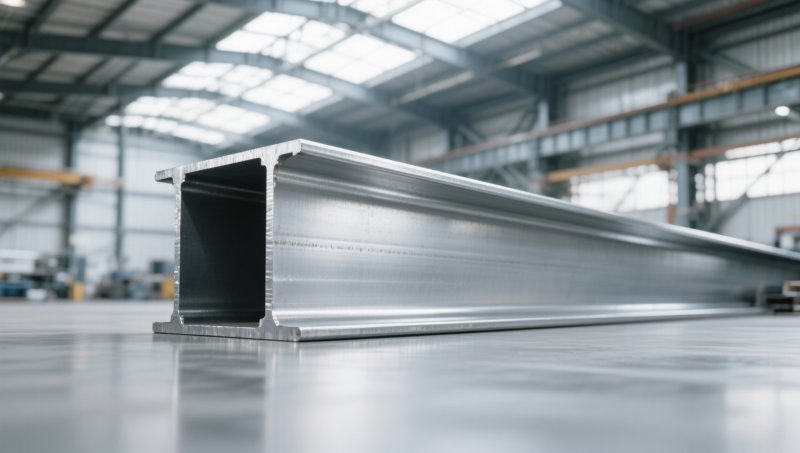
Weight Tolerance Comparison: ASTM vs EN — Practical Implications
The real-world impact of tolerance divergence extends beyond paperwork—it influences material yield, crane capacity planning, and even fireproofing thickness calculations. A 5.0% over-tolerance on a 12 m IPE300 beam (theoretical weight ≈ 42.2 kg/m) adds nearly 25 kg per piece—enough to exceed lifting gear limits in high-rise façade installations.
This table highlights why cross-standard sourcing demands proactive coordination. For example, a Middle Eastern EPC contractor ordering IPE400 beams for a petrochemical plant may receive ASTM-certified stock from one supplier and EN-certified from another—yet both must meet the same project-spec weight tolerance of ±2.5% to avoid rework. Hongteng Fengda resolves this by offering dual-certified production runs, where each heat undergoes parallel ASTM and EN verification protocols—reducing retesting costs by up to 40%.
Why Does Weight Accuracy Matter Beyond Compliance?
Weight per meter directly correlates with section modulus, moment of inertia, and plastic section capacity. A 4% underweight beam may pass visual inspection but reduce bending resistance by 3.2–3.8%, compromising long-term fatigue performance in wind-loaded structures or vibrating industrial floors.
Moreover, weight variance triggers cascading effects: inaccurate tonnage estimates distort freight cost allocation (e.g., sea container loading at 92% vs. 98% capacity), delay customs clearance due to MTR–invoice mismatches, and increase scrap rates during CNC cutting if nested parts assume incorrect density values.
For technical evaluators and safety managers, consistent weight control is non-negotiable—not just for static design, but for seismic retrofitting where added mass alters fundamental period calculations. That’s why Hongteng Fengda implements real-time rolling mill weight monitoring, with automatic rejection of any coil deviating beyond ±1.8% from theoretical mass before final shearing.
Procurement Checklist: 5 Critical Steps Before Ordering I Beams
To prevent field-level tolerance-related disputes, procurement teams should follow these evidence-based steps:
- Confirm whether the project specification references ASTM A6/A6M (U.S./Canada) or EN 10034 (EU/UK/MENA)—not just “ISO-compliant” or “international standard”.
- Require pre-shipment verification: request actual measured weight per meter data for ≥5 random samples per 20-ton lot, not just theoretical calculations.
- Validate mill test report format: EN requires EN 10204 Type 3.1; ASTM accepts A6M Annex A reports—but both must include heat number traceability.
- Clarify responsibility for tolerance overruns: specify whether excess weight is billable (common in U.S. contracts) or automatically adjusted (standard in EU framework agreements).
- Verify cold-formed Wire Rod used in secondary components—such as anchor bolts or shear connectors—meets matching tensile strength (e.g., HRB500E for seismic zones) and carbon content (0.06–0.22%) to ensure weld compatibility with main beams.
Why Partner With Hongteng Fengda for Global I Beam Sourcing?
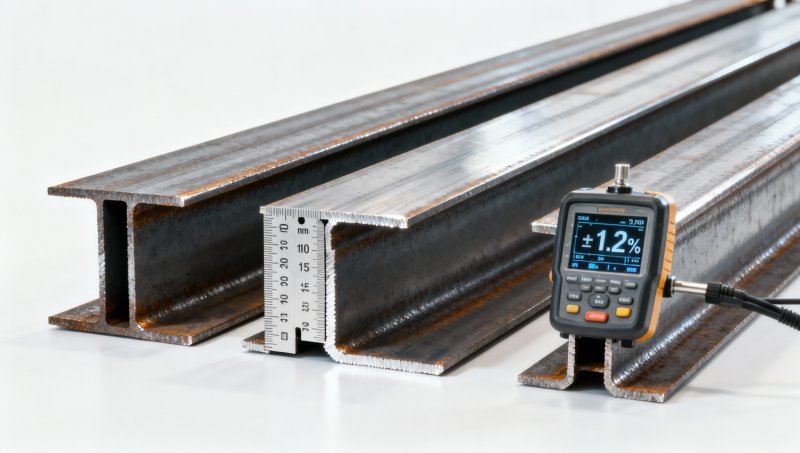
We don’t just supply I beams—we deliver verified, audit-ready structural steel solutions aligned with your regional compliance, project timeline, and risk-mitigation strategy. Our ISO 9001-certified facility maintains ≤±1.2% average weight deviation across 12+ ASTM/EN/JIS/GB product lines, backed by in-house metallurgical lab testing and third-party SGS/BV inspections.
Whether you need IPE, HEA, or custom hybrid sections, we offer: (1) Dual-standard certification within 7–10 working days; (2) Pre-shipment dimensional & weight reports with digital signature; (3) Just-in-time delivery windows of ±2 days across 30+ countries; and (4) OEM support for non-standard lengths (1–12 m), surface treatments, and marking protocols.
Get your free I beam weight tolerance assessment today—including side-by-side ASTM/EN compliance mapping, sample MTR review, and lead time confirmation for your next order. Contact our technical sales team to discuss your specific project requirements, certification needs, or customization scope.
Please give us a message


Please enter what you want to find