ASTM standard steel pipe inspection is critical for ensuring safety, consistency, and project performance. For buyers, engineers, and quality teams comparing carbon steel pipe for oil and gas, high strength stainless steel pipe, or custom structural steel solutions, understanding how ASTM requirements are checked helps reduce sourcing risk, control costs, and verify compliance before shipment or installation.
In steel procurement, the phrase “ASTM compliant” should never be treated as a simple label. It usually means the pipe has passed a sequence of checks covering chemistry, dimensions, mechanical properties, surface quality, and documentation. For project owners, distributors, fabricators, and safety managers, these checks directly affect weldability, load performance, corrosion behavior, and acceptance at site.
For a structural steel manufacturer and exporter serving international markets, inspection is also a bridge between production and trust. When pipe is supplied under ASTM, EN, JIS, or GB requirements, the value lies not only in manufacturing capacity but in disciplined verification before dispatch. This is especially important when lead times are tight, tolerances are narrow, and one rejected batch can delay a project by 2–6 weeks.
The sections below explain how ASTM standard steel pipe is checked in practical terms, what buyers should verify on a mill test basis, which tests are commonly used, and where quality risks often appear. The focus is on decision-ready information that helps technical teams evaluate suppliers and helps purchasing teams control risk before shipment.
What ASTM inspection actually covers
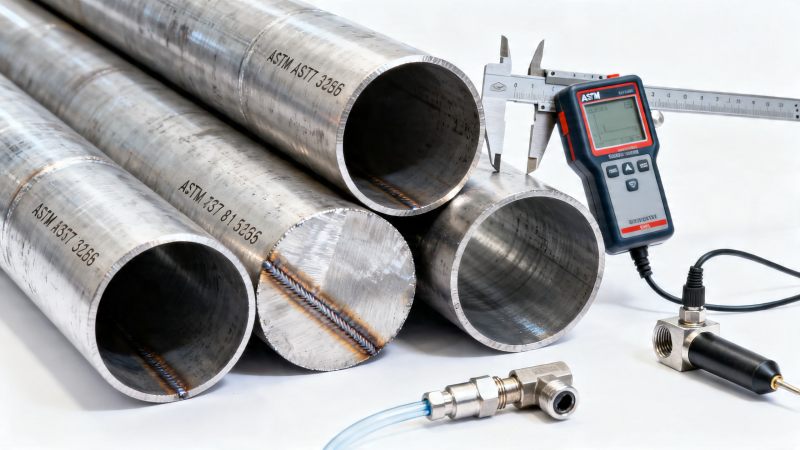
ASTM inspection is not a single test. It is a structured verification process tied to the applicable specification, such as ASTM A53, A106, A500, or stainless pipe standards used for pressure, structural, or corrosion-resistant service. The exact checklist changes by grade and use, but most inspections cover 5 core areas: chemical composition, mechanical properties, dimensions, workmanship, and traceable records.
In practical factory quality control, inspection begins long before final packing. Raw material heat numbers are reviewed, forming parameters are controlled, and each production lot is identified for traceability. For welded pipe, seam integrity and welding consistency are essential. For seamless pipe, wall thickness uniformity and internal soundness receive more attention. These distinctions matter because ASTM acceptance criteria are linked to manufacturing route.
A common misunderstanding is that visual appearance alone indicates compliance. In reality, clean surface finish does not confirm tensile strength, yield strength, flattening performance, or hydrostatic integrity. A pipe can look acceptable and still fail dimensional tolerance or test requirements. That is why professional inspection combines visual examination with measurable data and test records.
For export projects, quality teams also check whether the delivered pipe matches the purchase order in 4 critical ways: standard, grade, size range, and end use. A mismatch in one item can cause technical rejection even if the pipe itself is well made. For example, using structural pipe where pressure pipe is required may create compliance issues during engineering review or site acceptance.
Key inspection categories
- Material verification: heat analysis, grade identification, and alloy consistency.
- Dimensional control: outside diameter, wall thickness, length, straightness, and end condition.
- Performance testing: tensile, flattening, flaring, hardness, hydrostatic, or nondestructive testing.
- Surface and workmanship checks: cracks, laminations, scale condition, weld defects, and edge quality.
- Document review: mill test certificate, packing list, marking, and traceability by lot or heat number.
The table below shows how inspection focus changes depending on the pipe application. This helps buyers avoid using one evaluation method for all steel pipe categories.
The main takeaway is simple: ASTM inspection should be matched to service conditions. A buyer evaluating pipe for a building frame, a fire line, or a corrosive process line should not use the same acceptance priorities. Good suppliers make that distinction clear at quotation stage, not after production is complete.
How steel pipe is checked step by step in production and before shipment
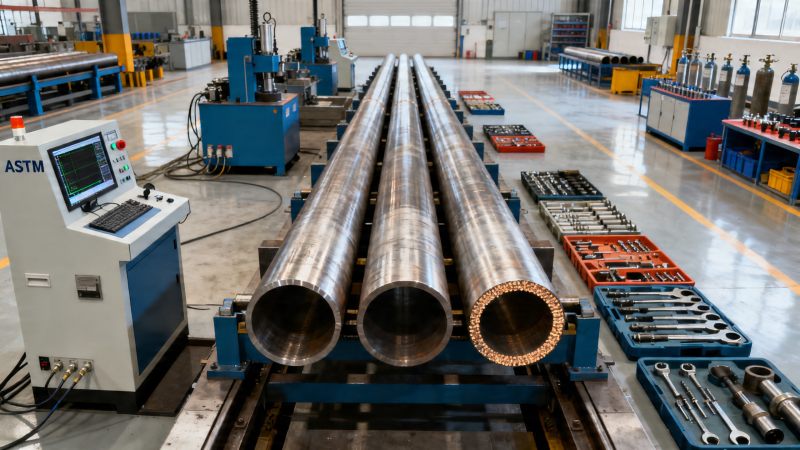
A reliable inspection workflow usually follows the manufacturing flow. In most steel pipe operations, checks happen at 3 stages: incoming material control, in-process inspection, and final inspection before packing. This staged approach reduces the chance that nonconforming material reaches shipment and helps manufacturers correct deviations while production is still active.
At the incoming stage, mills verify raw strip, billet, or coil against the required grade. Heat number traceability is critical because later test results must connect back to a specific production lot. If chemistry is off by even a small margin in carbon, manganese, sulfur, or alloying elements, downstream mechanical performance can change. For many buyers, reviewing this traceability is just as important as reviewing the final dimensions.
During forming and sizing, operators monitor outside diameter, wall thickness, weld seam condition, length, and straightness. Dimensional checks may be done by calipers, ultrasonic thickness devices, OD gauges, and length measurement tools. On export orders, random checks are often done every batch or every defined quantity, such as every 50–100 pieces depending on specification, size, and quality plan.
Final inspection includes visual examination, marking review, quantity confirmation, protective treatment, bundle condition, and test record verification. If the order requires third-party inspection, witness points may include sampling, hydrostatic testing, or review of the mill test certificate. This final stage is especially important for projects in North America, Europe, and the Middle East where site documentation can affect customs clearance and project approval.
Typical inspection workflow
- Confirm ASTM standard, grade, size, quantity, and special clauses on the purchase order.
- Verify raw material certificates and assign traceable lot or heat identification.
- Check forming quality, seam condition, and in-process dimensions during production.
- Perform required destructive or nondestructive tests according to standard and sampling plan.
- Review final dimensions, marking, coating or oiling condition, packing, and shipment documents.
A practical note for multi-product steel sourcing
Many global buyers do not purchase pipe alone. They often combine sections, beams, plates, or custom fabricated steel in the same sourcing cycle. In such cases, the same quality discipline should apply across categories. For example, when anti-skid flooring or equipment platform material is needed together with pipe and profiles, buyers may also compare dimensional tolerance, standard compliance, and shipment consistency for products such as SM400A Patterned steel plate.
That patterned plate is commonly used in transportation, construction, decoration, machinery platforms, and shipbuilding, with thickness typically ranging from 2–8 mm, width from 600–1800 mm, and length from 2–12 m. Core functions such as anti-skid performance, decorative surface, and steel-saving design matter in the same way that dimensional and standard consistency matter for ASTM pipe. For procurement teams handling mixed structural steel packages, unified inspection thinking reduces coordination errors and improves site fit-up.
The step-by-step model above also supports cost control. Finding a deviation at raw material stage is cheaper than discovering it after cutting, coating, or loading. In many export orders, a single failed dimension or marking issue can delay documents, vessel booking, or site release by 7–15 days. This is why experienced suppliers build inspection points into production rather than treating quality as a final checklist only.
Core ASTM test methods and what buyers should read in the reports
The exact tests depend on the ASTM standard and the service environment, but several test methods appear frequently in steel pipe inspection. Tensile testing verifies yield strength, tensile strength, and elongation. Flattening or flaring tests assess forming integrity. Hydrostatic testing checks leak resistance under internal pressure. Nondestructive testing, such as ultrasonic or eddy current inspection, is used where seam or body soundness must be screened without cutting the product.
For buyers, reading test reports should go beyond checking whether a value “passes.” The report should clearly show heat number or lot number, applicable standard, sample quantity, actual results, and acceptance basis. A clean report without traceability has limited value. In higher-risk applications, technical teams should confirm whether the sample frequency is consistent with the standard or project specification rather than relying on one test result for an entire order.
Chemical analysis is especially important when there is concern about grade substitution. For carbon steel, the balance among carbon, manganese, phosphorus, and sulfur affects weldability and toughness. For stainless grades, chromium and nickel content strongly influence corrosion behavior. A price that looks 8% lower may reflect a different chemistry route or a downgraded material source, which can create higher lifecycle cost later.
Dimensional inspection should also be read carefully. A mill may state nominal size clearly, but the actual concern is whether OD, wall thickness, and length remain within the permitted tolerance band. Thickness variation can influence strength, welding preparation, and pressure capability. For project fabrication, even a few millimeters of length deviation across multiple bundles can slow assembly and create cutting waste.
Common tests and purchasing relevance
The following table links common ASTM pipe tests to practical purchasing and project concerns, making it easier for non-laboratory stakeholders to read technical reports.
For most industrial and structural orders, the safest buying approach is to review the test package as a complete set instead of isolating one result. Strength data, chemistry, dimensions, and traceability should align. If one element is missing, the risk shifts from technical compliance to commercial uncertainty, especially when future claims or inspections occur after delivery.
The most common inspection risks, mistakes, and supplier evaluation points
Many quality failures in steel pipe purchasing do not come from extreme defects. They come from small gaps between specification, inspection scope, and commercial communication. One frequent mistake is ordering by size and price only, without locking the ASTM standard, grade, end finish, length tolerance, coating condition, and document requirements. That can lead to technically usable pipe that is still rejected by a project consultant or site QC team.
Another risk is assuming that all mill test certificates have equal reliability. Buyers should confirm whether the certificate is issued by the producing mill, whether results are linked to actual heat numbers, and whether third-party witnessing is needed. For critical pipelines, offshore structures, or audited industrial plants, this document chain matters as much as the material itself. A missing linkage can turn a compliant batch into a disputed shipment.
Inspection planning should also account for logistics and handling. Even properly tested pipe can suffer end damage, coating loss, moisture exposure, or bundle distortion during storage and export packing. For long products in the 6–12 m range, insufficient blocking or poor strapping may create handling issues at the port or at site. Quality control does not stop at the test bench; it continues through packing and delivery readiness.
From a supplier evaluation perspective, buyers should ask how many control points exist between raw material and shipment, how nonconforming products are segregated, and how replacement or remake is handled if a batch fails. These process questions often reveal more than a polished brochure. A supplier with stable production and clear quality response procedures generally presents lower sourcing risk over repeated orders.
Checklist for evaluating an ASTM pipe supplier
- Can the supplier explain the difference between ASTM grades and their application limits without vague language?
- Are inspection records tied to heat number, production lot, and shipment bundle marking?
- Does the quotation define tolerance, test scope, document set, and packing method in writing?
- Is there a clear lead time, such as 20–35 days for production plus export packing and vessel arrangement?
- Can the supplier support standard products and OEM structural steel solutions in the same project cycle?
Red flags that should trigger deeper review
If a supplier cannot clarify whether the pipe is seamless or welded, cannot provide sample MTC format, or avoids discussing tolerance and testing frequency, buyers should slow down the process. Likewise, unusually short lead times on special sizes or unusually low pricing on higher-grade stainless pipe should be checked against realistic production and raw material conditions. In steel sourcing, a 3% savings at order stage can become a much larger loss if rejection, delay, or rework occurs.
For international buyers working with a structural steel manufacturer and exporter from China, strong communication discipline is a practical advantage. When the supplier can coordinate angles, channels, beams, cold formed profiles, custom components, and pipe under one quality logic, project management becomes easier. Fewer handoff errors, fewer document gaps, and more predictable lead times support both technical approval and budget control.
FAQ and practical buying advice for project teams
Different stakeholders read ASTM pipe inspection from different angles. Engineers focus on compliance and service reliability. Procurement teams focus on comparability and delivery risk. Finance teams want to avoid hidden cost. The short answers below address common project questions and help align technical and commercial decisions.
How do I know whether the inspection scope is enough for my project?
Start with 3 points: service condition, code requirement, and project risk level. Structural and low-pressure uses may accept a standard mechanical and dimensional package, while pressure or corrosive service usually needs tighter test review and possibly third-party witnessing. If the pipe will be installed in safety-sensitive systems, define the inspection and documentation scope before order confirmation, not after production starts.
What documents should be reviewed before shipment?
At minimum, review the mill test certificate, packing list, marking details, quantity summary, and purchase order cross-check. For some projects, visual inspection photos, dimensional reports, and third-party certificates are also useful. The key is consistency: the standard, grade, size, and heat numbers on the documents should match the physical bundles and the order line items.
How much random inspection is reasonable when buying from overseas?
There is no single number for every order, but many buyers apply review at batch level plus random physical verification before shipment. For example, checking markings and dimensions across several bundles per size group can quickly identify mix-ups. Higher-value or project-critical orders may justify third-party inspection at one or more witness points, especially when replacement would cause a delay of 2–4 weeks.
Can one supplier support both pipe and other structural steel products effectively?
Yes, when the supplier has stable production coordination and strict quality control across categories. For buyers sourcing beams, channels, angles, cold formed sections, custom steel components, and plate products together, supplier consolidation can reduce communication time, improve packing coordination, and simplify document management. The benefit is strongest when quality standards and traceability are managed consistently across the package.
ASTM standard steel pipe inspection is ultimately about reducing uncertainty. When chemistry, dimensions, mechanical performance, workmanship, and records are checked in a disciplined way, buyers gain more than a pass result. They gain confidence in fit-up, service performance, and project timing. For global purchasers comparing standard steel products and customized structural steel solutions, a supplier with modern manufacturing, clear quality procedures, and dependable export support can make a measurable difference.
Hongteng Fengda supports international buyers with structural steel manufacturing, export coordination, and quality-focused supply across multiple product lines. If you need ASTM-related steel pipe support, mixed structural steel sourcing, or a tailored solution for construction and industrial projects, contact us now to discuss specifications, inspection requirements, and delivery planning in detail.
Please give us a message


Please enter what you want to find