High strength steel plate offers clear benefits in load capacity and weight reduction, but its weldability trade-off can affect fabrication quality, safety, and project cost. For buyers, engineers, and contractors comparing galvanized steel for construction, steel rebar for construction, or reviewing steel sheet price and steel coil price per ton, understanding this balance is essential to selecting reliable structural steel solutions.
Why does high strength steel plate create a weldability trade-off?
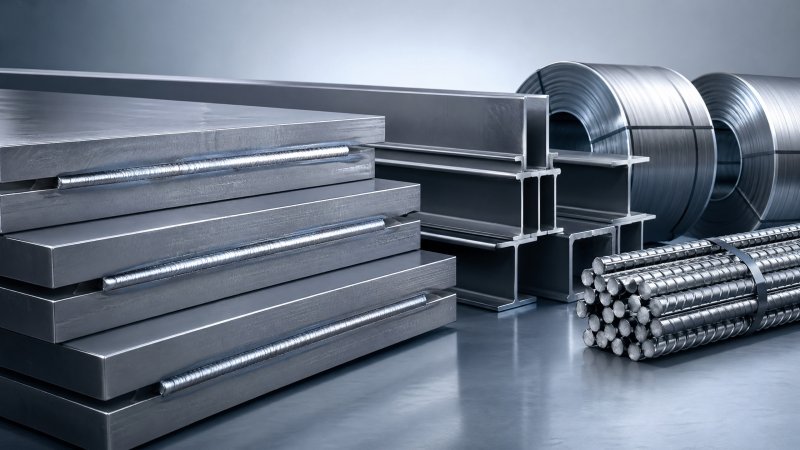
In structural steel projects, the appeal of high strength steel plate is straightforward: higher yield strength can reduce section size, lower total structural weight, and improve transport and erection efficiency. In many building frames, machinery bases, bridge components, and industrial platforms, this can translate into fewer tons moved, fewer weld passes, and simpler handling for medium and large assemblies.
The trade-off appears when fabrication moves from design theory to welding practice. As strength increases, the steel often becomes more sensitive to heat input, cooling rate, and hydrogen control. That means the welding procedure may require tighter preheat ranges, more disciplined filler metal selection, and closer control of interpass temperature. A plate that looks economical on paper can become more demanding in the workshop within 2–4 production stages.
For technical evaluators and quality managers, weldability is not a single number. It is the combined result of chemical composition, carbon equivalent, plate thickness, restraint condition, joint design, and service environment. In practice, 3 core questions matter most: can the plate be welded consistently, can the welded joint meet required toughness and strength, and can this be achieved without raising fabrication risk beyond the project budget?
For procurement teams and project managers, this topic also affects total cost. A lower steel sheet price or steel coil price per ton does not automatically mean a lower installed cost. If high strength steel plate requires more preheating time, additional procedure qualification, or stricter welder control, the final cost per fabricated ton can shift significantly during the 7–15 day fabrication window.
What changes as strength level rises?
- Higher strength grades may increase susceptibility to hydrogen-induced cracking if moisture control, consumable storage, or preheat practice is weak.
- Thicker plate sections usually demand narrower process windows, especially when joint restraint is high or ambient temperature falls below common workshop ranges.
- Heat input that is too low or too high can both create problems, including excessive hardness, poor fusion, or reduced toughness in the heat affected zone.
- Inspection requirements often become stricter, with more attention to visual inspection, dimensional checks, and non-destructive testing at critical joints.
Why this matters for global steel sourcing
Global buyers rarely purchase steel only by grade name. They need stable chemistry, reliable rolling quality, and documents aligned with ASTM, EN, JIS, or GB requirements. Hongteng Fengda supports this by combining structural steel manufacturing experience, export coordination, and quality control for projects across North America, Europe, the Middle East, and Southeast Asia, where welding expectations and compliance review can vary from one market to another.
How should engineers and buyers compare strength, weldability, and fabrication risk?
A practical comparison should not stop at nominal strength. Engineers, purchasers, and commercial reviewers should compare at least 5 dimensions: base metal strength, plate thickness, expected weld volume, fabrication environment, and inspection level. This approach helps separate a technically suitable steel plate from one that only appears attractive because of initial material pricing.
The table below summarizes how high strength steel plate should be evaluated against conventional structural steel in fabrication-heavy applications. These are not fixed values for every grade, but they reflect common decision logic used in structural steel sourcing, workshop planning, and project risk assessment.
The key takeaway is that high strength steel plate is not automatically the best option for every structural member. In low-complexity frames, it may create clear savings. In weld-intensive assemblies with many restrained joints, the extra fabrication controls can offset part of the material advantage. That is why technical and commercial teams should review design intent and production reality together before approval.
This comparison becomes especially important when buyers are also assessing galvanized steel for construction, steel rebar for construction, or mixed structural packages. Different steel products solve different problems. Plate selection should be linked to load path, weld detail, corrosion environment, and fabrication sequence rather than broad price comparison alone.
Which decision signals indicate a good fit?
A good fit usually appears when the project can benefit from 3 advantages at the same time: weight reduction, manageable welding volume, and a qualified fabricator able to follow documented welding procedures. If one of these three conditions is missing, the business case becomes weaker. Finance approvers often overlook this because they focus on raw material cost rather than fabricated cost per delivered assembly.
Hongteng Fengda helps buyers bridge this gap by aligning steel supply with actual fabrication and export requirements. For global construction and industrial projects, that means matching grade, dimension, and standard requirements early, reducing the chance of rework, substitution disputes, or delivery delays during the final 2–6 weeks before shipment.
What technical checks reduce welding problems before purchase?
Before placing an order for high strength steel plate, buyers and engineers should confirm more than basic size and quantity. A robust review normally includes 6 checks: applicable standard, strength class, thickness range, expected welding process, toughness requirement, and documentation needed for inspection and export. This is where many sourcing errors begin, especially in projects with multiple subcontractors or mixed standards.
In some projects, buyers also need complementary carbon steel products for machined parts, fixtures, support pieces, or secondary components. For example, 45# Carbon Steel Round Bar can be integrated into broader steel procurement when excellent strength and wear resistance are needed in round bar form for construction-related fabrication, handrails, furniture, water-supplying parts, or OEM support components. Typical dimensions may range from Diameter 5–2500mm with Length 2m, 5m, 6m, or 12m, depending on downstream processing needs.
This matters because plate welding performance is only one part of a steel package. Projects often combine plates, beams, channels, cold formed profiles, and round bars under one supply plan. Coordinating material standards such as ASTM, EN, JIS, GB, AISI, DIN, or JIS-based specifications can reduce document mismatches and simplify quality review across 3 parties: supplier, fabricator, and end client.
The table below provides a practical pre-purchase checklist for high strength steel plate and related structural steel items. It is especially useful for procurement teams, quality controllers, and project coordinators who need to reduce sourcing risk before order confirmation.
When these checks are completed early, the project team can reduce common failure points such as wrong grade delivery, unexpected welding restrictions, and incomplete export documents. For cross-border orders, even a 1–2 day clarification delay in technical approval can affect packing, vessel booking, and on-site installation sequence.
A simple 4-step review before order release
- Match the steel grade and standard to structural drawings and project specifications.
- Review weld details, thickness, and expected fabrication method with the workshop team.
- Confirm inspection documents, marking rules, and any certification requirements before production.
- Lock packaging, shipment time, and delivery milestones based on the real project schedule.
How do cost, standards, and project timing affect the final choice?
In procurement, the final choice is rarely made by metallurgy alone. Cost, standards, and schedule often decide whether high strength steel plate is approved. A buyer may accept a higher base material cost if the design can reduce tonnage, freight volume, or crane load class. However, if the project involves high weld density, tight tolerances, or limited workshop capability, the savings may narrow across the full procurement cycle.
Lead time also matters. Standard structural shapes and common grades may be easier to source within normal 2–4 week windows, while customized plate sizes, OEM components, or mixed export batches can require earlier coordination. For overseas projects, buyers should also allow time for documentation review, packaging confirmation, and port scheduling, especially when several standards such as ASTM and EN must be referenced in the same project file.
The next table helps decision-makers compare selection priorities by role. This is useful because engineers, purchasers, quality managers, and financial approvers often focus on different risks, even when reviewing the same steel package.
This role-based view improves decision quality because it connects steel performance to business outcome. It also helps distributors, agents, and end users explain why one structural steel option is preferred over another. The right answer may not be the cheapest per ton; it is the option that best balances fabrication risk, compliance, and project delivery.
Common misconceptions that increase cost
- Assuming higher strength always lowers total cost, even when weld complexity is high.
- Comparing steel sheet price or steel coil price per ton without checking fabrication and inspection implications.
- Treating all structural steel standards as directly interchangeable without verifying project specifications.
- Approving material before confirming welding capability, delivery timing, and document requirements.
FAQ and next steps for structural steel buyers
The questions below reflect common concerns from information researchers, operators, technical reviewers, purchasing teams, business evaluators, and project leaders. They can help shorten the decision cycle and reduce avoidable back-and-forth during steel sourcing.
How do I know whether high strength steel plate is suitable for my project?
Start with 4 factors: required load capacity, target weight reduction, weld density, and fabricator capability. If the project gains meaningful structural efficiency and the welding team can control preheat, consumables, and inspection, high strength steel plate is often a strong option. If weld restraint is severe or workshop control is limited, a more conventional structural steel grade may be safer and easier to execute.
What should I check when comparing quotations?
Check at least 5 items: standard and grade, size and thickness range, document package, surface condition, and delivery term. Then ask whether the quotation reflects only raw steel supply or includes cutting, drilling, coating, or OEM fabrication. This avoids false comparisons between a low material price and a more complete structural steel solution.
How long is a typical supply cycle?
The answer depends on grade availability, quantity, processing scope, and export destination. Standard items may fit within common 2–4 week preparation windows, while customized structural components, mixed containers, or projects with strict documentation requirements may need longer coordination. Early confirmation of drawings, standards, and inspection needs usually shortens the overall cycle.
Why choose us for structural steel sourcing and export support?
Hongteng Fengda combines structural steel manufacturing and export service for global construction, industrial, and manufacturing projects. We supply angle steel, channel steel, steel beams, cold formed steel profiles, and customized structural steel components, with production and quality control aligned to common international standards such as ASTM, EN, JIS, and GB. This helps buyers reduce sourcing risk across specification review, manufacturing coordination, and shipment planning.
If you are evaluating high strength steel plate, galvanized steel for construction, steel rebar for construction, or related carbon steel products, you can contact us to discuss 6 practical topics: parameter confirmation, grade selection, fabrication suitability, delivery cycle, certification expectations, and quotation planning. We can also support OEM requirements, mixed structural steel packages, and document alignment for international projects.
Send your drawings, grade list, thickness range, standard requirement, target destination, and expected shipment schedule. With those details, we can help you compare options more accurately, identify weldability-related risks earlier, and build a structural steel supply plan that matches both technical performance and commercial targets.
Please give us a message


Please enter what you want to find