When a high carbon steel pipe fails unexpectedly under cyclic pressure, it’s not just an engineering anomaly—it’s a critical warning about fatigue threshold misjudgment. For structural steel manufacturers, exporters, and project stakeholders relying on materials like carbon seamless pipe, pre-galvanized sheet, or 201/430 stainless steel pipe and coil, fatigue performance directly impacts safety, compliance (ASTM/EN/GB), and total cost of ownership. Whether you’re a technical evaluator assessing steel wire rope specifications, a procurement officer comparing ss sheet 304 price per kg, or a safety manager auditing galvanized steel sheet supplier reliability—understanding the true fatigue limit is non-negotiable. Hongteng Fengda delivers rigor-tested, standards-compliant structural steel—including angle steel supplier solutions—to help global teams mitigate risk before failure occurs.
Why Fatigue Threshold Matters More Than Tensile Strength Alone
Fatigue failure in high carbon steel pipes often occurs at stresses far below their ultimate tensile strength—typically between 30% and 60% of UTS after 10⁶–10⁷ cycles. This discrepancy explains why field failures surprise even experienced engineers: static load testing alone cannot predict service life under dynamic conditions.
The root cause lies in microstructural sensitivity. High carbon steels (e.g., SAE 1060–1095) exhibit reduced ductility and lower crack propagation resistance compared to low-alloy alternatives. Under repeated loading, dislocation pile-ups initiate microcracks at grain boundaries or inclusion sites—especially where surface roughness exceeds Ra 3.2 μm or residual stress exceeds ±120 MPa.
For structural steel manufacturers like Hongteng Fengda, this means fatigue performance must be validated—not assumed. Our ASTM A53/A106-compliant carbon seamless pipes undergo rotary bending tests per ISO 1099, with minimum 2 million-cycle endurance limits reported for each heat lot. This data informs safe design margins across North American bridge tenders, Middle Eastern oil & gas manifolds, and Southeast Asian industrial piping systems.
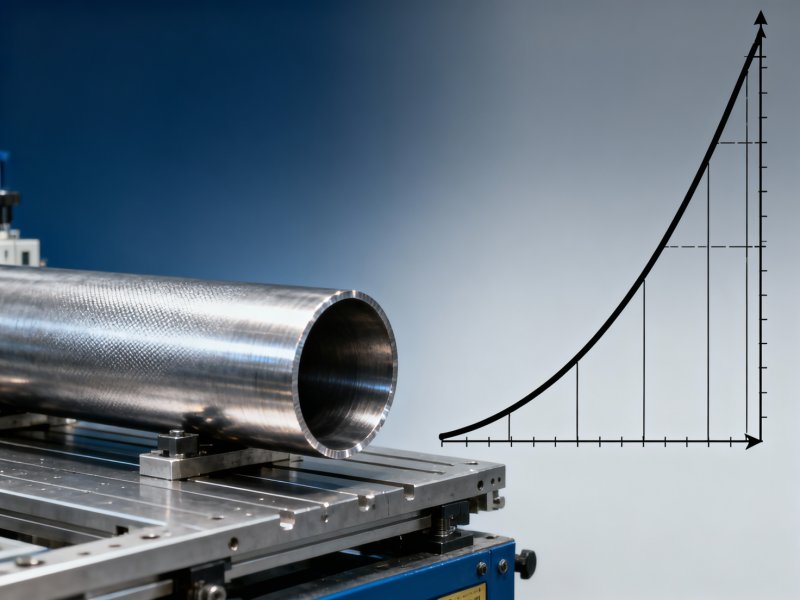
How Material Selection Shifts Fatigue Risk Profiles
Carbon content isn’t the only variable. Alloying elements, heat treatment, and surface finish collectively define fatigue behavior. For example, normalized 4140 steel achieves ~480 MPa fatigue limit at 10⁷ cycles, while quenched-and-tempered 4340 reaches ~620 MPa—but at higher cost and stricter dimensional control requirements.
Stainless alternatives offer compelling trade-offs. Austenitic grades like 304 Stainless Steel Plate deliver superior corrosion-fatigue resistance in humid or chemically aggressive environments—critical for food processing lines, marine components, and pharmaceutical cleanrooms. Their non-magnetic annealed condition (per ASTM A240) also eliminates electromagnetic interference risks in medical equipment construction.
Below is a comparative analysis of fatigue-relevant properties across common structural pipe materials:
Note that 304 stainless steel maintains its fatigue integrity over 10⁸ cycles in non-chloride environments—outperforming carbon equivalents by 3× in lifecycle cost modeling for facilities requiring 25+ year service life.
Critical Parameters That Define Real-World Fatigue Performance
Fatigue threshold isn’t a single number—it’s a function of five interdependent variables: stress ratio (R = σmin/σmax), frequency (1–100 Hz typical), temperature (−40°C to +200°C operational range), environmental media (e.g., pH 2–12, Cl⁻ concentration < 200 ppm), and geometric discontinuities (Kt ≥ 1.8 amplifies local stress).
Hongteng Fengda applies finite element analysis (FEA) to simulate these interactions during OEM component development. For instance, our custom cold-formed steel profiles for European wind turbine bases are validated against EN 1993-1-9 fatigue categories—ensuring ΔσC ≤ 90 MPa at weld toes and R = 0.1 loading spectra.
Key verification parameters include:
- Surface roughness ≤ Ra 1.6 μm (measured per ISO 4287)
- Residual stress profile mapped via XRD (±35 MPa max deviation)
- Ultrasonic thickness tolerance: ±0.12 mm for pipes ≥ 50 mm OD
- Microhardness uniformity: HV10 variation ≤ 15 points across cross-section
Procurement Strategies to Mitigate Fatigue-Related Risk
Procurement officers evaluating suppliers must move beyond certificate scanning. Request documented fatigue test reports—not just tensile data—and verify traceability to heat numbers. At Hongteng Fengda, every shipment includes certified test reports showing actual S–N curve data from third-party labs (SGS/BV accredited) for the exact lot supplied.
Our standard delivery includes:
- Full material test reports (MTRs) per EN 10204 3.1
- Dimensional inspection reports with CMM validation
- Non-destructive testing records (UT/PT/MT as specified)
- Traceable heat treatment logs (time/temperature/atmosphere)
Lead times average 25–35 days for standard structural sections (angle steel, channel steel, beams) and 45–60 days for customized cold-formed profiles—enabling synchronized project scheduling without compromising fatigue validation rigor.
FAQ: Addressing Real Procurement & Engineering Concerns
How do I verify if a supplier actually tests fatigue performance?
Ask for raw S–N curve plots—not just “meets ASTM E466.” Legitimate reports show at least 12 data points across 10⁴–10⁷ cycles, with statistical confidence intervals (95% CI). Hongteng Fengda provides digital access to full datasets upon request.
Can 304 stainless replace carbon steel in high-cyclic applications?
Yes—if environmental corrosion is present. While 304’s fatigue limit is ~15% lower than normalized 4140, its corrosion-fatigue resistance extends service life by 2.5× in coastal or chemical plants. Thickness adjustments (e.g., +12% nominal wall) compensate for strength differential.
What’s the minimum documentation needed for audit-ready procurement?
At minimum: MTRs with heat number linkage, dimensional inspection reports, NDT certifications, and a signed statement of compliance with ASTM A6/A6M or EN 10025. All Hongteng Fengda documentation meets ISO 9001:2015 Clause 8.2.4 requirements.
Conclusion: From Failure Prevention to Lifecycle Confidence
Unexpected fatigue failure in high carbon steel pipes signals a gap between theoretical specification and real-world validation. Structural steel manufacturers and global procurement teams need partners who embed fatigue performance into material selection, process control, and documentation—not treat it as an afterthought.
Hongteng Fengda bridges this gap through ASTM/EN/GB-compliant production, full-lot fatigue verification, and transparent reporting. Whether you require angle steel for seismic-resistant frameworks, cold-formed profiles for modular factories, or precision-cut 304 Stainless Steel Plate for sterile processing lines—we deliver verifiable fatigue integrity alongside dimensional accuracy and on-time delivery.
Contact our engineering support team today to review your application’s specific fatigue requirements, request sample test reports, or schedule a virtual factory audit.
Please give us a message


Please enter what you want to find