When projects face extreme heat, choosing the right high-temperature steel is critical to safety, durability, and cost control. From structural components to ASTM stainless steel, 304 pipe, and ASTM A106 pipe, engineers and buyers need materials that retain strength under demanding conditions. This guide explores steel grades that perform reliably at elevated temperatures and helps global sourcing teams compare options from a trusted China steel supplier.
What Buyers and Engineers Really Need to Know First
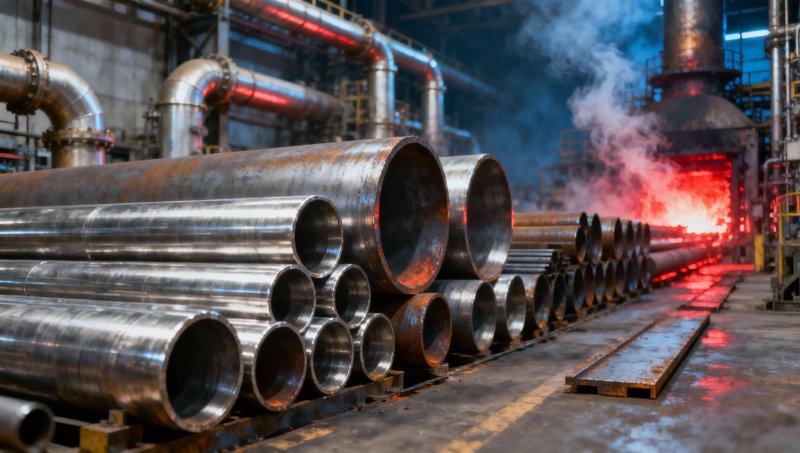
The core question behind high-temperature steel selection is not simply, “Which grade can tolerate heat?” It is, “Which steel will still deliver enough strength, oxidation resistance, fabrication practicality, code compliance, and service life at my actual operating temperature?”
That distinction matters. Many steels can survive occasional heat exposure, but fewer can maintain reliable mechanical performance under continuous service, thermal cycling, pressure, or corrosive high-temperature environments. For project managers, technical evaluators, procurement teams, and safety personnel, the best choice usually depends on five factors:
- Actual operating temperature range and peak excursions
- Whether the load is structural, pressure-related, or both
- Exposure to oxidation, scaling, steam, sulfur, or process chemicals
- Required standards such as ASTM, EN, JIS, or GB
- Budget, lead time, fabrication, and inspection requirements
In practical terms, carbon steel may still be suitable at moderate temperatures, low-alloy Cr-Mo steels often become the better choice for pressure and heat resistance, and stainless steels are preferred when oxidation and corrosion resistance at elevated temperature are also important. The right decision is always application-specific.
Which Steel Grades Hold Strength Under Heat Best
Different steel families perform differently as temperature rises. Here is a practical way to evaluate the most common options.
Carbon Steel for Moderate High-Temperature Service
Standard carbon steels are widely used because they are cost-effective, easy to fabricate, and available globally. However, their strength and long-term stability decrease as operating temperatures increase. In many industrial applications, plain carbon steel is acceptable for lower-temperature service but becomes less reliable when heat is sustained for long periods.
For example, ASTM A106 pipe is commonly used for high-temperature service in piping systems, especially in refineries, power plants, and process lines. It performs well within its design limits, but engineers still need to evaluate allowable stress reduction at elevated temperatures rather than assuming room-temperature strength still applies.
Low-Alloy Chromium-Molybdenum Steels for Better Heat Strength
When higher temperature capability is needed, Cr-Mo alloy steels are often the first serious upgrade. Grades such as 15CrMoR, 14Cr1MoR, and 12Cr2Mo1R are widely used in boilers, pressure vessels, heat exchangers, and petrochemical equipment because they offer improved creep resistance, better retained strength, and stronger performance under prolonged heat exposure.
These grades are especially relevant where pressure and temperature act together. In real projects, they can provide a better balance of heat performance and cost than moving directly to stainless steel.
Stainless Steel for Heat Plus Oxidation or Corrosion Resistance
ASTM stainless steel grades are often selected when components face both elevated temperatures and oxidizing or corrosive conditions. Grade 304 pipe is one of the most recognized options because of its broad availability and useful corrosion resistance, but it is not automatically the best solution for every high-heat application.
In hotter or more aggressive environments, engineers may compare 304 with 310, 316, 321, or other heat-resistant stainless grades. The correct grade depends on scaling resistance, weldability, thermal fatigue behavior, and the service atmosphere, not just the stainless label.
How Temperature Actually Changes Steel Performance
One of the biggest sourcing and engineering mistakes is choosing steel based on room-temperature mechanical properties. As temperature rises, steel can lose yield strength, tensile strength, hardness, and dimensional stability. At the same time, creep, oxidation, grain changes, and thermal expansion become more important.
Below are the key performance issues to assess:
- Strength retention: Can the steel still support the required load at operating temperature?
- Creep resistance: Will the material slowly deform under stress during long-term high-temperature service?
- Oxidation resistance: Will scale formation reduce wall thickness or surface integrity?
- Thermal fatigue resistance: Can it handle repeated heating and cooling cycles without cracking?
- Weld integrity: Will welding procedures and heat-affected zones remain reliable for the intended service?
This is why temperature-specific design data, code tables, and service history matter far more than a simple grade name.
How to Match Steel Grade to Real Applications
The best high-temperature steel choice depends on what the component actually does in service.
Structural Components Near Heat Sources
For structural applications near furnaces, kilns, thermal equipment, or industrial plants, the concern is whether the steel frame or support member can maintain load-bearing capacity during continuous heat exposure. In these cases, buyers should verify allowable stress at service temperature, not just general structural grade compliance.
Pipes and Process Lines
For hot fluid transport, ASTM A106 pipe remains a common solution where the environment is primarily temperature-driven and corrosion is manageable. If the process includes aggressive media, oxidation, or very high temperatures, alloy or stainless alternatives may be more suitable.
Pressure Vessels, Boilers, and Heat Exchangers
This is where pressure vessel plate grades and Cr-Mo steels become especially important. In the middle of many industrial supply chains, plate selection directly affects fabrication safety, inspection acceptance, service life, and shutdown risk.
For example, Carbon Sheet Steel is available in models such as Q245R, Q345R, Q370R, 16MnDR, 09MnNiDR, 15MnNiDR, 15MnNiNbDR, 15CrMoR, 14Cr1MoR, 12Cr2Mo1R, 07MnNiMoDR, and 12MnNiVR, with thickness from 1mm to 100mm. These grades are used across construction, shipbuilding, petroleum, chemical processing, boiler heat exchangers, machinery, and power-related industries. For buyers comparing hot rolled steel sheets, pressure vessel plates, or corten-related plate options, this kind of range helps cover both standard and specialized thermal service needs.
The value is not only product availability. It is the ability to match plate chemistry, thickness, and specification to the actual duty condition while keeping procurement practical.
What Procurement Teams Should Check Before Ordering
For purchasing managers, commercial evaluators, and financial approvers, selecting high-temperature steel is also a risk-management decision. A cheaper material can become much more expensive if it leads to premature failure, rework, downtime, delayed approval, or shortened maintenance intervals.
Before placing an order, verify the following:
- Applicable standard and grade equivalency
- Mill test certificates and traceability
- Chemical composition and mechanical property range
- Heat treatment condition
- Plate, pipe, or profile dimensional tolerance
- Third-party inspection requirements
- Welding and fabrication compatibility
- Export packaging, lead time, and delivery reliability
Global buyers also benefit from working with a supplier that understands cross-market standards such as ASTM, EN, JIS, and GB. That reduces confusion when projects involve international EPC contractors, consultants, and multi-country approval processes.
Common Mistakes When Choosing Steel for High-Heat Service
Several avoidable mistakes repeatedly create technical and commercial problems:
- Choosing based only on initial price instead of lifecycle cost
- Assuming all stainless steel performs equally under high heat
- Using room-temperature strength data for hot service design
- Ignoring creep in long-term elevated-temperature applications
- Failing to consider oxidation, scaling, or process corrosion together
- Overlooking fabrication factors such as weld procedure qualification
- Buying to a nominal grade name without checking full specification details
For quality control and safety teams, these mistakes often appear later as inspection failures, unstable service performance, or shortened asset life.
How to Make a Better High-Temperature Steel Decision
A practical decision path is simple:
- Define continuous temperature, peak temperature, and duration.
- Identify whether the part is structural, pressure-bearing, or process-contacting.
- Assess oxidation, corrosion, and thermal cycling conditions.
- Match the material to the governing code or project specification.
- Compare carbon steel, low-alloy steel, and stainless options by total service value.
- Confirm supply capability, documentation, and quality consistency.
For many projects, the best answer is not the most expensive steel, but the grade that offers sufficient retained strength, acceptable service life, and dependable supply at the required standard.
Conclusion
High-temperature steel grades that truly hold strength under heat are selected by service condition, not by label alone. Carbon steels can work well in moderate ranges, low-alloy Cr-Mo steels are often the preferred step up for pressure and prolonged heat, and stainless steels become important when oxidation and corrosion resistance also matter.
For engineers, buyers, and decision-makers, the smartest approach is to evaluate operating temperature, load, environment, fabrication needs, and compliance requirements together. That leads to safer performance, better cost control, and fewer sourcing risks. When suppliers can provide stable quality, broad specification coverage, and international standard support, global projects move faster and with more confidence.
Please give us a message


Please enter what you want to find