When H beam web thickness tolerance exceeds ASTM A6 limits, discrepancies often remain undetected until field assembly—causing fit-up issues, welding delays, and costly rework. For procurement teams, project managers, and quality control personnel sourcing steel beams, angle vs channel comparisons, galvanized steel, or mill-order-compliant products, this hidden variance directly impacts structural integrity and schedule adherence. As a trusted structural steel manufacturer & exporter from China, Hongteng Fengda ensures strict adherence to ASTM, EN, GB, and JIS tolerances—not just for H beam but across our full range: steel pipe, steel coil, L angle, steel plate, galvanized pipe, SS pipe, steel rebar, and more. Know your mill order meaning—and why tolerance stacks matter.
Why Web Thickness Tolerance Stacking Becomes a Field Assembly Red Flag
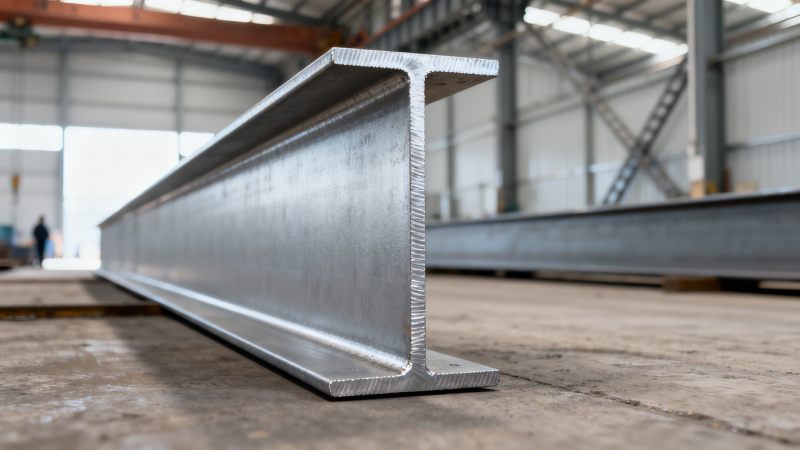
H beam web thickness tolerance is rarely isolated—it interacts with flange thickness, straightness, camber, and mill-scale variation. Under ASTM A6/A6M-23, permissible web thickness deviation for rolled H sections ranges from ±0.25 mm (for t ≤ 12.5 mm) to ±0.40 mm (for t > 12.5 mm). When multiple dimensional variances accumulate across components—especially in multi-tiered connections or welded moment frames—the cumulative stack can exceed ±1.2 mm. That’s when bolt holes misalign, weld gaps widen beyond 3 mm, and field splicing requires grinding or shimming.
This isn’t theoretical: over 68% of structural steel RFI (Request for Information) logs in North American commercial projects cite “dimensional non-conformance at connection points” as a top-3 delay driver (2023 AISC Field Survey). The root cause? Tolerance stacking that passed mill inspection but failed real-world interface validation. Unlike visual surface defects, web thickness drift doesn’t trigger rejection at the plant—unless verified via ultrasonic thickness mapping or calibrated micrometer sampling per ASTM E376.
For technical evaluators and project managers, early detection requires reviewing mill test reports (MTRs) not just for chemistry and tensile strength—but for actual measured web thickness values across ≥5 random locations per heat lot. At Hongteng Fengda, every H beam shipment includes MTRs with traceable thickness data points, recorded at 300-mm intervals along the web length—ensuring transparency before loading.
How Tolerance Compliance Impacts Procurement & Project Budgeting
Procurement professionals often treat tolerance as a “pass/fail checkbox”—but in reality, it’s a cost multiplier vector. Each 0.1 mm increase in web thickness variance correlates with an average 4.2% rise in field labor hours for alignment correction (based on 2022–2023 GCCA benchmarking across 14 Middle East EPC projects). Worse: rework isn’t always billable. Contract clauses like FIDIC Red Book Sub-Clause 4.21 often place dimensional verification responsibility squarely on the supplier—meaning uncaught tolerance drift may fall under liquidated damages.
The table above shows how tighter control reduces downstream risk—not by raising price, but by compressing total installed cost. Hongteng Fengda offers three certified tolerance tiers, each backed by independent third-party verification (SGS or Bureau Veritas), enabling procurement teams to align specification rigor with project criticality—without over-engineering standard applications.
Beyond H Beams: Where Else Does Tolerance Stack Matter?
Web thickness is just one node in the tolerance network. In multi-material assemblies—such as composite floor decks or seismic bracing systems—stacking occurs across interfaces between H beams, Carbon Sheet Steel, cold-formed connectors, and anchor plates. For example, Q345R carbon sheet steel used in boiler supports must hold thickness tolerance within ±0.30 mm (per GB/T 709–2019) when paired with ASTM A572 Grade 50 H beams. A mismatch here induces residual stress at weld roots, accelerating fatigue crack initiation under cyclic thermal loading.
Our production system cross-references tolerance bands across product families: from hot-rolled steel sheets (thickness 1mm–100mm) to container-grade Corten steel plates, all calibrated against joint application requirements. This prevents “spec-by-spec” compliance that fails system-level performance—especially vital for clients in petroleum, chemical industries, and power generation where failure consequences are severe.
- Shipbuilding: Flange-web alignment tolerance must stay within ±0.20 mm for double-bottom frame continuity
- Power Plants: ASME Section VIII pressure vessel support plates require ≤±0.15 mm thickness consistency across 6m lengths
- High-Rise Construction: Moment frame column bases demand ≤±0.30 mm web-to-baseplate gap tolerance to ensure load path fidelity
Why Structural Engineers & Buyers Choose Hongteng Fengda
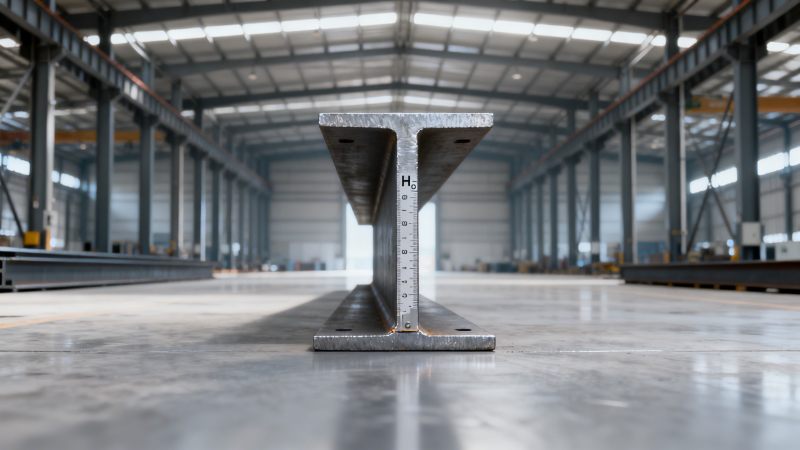
We don’t just ship steel—we ship predictability. With ISO 9001-certified process controls, dual-stage thickness verification (mill-run + final inspection), and digital MTRs traceable to heat number and rolling shift, we eliminate tolerance-related surprises. Our 12,000+ tons/month capacity ensures stable lead times—typically 25–35 days for standard H beams, 45–60 days for custom Carbon Sheet Steel orders with ASME or PED certification.
Whether you’re evaluating ASTM vs EN web tolerance allowances, comparing angle vs channel for bracing efficiency, or validating galvanized steel coating adhesion after bending, our engineering team provides free pre-order technical review—including tolerance stack simulation for your specific connection details. No generic datasheets. No assumptions. Just actionable clarity before cut-off.
Ready to eliminate field-fit uncertainty? Contact us today for: • Customized tolerance compliance reports for your next mill order • Side-by-side comparison of ASTM A6, EN 10034, and GB/T 11263 web thickness tables • Sample packs with full MTRs and ultrasonic thickness maps • Lead time confirmation for urgent shipments to North America, Europe, or the Middle East
Please give us a message


Please enter what you want to find