Don’t judge galvanized steel by its dull gray surface—appearance doesn’t reflect performance. Whether you’re sourcing steel pipe, steel coil, L angle, steel plate, or H beam, understanding true quality matters more than shine. From angle vs channel comparisons to ASTM A6 tolerances and mill order meaning, Hongteng Fengda delivers certified galvanized steel, galvanized pipe, SS pipe, steel rebar—and more—with full compliance (ASTM, EN, JIS, GB). Trusted by procurement teams, engineers, project managers, and distributors worldwide, we bridge the gap between perception and reliability—where galvanized means protection, not pretense.
Why “Dull Gray” Is a Sign of Real Protection — Not Poor Quality
The matte, non-reflective finish of hot-dip galvanized steel is often misinterpreted as low-grade or outdated. In reality, it signals a thick, uniform zinc coating (typically 50–85 µm) formed through immersion in molten zinc at ~450°C. This layer provides cathodic protection — even if scratched, zinc sacrifices itself to prevent base steel corrosion.
By contrast, shiny “pre-galvanized” or electrogalvanized surfaces often indicate thinner coatings (5–15 µm), applied before forming. These lack the metallurgical bond and edge coverage of hot-dip galvanizing — making them vulnerable to early red rust in humid, saline, or industrial environments.
At Hongteng Fengda, every batch of structural steel — from angle steel to H beams — undergoes strict adherence to ASTM A123/A153 and EN ISO 1461. Coating thickness is verified via magnetic induction gauges at ≥3 sampling points per meter, with 100% traceability to mill test reports.
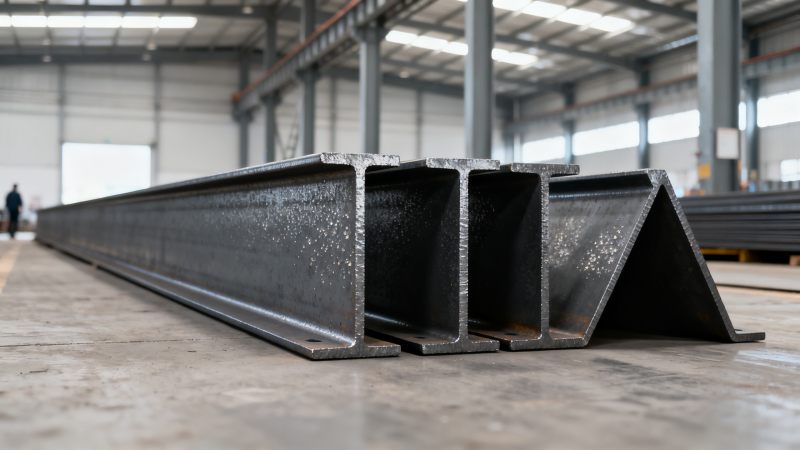
How Appearance Misleads Across Key Steel Product Categories
Visual assumptions create real risk in procurement. For example:
- Galvanized pipe: Bright silver finish may suggest high purity — but could indicate inadequate zinc adhesion or post-treatment polishing that removes protective oxide layer.
- Steel coil: Mirror-finish stainless coils (e.g., 8K or BA) look premium, yet mechanical properties depend on cold-rolling reduction ratio and annealing atmosphere — not reflectivity.
- L angle & channel steel: Mill-scale residue or light rust spotting on hot-rolled sections is normal pre-galvanizing; premature cleaning can compromise coating integrity.
True quality verification requires objective metrics: tensile strength (≥400 MPa for Q235B), bend test compliance (180° around mandrel without cracking), and zinc coating weight (≥610 g/m² for Class D per ASTM A123).
Key Visual vs. Performance Mismatches
This mismatch affects decision-makers across roles: procurement teams overpay for aesthetics; engineers underestimate service life; safety managers miss early degradation signs. Objective testing — not visual inspection — remains the only reliable assessment method.
When Shine *Does* Matter — Select Applications for Reflective Stainless Steel
While galvanized steel’s dull gray signals durability, certain applications demand optical performance — where surface finish directly impacts function. That’s where precision-finished stainless steel becomes critical.
For instance, 316 Stainless Steel Coil in BA (bright annealed) or 8K mirror finish meets stringent requirements in medical equipment construction, food processing conveyors, and urban decoration engineering — where hygiene, light reflection, and aesthetic consistency are non-negotiable.
Its technical parameters support this dual role: tensile strength ≥520 MPa, elongation ≥55–60%, and hardness ≤183 HB ensure structural integrity under pressure while maintaining formability for complex fabrication — such as deep-drawn kitchenware or curved architectural cladding.
Critical Selection Criteria for Stainless Steel Coil Applications
Hongteng Fengda supplies 316 Stainless Steel Coil in widths from 610mm to 2000mm, thicknesses 2.5–10.0mm, and lengths up to 6000mm — all backed by ISO, SGS, and BV certifications. Each coil includes full material test reports (MTRs) with chemical composition, mechanical properties, and surface finish verification.
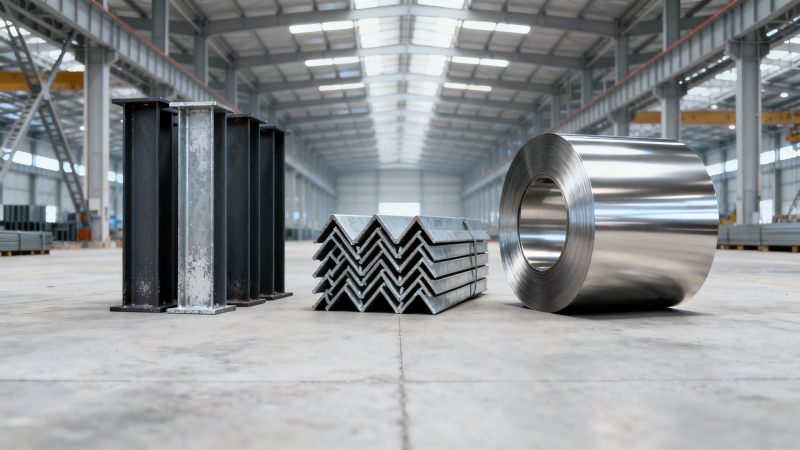
How Hongteng Fengda Ensures You Get Performance — Not Just Appearance
We eliminate visual bias through process transparency and third-party validation. Every structural steel shipment includes:
- Mill test reports showing actual tensile/yield values — not just “meets ASTM A653” generic claims;
- Zinc coating weight certificates with location-specific measurements (edge, flat, corner);
- Dimensional tolerance logs aligned to ASTM A6 (±0.25mm for thickness, ±1.5mm for width in hot-rolled sections);
- Batch-level traceability from raw material heat number to final packaging.
Our production capacity supports stable lead times: standard structural steel orders ship within 2–4 weeks; customized cold-formed profiles require 4–6 weeks — with no rush fees. We serve clients across North America, Europe, the Middle East, and Southeast Asia with FOB, CIF, and DAP terms — including documentation support for customs clearance and import compliance.
Whether you need angle steel for warehouse racking, channel steel for rail infrastructure, or OEM-designed steel components for industrial machinery, our team provides direct engineering consultation — helping you specify the right grade, finish, and tolerances for your application’s lifetime cost, not just first cost.
Contact us today to request mill test reports, review dimensional tolerance charts, or discuss your next structural steel requirement — with zero obligation and full technical backing.
Please give us a message


Please enter what you want to find