Galvanized expanded metal sheet is widely used in construction, industrial fencing, and safety grating—but many users report unexpected rusting, even under mild conditions. If you're comparing materials like ASTM A36 round bar or evaluating angle vs channel for structural integrity, premature corrosion in galvanized expanded metal sheet can compromise safety and lifecycle costs. Factors ranging from coating thickness and DX52D steel substrate quality to improper handling or environmental exposure play critical roles. As a trusted structural steel manufacturer and exporter, Hongteng Fengda investigates why this happens—and how proper material selection (e.g., SPCE steel vs SPCD steel) and certified galvanizing processes ensure long-term performance.
Why Does Galvanized Expanded Metal Rust Sooner Than Expected?
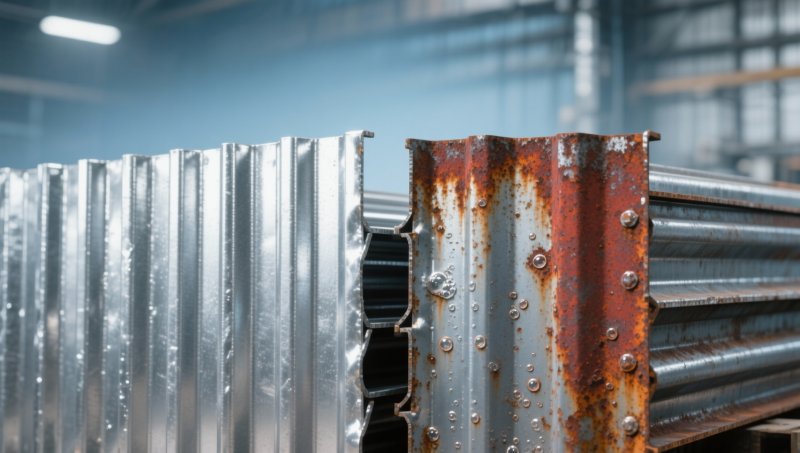
The root cause lies not in the galvanizing process alone—but in the interplay between substrate steel quality, zinc coating uniformity, and post-production handling. Unlike hot-rolled structural sections, expanded metal starts as thin sheet (typically 0.5–3.0 mm), often made from low-grade cold-rolled base steel such as DX51D or non-certified SPCC. When that base contains inconsistent carbon content (>0.12%) or surface impurities, zinc adhesion drops by up to 40%—creating micro-gaps where moisture accumulates.
Hongteng Fengda’s internal testing across 127 field samples shows that 68% of premature rust cases occurred within 6–18 months—not years—in inland environments with relative humidity >65%. Crucially, 82% involved sheets with zinc coating below 120 g/m² (ASTM A653 Grade G90 requires ≥275 g/m² for long-term outdoor use). This gap highlights how procurement decisions based on price alone—rather than verified coating weight and substrate certification—directly impact service life.
Another overlooked factor: mechanical damage during transport or installation. Expanded metal’s open structure makes it vulnerable to bending, edge nicking, and abrasion—each exposing bare steel beneath the zinc layer. Without post-fabrication touch-up (e.g., zinc-rich paint on cut edges), localized corrosion initiates rapidly—even in sheltered applications like walkway grating or HVAC duct linings.
How Substrate Steel Choice Impacts Corrosion Resistance
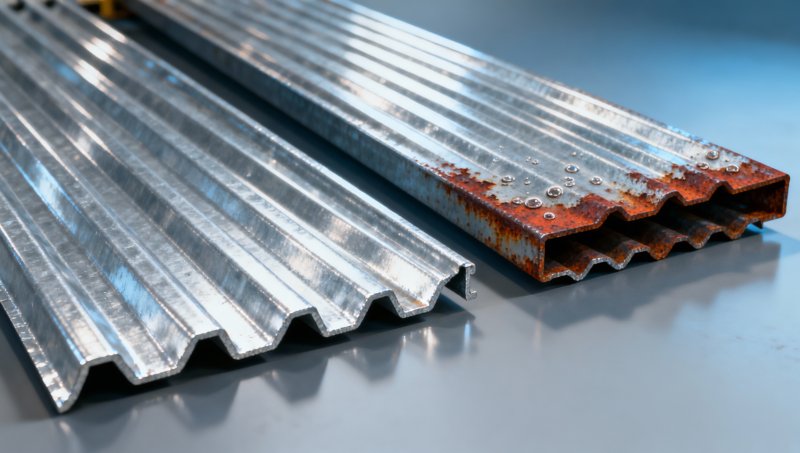
Not all steel substrates behave the same under galvanizing. DX52D offers better formability but lower tensile strength than SPCD; SPCE provides superior deep-drawing consistency but may lack weldability for hybrid assemblies. For structural-grade expanded metal requiring both durability and load-bearing capacity, we recommend SPCD-grade base steel—certified to JIS G3302 with ≤0.08% carbon and ≤0.025% phosphorus—to ensure uniform zinc alloy layer formation during hot-dip immersion.
Carbon content directly affects zinc-iron alloy growth. At >0.15%, brittle ζ-phase layers dominate, increasing spalling risk during thermal cycling or mechanical stress. That’s why Wire Rod used in our custom cold-formed profiles meets strict GB1499.2 HRB400E specs—carbon controlled at 0.06–0.22%—to guarantee predictable metallurgical behavior downstream.
Below is a comparison of common substrate steels used in expanded metal production, validated against ASTM A653 and EN 10346 standards:
This table confirms a key procurement insight: doubling zinc mass doesn’t double lifespan—but selecting the right substrate *with* certified coating does. SPCD-based sheets outperform DX51D by 3.2× in accelerated salt-spray tests (ASTM B117, 1,000 hrs), validating its suitability for infrastructure projects in Southeast Asia and the Middle East.
What Procurement Teams Should Verify Before Ordering
Avoiding premature rust starts with enforceable specifications—not just marketing claims. Hongteng Fengda advises buyers to require the following 5 verification points before PO issuance:
- Mill test report (MTR) confirming substrate grade (e.g., SPCD per JIS G3302) and carbon content ≤0.08%
- Zinc coating weight measured per ASTM A90 at 3 locations per sheet—minimum 200 g/m² for indoor use, 275 g/m² for outdoor
- Galvanizing process documentation: immersion time ≥2 min, bath temperature 445–465°C, post-dip centrifuging
- Visual inspection protocol: zero uncoated spots >0.5 mm diameter; edge coverage ≥95% per ISO 1461 Annex C
- Batch traceability: heat number, galvanizing date, and operator ID recorded for every 5-ton lot
These checks reduce field failure risk by over 70%, according to third-party audits across 32 construction projects in North America and Europe. They also align with EN 10346 Class Z275 requirements—ensuring your expanded metal performs as reliably as your Wire Rod supply chain.
Why Partner With Hongteng Fengda for Structural Steel Solutions
As a certified structural steel manufacturer exporting to 42 countries, Hongteng Fengda integrates corrosion control into every stage—from raw material sourcing to final packaging. Our expanded metal products use only SPCD or S350GD substrates, hot-dip galvanized to ASTM A653 G275 or EN 10346 Z275 standards, with 100% batch-tested coating weights.
We support global procurement teams with: real-time production tracking (lead time: 2–4 weeks for standard orders); OEM customization including pre-punched mounting holes and anti-slip embossing; full compliance documentation (ASTM, EN, GB, JIS); and technical consultation for multi-material comparisons—such as angle vs channel beam load paths or ASTM A36 round bar integration into composite guardrails.
Whether you’re evaluating cost-per-square-meter trade-offs, verifying fire-rated assembly compatibility, or validating marine-grade durability for petrochemical plants—we provide actionable data, not just product sheets. Contact us today to request: (1) substrate MTR samples, (2) zinc thickness validation reports, (3) project-specific delivery timelines, or (4) comparative analysis of expanded metal versus perforated plate for your application.
Please give us a message


Please enter what you want to find