Choosing galvanized steel wire for fencing is not only about strength but also about getting the zinc coating right. From coating thickness to corrosion resistance, small mistakes can raise maintenance costs and shorten service life. This guide explains the zinc coating errors buyers and users should avoid while helping procurement and project teams compare galvanized steel price, quality standards, and long-term performance.
What Buyers Usually Get Wrong About Zinc Coating on Fencing Wire
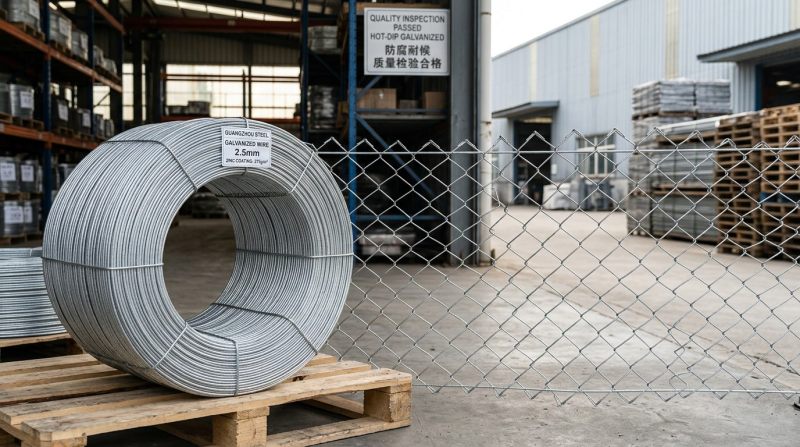
If you are sourcing galvanized steel wire for fencing, the biggest mistake is assuming all galvanized wire performs the same as long as the diameter and tensile strength look correct. In practice, zinc coating quality often determines whether the fence lasts for years or starts failing early in humid, coastal, agricultural, or industrial environments.
For most buyers, users, and technical evaluators, the core issue is not simply “Is the wire galvanized?” but rather:
- How much zinc coating is actually applied?
- Is the coating uniform and well bonded?
- Does it match the service environment?
- Is the supplier proving coating quality with recognized standards and test data?
- Will a lower purchase price create higher maintenance or replacement costs later?
The overall judgment is straightforward: a fencing wire with the wrong zinc coating specification may still look acceptable at delivery, but it can become the weak point of the entire fencing system. That is why coating selection should be treated as a service-life and risk-control decision, not just a line-item price comparison.
Mistake 1: Choosing by Price Per Ton Instead of Coating Performance
Many procurement teams compare galvanized steel price first, which is understandable. However, lower pricing may reflect a lighter zinc coating, weaker process control, or reduced corrosion resistance. This is especially risky for perimeter fencing, livestock fencing, highway barriers, vineyard systems, and security fencing in demanding climates.
A cheaper wire can become expensive if it leads to:
- Earlier rust formation
- More frequent replacement cycles
- Higher labor costs for maintenance
- Reputation risk in projects with end-user complaints
- Safety concerns when wire loses strength over time
For project managers and commercial evaluators, the better question is: What is the cost per year of usable service life? A wire with a more suitable zinc coating may cost more upfront but deliver lower total ownership cost.
Mistake 2: Not Checking Zinc Coating Weight or Thickness Clearly
One of the most common technical mistakes is buying galvanized fencing wire without defining coating requirements in measurable terms. Terms like “heavy galvanized” or “good galvanizing” are too vague for quality control.
What should be clarified in purchase documents:
- Zinc coating mass, commonly expressed in g/m²
- Applicable standard such as ASTM, EN, JIS, or GB
- Wire diameter and acceptable tolerance
- Type of galvanizing process
- Required salt spray or corrosion-related performance if relevant
If these points are not specified, suppliers may quote different quality levels under the same product name, making comparison inaccurate. Quality control teams should always request inspection reports, coating test methods, and batch traceability.
Mistake 3: Ignoring the Difference Between Electro-Galvanized and Hot-Dip Galvanized Wire
Not all galvanized steel wire is produced the same way. For fencing applications, this distinction matters.
Electro-galvanized wire usually has a thinner and smoother zinc layer. It may be acceptable for indoor use or low-corrosion environments, but it is often less suitable for long-term outdoor fencing where corrosion resistance is critical.
Hot-dip galvanized wire generally provides a thicker zinc coating and better protection for outdoor exposure. In many fencing projects, especially in coastal, rainy, agricultural, or industrial areas, hot-dip galvanized wire is the safer choice.
Users and purchasing staff should confirm the process rather than assume “galvanized” automatically means heavy-duty outdoor protection.
Mistake 4: Overlooking the Service Environment
The right zinc coating for fencing wire depends heavily on where the fence will be installed. A wire suitable for a dry inland region may fail much faster in a coastal or chemical-exposed area.
High-risk environments include:
- Coastal zones with salt-laden air
- Farms with animal waste and fertilizers
- Industrial facilities with airborne chemicals
- Areas with frequent rain, standing moisture, or temperature cycling
In these conditions, buyers should avoid using minimum-grade galvanizing just to reduce initial budget. Technical assessment should align coating specification with environmental severity. This is one of the most effective ways to prevent premature corrosion claims.
Mistake 5: Focusing Only on Coating and Forgetting Base Wire Quality
Zinc coating is critical, but it cannot compensate for poor base steel quality. A fencing wire must also have appropriate tensile strength, ductility, diameter consistency, and surface condition before galvanizing.
If the substrate quality is poor, common issues may include:
- Cracking during bending or tensioning
- Inconsistent coating adhesion
- Wire breakage during installation
- Reduced long-term mechanical performance
For technical buyers, good practice is to evaluate galvanized wire as a full product system: steel chemistry, wire drawing quality, galvanizing process, final coating, and inspection consistency.
How to Evaluate Zinc Coating Quality Before You Order
To make a sound purchasing decision, use a simple evaluation checklist:
- Confirm the application
Define whether the wire will be used for agricultural fencing, security fencing, chain link mesh, barbed wire, welded mesh, or general perimeter fencing. - Match the coating to the environment
Higher-corrosion environments need stronger zinc protection. - Request standard compliance
Ask whether the product meets ASTM, EN, JIS, or GB requirements. - Review test reports
Check coating mass, diameter tolerance, tensile strength, and inspection records. - Assess supplier consistency
Stable production and quality control matter as much as one sample coil. - Compare lifecycle value
Do not compare only ex-works price; compare service life, installation risk, and replacement frequency.
This approach helps procurement managers, distributors, and engineering teams avoid hidden quality gaps that are difficult to detect once the wire is installed.
A Practical Note for Projects Using Multiple Steel Products
Many construction and industrial buyers source fencing materials together with other steel items for site access, equipment zones, walkways, and platform areas. In those cases, it helps to work with suppliers that understand broader project steel requirements and quality coordination.
For example, if your project also requires anti-slip flooring or platform materials, 235JR Patterned steel plate may be relevant for transportation, construction, decoration, machinery, shipbuilding, and floor areas around equipment. Available in thicknesses from 2-8mm, widths from 600mm-1800mm, and lengths up to 12m, it offers anti-skid performance, bending resistance, and compliance with standards such as ASTM, DIN, JIS, GB/TC, and ISO. For buyers managing total steel packages, combining fencing wire decisions with compatible structural and platform materials can improve sourcing efficiency and quality control.
Questions Procurement and QC Teams Should Ask Suppliers
Before placing an order, ask these direct questions:
- Is the wire electro-galvanized or hot-dip galvanized?
- What is the guaranteed zinc coating mass?
- Which inspection standard is used?
- Can you provide mill test certificates or third-party reports?
- What are the diameter and tensile tolerances?
- How is coating adhesion verified?
- What environments is this grade recommended for?
- What is your batch consistency and lead time reliability?
These questions are useful not only for direct users but also for importers, resellers, distributors, and project contractors who need confidence before committing to volume orders.
Final Takeaway: The Best Fencing Wire Is the One That Matches Real Exposure Conditions
The most important zinc coating mistake to avoid is treating galvanized fencing wire as a generic commodity. For real outdoor performance, coating type, coating weight, environmental fit, and supplier quality control matter far more than a low initial quote alone.
If you want fencing that lasts, focus on measurable coating specifications, relevant international standards, and total service-life value. That is the best way to reduce corrosion risk, protect project budgets, and choose galvanized steel wire that performs reliably in actual field conditions.
Please give us a message


Please enter what you want to find