Galv sheeting is widely specified in agricultural buildings for its durability and cost-efficiency—yet hidden condensation behind cladding remains a critical, often underestimated driver of premature corrosion. For structural steel manufacturers, procurement teams, and project managers evaluating galvanized metal plate or galv sheeting solutions, understanding this moisture-induced degradation mechanism is essential to ensure long-term asset integrity. Whether sourcing galvanized coil, GI sheet coil, cold drawn wire, or carbon steel sheet plate from trusted suppliers like Hongteng Fengda—a certified steel wire manufacturer and exporter compliant with ASTM, EN, and GB standards—selecting the right galvanised plate steel and installation practices directly impacts service life, maintenance costs, and safety compliance.
Why Condensation Behind Galv Sheeting Accelerates Corrosion in Agricultural Structures
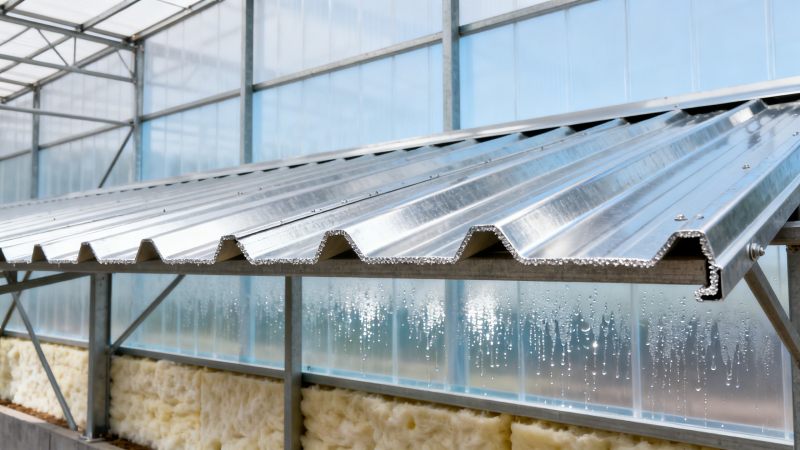
Agricultural buildings operate under extreme thermal and humidity cycles—daytime solar gain heats metal cladding rapidly, while nighttime cooling causes rapid dew-point drop inside wall/roof cavities. When warm, moisture-laden interior air contacts cold galvanized sheeting surfaces (often below 10°C), condensation forms on the underside. This trapped moisture cannot evaporate due to low ventilation rates (<0.3 air changes per hour in many barns) and lack of vapor-permeable membranes.
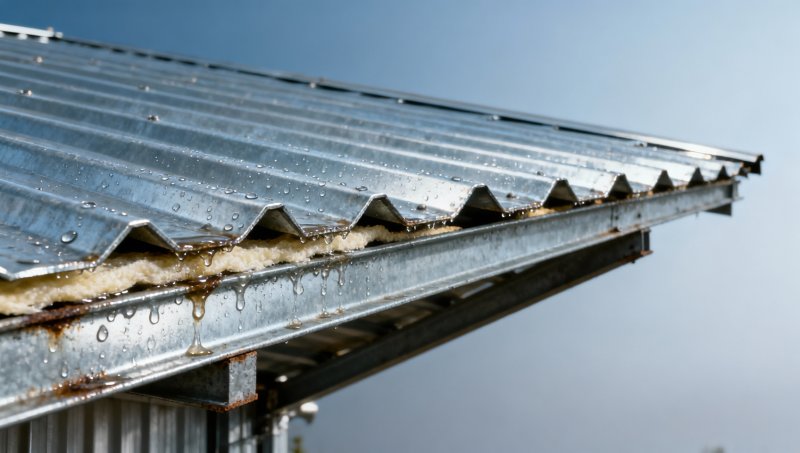
Zinc coatings rely on a stable, dry oxide layer for protection. Continuous wet-dry cycling disrupts passivation, accelerating electrochemical dissolution—especially at cut edges, fastener holes, and scratches where base steel is exposed. Field studies show corrosion rates increase by 3–5× when relative humidity exceeds 80% for >4 hours daily over consecutive weeks.
Unlike industrial facilities with HVAC control, agricultural structures rarely include active dehumidification or cavity ventilation. This makes design-stage mitigation—such as thermal break integration, vapor barrier placement, and substrate selection—not optional but mission-critical for longevity.
How Structural Steel Design Choices Influence Moisture Management
The supporting framework plays a decisive role in condensation risk. Cold-bridging through un-insulated purlins or wall girts creates localized thermal sinks that attract condensate. Hot-dip galvanized channel steel—used extensively in roof purlin and wall beam applications—must be specified with attention to both coating mass (≥275 g/m² per EN ISO 1461) and geometric profile to minimize contact area with cladding.
Hongteng Fengda’s Channel Steel Supplier offers hot-dip galvanized channel steel in Q235B and Q345B grades, with height options from 80mm to 160mm and thicknesses spanning 1.5mm–25mm. These dimensions allow engineers to select profiles that reduce thermal bridging while maintaining load-bearing capacity for lightweight roofs and wall beams—critical for minimizing localized condensation traps.
Key dimensional tolerances—±0.02mm in thickness and ±2mm in height—ensure precise fit-up during erection, reducing gaps where moisture can accumulate. Consistent geometry also supports accurate thermal modeling, enabling predictive condensation risk assessment before construction begins.
Critical Performance Parameters for Condensation-Resistant Channel Steel
This table confirms how specification alignment—coating mass, mechanical strength, and delivery readiness—directly supports moisture-resilient structural design. Higher zinc mass delays time-to-first-rust under cyclic wetting; tighter tolerances improve sealing against vapor ingress; and shorter lead times enable just-in-time installation, reducing on-site exposure to weather-induced corrosion pre-completion.
Procurement Checklist: 5 Non-Negotiables for Galv Sheeting Projects
For procurement personnel and project managers, mitigating condensation-driven corrosion starts long before cladding arrives onsite. Use this field-tested checklist:
- Verify galvanizing batch certification includes adhesion test results (per ASTM A90) and coating thickness mapping—not just average values
- Require thermal break details in purlin/wall beam specs: minimum 10mm air gap or certified insulating sleeve integration
- Confirm supplier provides traceable material test reports (MTRs) covering base steel grade (e.g., Q235B), tensile yield, and bend test outcomes
- Validate packaging includes edge protection and desiccant packs for long-haul export shipments—especially relevant for Middle East and Southeast Asia deliveries
- Assess supplier’s quality control process: Hongteng Fengda conducts 100% visual inspection + random salt-spray testing (ASTM B117, 96-hour minimum) on every production lot
Why Partner With Hongteng Fengda for Corrosion-Resilient Structural Steel
As a structural steel manufacturer and exporter from China serving North America, Europe, and the Middle East, Hongteng Fengda delivers more than raw materials—it delivers corrosion assurance built into specification, production, and documentation.
Our modern facilities maintain strict process controls across hot-dip galvanizing lines, with real-time bath temperature monitoring (±1.5°C tolerance) and automated withdrawal speed regulation to ensure uniform coating distribution—even on complex U-channel geometries. Every order ships with full compliance documentation: EN 10346, ASTM A653, GB/T 2518, plus third-party SGS or BV verification upon request.
We support global buyers with stable production capacity (120,000+ MT/year), consistent quality across batches, and dependable lead times—reducing sourcing risks and avoiding costly rework from premature corrosion failures. Whether you need angle steel for bracing, cold-formed profiles for roofing systems, or customized channel steel for specialized agricultural equipment frames, our engineering team collaborates early to align material selection with environmental performance targets.
Contact us today to discuss your next agricultural building project—we’ll help you confirm optimal galvanized sheeting specifications, review purlin/wall beam thermal performance data, provide sample MTRs, and outline delivery timelines for Q235B or Q345B Channel Steel Supplier solutions.
Please give us a message


Please enter what you want to find