When evaluating gi sheet coil for roofing, cladding, or industrial fabrication, thickness and zinc coating are two critical factors that directly shape service life, corrosion resistance, and total project cost. For buyers comparing coil coated steel, hrc coil, or sourcing from a China Steel Supplier, understanding how these specifications perform in real environments helps reduce risk and make smarter technical and purchasing decisions.
How do thickness and zinc coating affect GI sheet coil service life?
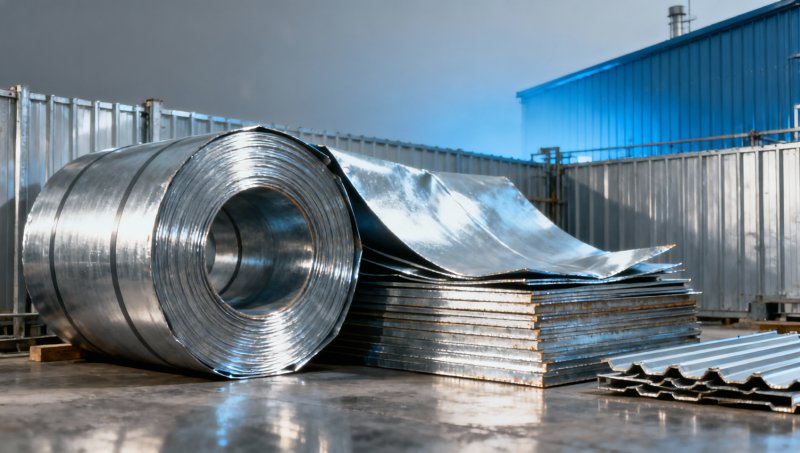
In galvanized steel applications, service life is rarely determined by one specification alone. GI sheet coil thickness affects structural rigidity, dent resistance, forming behavior, and substrate durability. Zinc coating mainly determines how long the steel surface can resist atmospheric corrosion before red rust reaches the base metal. In practical use, these two variables work together rather than separately.
For roofing and wall cladding, common base thickness ranges often fall between 0.25 mm and 1.20 mm, while heavier industrial uses may require thicker material. Zinc coating is commonly discussed by coating mass, such as Z80, Z120, Z180, or Z275, depending on market standard and project requirement. A thicker base sheet with insufficient zinc may still fail early in marine or high-humidity conditions, while a heavy zinc layer on very thin steel may improve corrosion resistance but not solve deformation risk.
This is why technical evaluators, procurement teams, and project managers should not ask only, “What is the lowest price per ton?” A better question is, “What thickness and coating combination fits the actual environment, expected maintenance interval, and service target?” In many projects, a mismatch of 1–2 specification levels can lead to faster replacement cycles, higher installation loss, or customer complaints within 2–5 years.
For distributors and industrial users, the risk is also commercial. If a GI sheet coil is sold into a coastal warehouse, agricultural building, or chemical processing area without checking coating class, the visible corrosion rate can accelerate quickly. This affects not only end use but also brand reputation, warranty discussions, and inventory turnover.
Why base metal thickness matters beyond simple strength
Thickness influences more than load-bearing capacity. In roll forming, bending, and panel fabrication, a thin sheet may be easier to process, but it can become vulnerable to oil canning, transport damage, and fixing-point deformation. For roofing sheets exposed to wind uplift and thermal cycling, increasing thickness within a suitable range often improves dimensional stability over long-term outdoor use.
Operators and quality control teams should also consider thickness tolerance. A nominal 0.50 mm coil does not always mean the same effective steel content across suppliers. In procurement reviews, verifying actual base metal thickness, coating mass, and total thickness is a basic 3-point control step that helps prevent disputes after installation.
For finance approvers, the implication is straightforward. Lower gauge material may reduce initial purchase cost, but if the product requires earlier replacement, more maintenance, or generates damage claims, the total lifecycle cost becomes less favorable. The cheapest quote per ton is not always the lowest cost per year of service.
Why zinc coating often decides corrosion resistance first
Zinc acts as a sacrificial protective layer. In normal atmospheric exposure, the coating gradually weathers before the steel substrate is attacked. In dry inland environments, lighter coating classes may be acceptable. In coastal, industrial, or high-condensation environments, buyers usually benefit from moving to a higher coating mass because the zinc consumption rate is typically faster.
A common misunderstanding is that visual brightness indicates better coating quality. In reality, appearance alone cannot confirm coating mass, uniformity, or adhesion. Technical evaluation should include coating designation, substrate grade, application environment, and processing requirements. These factors are more important than surface shine in predicting service life.
If a project includes cutting, punching, or edge exposure, the coating decision becomes even more important. Zinc protects flat surfaces well, but exposed cut edges may corrode faster in aggressive environments. This is one reason why many project specifications combine appropriate coating class, design drainage control, and installation detailing rather than depending on coating only.
Which thickness and coating combinations fit different steel application scenarios?
Different industries use GI sheet coil under very different stress conditions. A warehouse roof, agricultural shed, HVAC duct, appliance panel, and industrial enclosure do not face the same corrosion load or forming demand. That is why a practical selection guide should connect specification to use case instead of relying on a single universal grade.
For construction buyers, three dimensions usually matter most: mechanical suitability, corrosion environment, and budget control. For distributors and agents, standard inventory combinations also matter because stocking too many non-standard specifications can slow turnover. In many export projects, standard widths and coating classes help balance lead time, freight efficiency, and project compatibility.
The following table shows common GI sheet coil selection logic by application type. Exact specification still depends on design code, local climate, and fabrication method, but this framework helps narrow down options during early-stage technical and commercial review.
The table shows that no single GI sheet coil specification suits all conditions. In moderate inland use, a mid-range combination may be enough. In marine, industrial, or agricultural settings, moving from a lighter coating to a heavier one is often a more rational upgrade than increasing thickness alone. This is a common decision point in project budgeting.
When should buyers compare GI sheet coil with cold rolled substrate options?
In some fabrication programs, buyers also compare galvanized material with cold rolled steel used as a substrate for later coating, painting, or processing. For example, manufacturers serving construction machinery, building structures, or pressure vessels may start from high-quality cold rolled coil when dimensional consistency, weldability, and downstream treatment are critical.
A relevant option in this workflow is Steel Cold Rolled Coil. Based on Q355 carbon steel, it is used in construction machinery, building structures, and pressure vessels where high strength, enhanced toughness, good workability, and good weldability are needed. Available dimensions include Thickness 0.12-12mm, Width 600-2000mm, and Coil Weight 3-20 Tons, which gives buyers flexibility for bending, welding, decoiling, cutting, punching, and surface treatment.
For technical teams, this comparison matters because service life is not always solved by galvanization alone. Some projects require a stronger substrate, tighter forming control, or later coating systems. Standards such as ASTM A36/A36M-08, JIS G3101-2004, EN 10025-2, and GB/T 700-2006 are frequently referenced during substrate selection, especially when export compliance and documentation such as MTC, ISO, SGS, or BV inspection support are involved.
This is where an experienced structural steel manufacturer and exporter adds value. Hongteng Fengda supports buyers not only with common steel sections and custom structural components, but also with specification alignment across standard products, OEM requests, and international documentation needs. That reduces rework during sourcing and helps procurement teams compare options on a like-for-like basis.
What should procurement teams, engineers, and QC check before ordering?
A good GI sheet coil purchase decision usually combines 5 key checks: base metal thickness, zinc coating class, steel grade, dimensional tolerance, and end-use environment. Many procurement problems happen because only price and nominal size are confirmed, while corrosion conditions, forming method, and packaging requirements are left vague. That can create disputes within 7–15 days of delivery or only after installation begins.
For B2B buyers, especially importers and project contractors, documentation review is part of risk control. A quotation should clearly identify nominal thickness, whether thickness includes coating or base metal only, coating designation, width tolerance, coil weight range, and applicable standards. If the project serves regulated markets, it is also wise to confirm whether ASTM, EN, JIS, or GB references are needed in mill paperwork.
The table below can be used as a practical procurement checklist before issuing a purchase order or approving supplier comparison. It is especially useful for purchasing managers, QA teams, and finance approvers who need a structured basis for technical-commercial decisions.
This checklist helps buyers convert broad demand into verifiable order details. It is also useful during multi-supplier comparison because two quotes with the same nominal thickness may not represent the same performance level. Small wording differences in thickness definition or coating designation can change the actual value of the offer.
A 4-step specification review process for lower sourcing risk
- Define the operating environment first: inland, coastal, industrial, agricultural, or intermittent condensation. This determines whether standard or heavier zinc coating should be prioritized.
- Confirm the fabrication route next: slitting, roll forming, punching, bending, or welding. Processing complexity can narrow the acceptable thickness and surface condition range.
- Match standards and documents: ASTM, EN, JIS, or GB references, plus MTC or third-party inspection if required by customer contract.
- Review logistics and delivery cycle: standard export orders may move within 2–4 weeks depending on specification, while custom OEM or non-standard combinations can require longer planning.
For project managers, this 4-step review often avoids delays later in the procurement chain. For distributors, it also helps standardize communication with end customers and reduces returns caused by wrong application matching. For finance teams, better specification control means fewer hidden costs after order confirmation.
What are the common misconceptions, cost trade-offs, and service life risks?
One of the most common misconceptions is that thicker GI sheet coil always means longer service life. In reality, thickness mainly supports mechanical performance, while zinc coating often governs corrosion durability. A 0.80 mm sheet with a light coating may underperform a 0.50 mm sheet with a heavier coating in aggressive outdoor conditions. The better choice depends on whether the limiting factor is corrosion, loading, or fabrication stability.
Another misconception is that all galvanized products are interchangeable. Buyers may compare gi sheet coil, coil coated steel, and even hrc coil on a headline price basis, but these materials serve different roles. Hot rolled coil may be suitable as a base material for structural or further processing needs, while galvanized and coated coils are chosen for corrosion protection or painted finish requirements. Cross-comparison without application logic creates technical and budget errors.
A third issue is underestimating storage and installation conditions. Even correctly specified GI sheet coil can suffer wet storage stain if coils are exposed to trapped moisture during transport or warehousing. For importers and distributors, basic handling discipline during the first 30 days after arrival can influence customer satisfaction almost as much as material specification.
The cost trade-off is therefore not simply “higher coating equals unnecessary expense.” In many projects, paying more for the right coating class reduces repainting, sheet replacement, labor downtime, and complaint handling. Decision-makers should assess material cost, service interval, maintenance frequency, and failure consequence together, especially on projects expected to run 5–15 years or more.
Typical risk points buyers should not ignore
- Using inland-grade zinc coating in coastal, port, island, or chemical-adjacent environments where corrosion rates are usually higher.
- Approving a quote based only on nominal thickness without verifying tolerance range, coating class, and actual application duty.
- Ignoring edge protection, drainage detail, and installation design, which can shorten service life even when the coil itself is correctly selected.
- Failing to align packaging and transport method with export route, humidity exposure, and unloading capacity at destination.
FAQ: practical answers for buyers and technical reviewers
How should I choose between increasing thickness and increasing zinc coating?
If the main concern is structural stiffness, dent resistance, or forming stability, increasing thickness is often more relevant. If the main concern is outdoor corrosion, humidity, or marine exposure, upgrading zinc coating is usually more effective. In many roofing and cladding applications, coating upgrade delivers a better durability gain than thickness increase alone.
Is heavier zinc coating always necessary?
No. In dry indoor or mild inland conditions, a moderate coating class may be sufficient. Heavier coating becomes more valuable in aggressive environments, long service-life projects, or applications where maintenance is difficult. The right choice depends on exposure class, budget, and replacement difficulty.
What delivery information should be confirmed before payment approval?
At minimum, confirm thickness basis, coating designation, width and coil weight range, packing method, standard reference, and lead time. For export orders, also review destination market requirements, inspection documents, and whether standard or OEM production is involved. These points affect both landed cost and project scheduling.
Can one supplier support both standard and customized steel requirements?
Yes, and this often reduces coordination cost. A manufacturer with experience in structural steel, cold formed profiles, and custom steel components can help buyers align project demand across multiple categories. This is especially useful when a project combines GI sheet coil, structural members, and fabricated steel parts under one sourcing plan.
Why work with a China structural steel manufacturer for specification support and supply planning?
For global buyers, the ideal supplier is not only a producer but also a specification partner. Hongteng Fengda operates as a structural steel manufacturer and exporter from China, serving construction, industrial, and manufacturing projects across North America, Europe, the Middle East, and Southeast Asia. This cross-market experience helps buyers compare ASTM, EN, JIS, and GB related requirements with fewer communication gaps.
The company’s product scope includes angle steel, channel steel, steel beams, cold formed steel profiles, and customized structural steel components. That matters because many buyers do not purchase GI sheet coil in isolation. They often need coordinated supply across several steel categories, with stable production capacity, predictable lead times, and documentation consistency over repeated orders.
For procurement managers and business evaluators, working with a supplier that understands both standard specifications and OEM solutions can reduce sourcing risk in 3 important ways: clearer technical communication, more reliable production planning, and better quality control alignment. These are practical advantages when project schedules are tight, especially in 2–4 week procurement windows or phased delivery programs.
For project owners and financial approvers, the value is also measurable in fewer specification disputes, lower rework risk, and better control over replacement and maintenance cost. Instead of selecting GI sheet coil only by headline price, buyers can evaluate the full package: service life fit, standards compliance, processing suitability, and delivery reliability.
Why choose us for your next GI sheet coil or structural steel inquiry?
If you are comparing thickness options, zinc coating classes, or cold rolled and galvanized steel routes, we can help you confirm the right specification before ordering. You can discuss base metal thickness, coating requirement, target application, export standard, coil size, and packaging details based on your actual project rather than a generic catalog description.
We also support practical sourcing discussions such as standard versus OEM supply, sample requests, documentation expectations, delivery planning, and quotation comparison. Whether you are a distributor building inventory, a contractor reviewing project materials, or an industrial buyer evaluating long-term cost, the goal is to match steel performance with commercial reality.
Contact us to discuss 6 key points in one review: application environment, required thickness range, zinc coating level, processing method, certification or standard reference, and expected delivery schedule. With clearer inputs, your team can make faster decisions, control procurement risk, and choose GI sheet coil or related steel products with greater confidence.
Please give us a message


Please enter what you want to find