Choosing the right fluid pipe standard affects safety, cost, and long-term performance in every project. From API 5L pipe and seamless steel tube to corrosion-resistant pipe options, understanding key specifications helps buyers, engineers, and project teams compare materials with confidence. This guide explains the fluid pipe standards you should know and how they relate to quality, application, and sourcing decisions.
When people search for fluid pipe standards, they usually want a practical answer to one question: which standard is suitable for the medium, pressure level, operating environment, and project requirement? For engineers, buyers, and project managers, the issue is not simply knowing standard names. It is understanding how standards affect material selection, inspection, compliance, fabrication, service life, and total procurement risk. In most cases, the best decision comes from matching the pipe standard to the actual application instead of choosing the cheapest or most familiar option.
Why fluid pipe standards matter in real projects
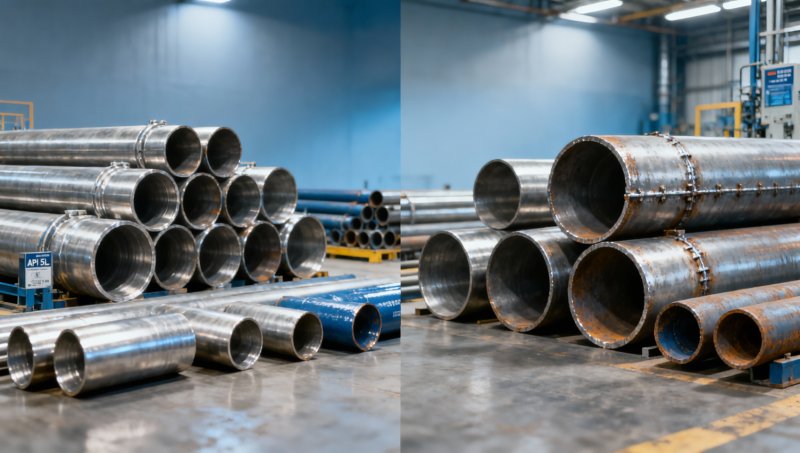
Fluid pipe standards are the basis for consistent quality. They define dimensions, tolerances, chemical composition, mechanical properties, manufacturing methods, test requirements, and marking rules. Without a clear standard, it becomes difficult to verify whether a pipe is suitable for water transmission, oil and gas transport, industrial processing lines, fire protection systems, or structural-support-related fabrication.
For technical evaluators and quality teams, standards reduce uncertainty. For procurement teams, they make supplier comparison easier. For business decision-makers, they help control lifecycle cost by reducing failure risk, rework, and compliance issues. A pipe that looks similar on paper may perform very differently depending on whether it is produced to ASTM, API, EN, JIS, or GB requirements.
In international sourcing, this is especially important. Global projects often involve multiple stakeholders, including designers, EPC contractors, distributors, inspectors, and financial approvers. A recognized standard provides a common technical language for all of them.
Which fluid pipe standards should you know first?
If you need a practical starting point, the most commonly referenced standards for fluid pipe include API, ASTM, EN, JIS, and GB systems. Each is widely used, but each serves somewhat different markets and applications.
API 5L
API 5L pipe is one of the best-known standards for line pipe used in oil, gas, and other fluid transportation. It is often selected for pipeline systems where strength, toughness, and controlled manufacturing quality are critical. Buyers frequently compare PSL1 and PSL2 levels, since PSL2 includes stricter chemistry, testing, and traceability requirements.
ASTM standards
ASTM covers a broad range of pipe materials and production routes. For example:
- ASTM A53 is commonly used for mechanical and pressure applications, as well as ordinary uses for steam, water, gas, and air lines.
- ASTM A106 is a common choice for high-temperature service in seamless carbon steel pipe.
- ASTM A312 is well known for stainless steel pipe where corrosion resistance is important.
ASTM standards are widely recognized in North America and in many international projects. They are often preferred when buyers need clear requirements for pressure service, fabrication, and testing.
EN standards
European standards such as EN 10216 and EN 10217 are often used for seamless and welded steel tubes for pressure purposes. These standards are important for projects serving European markets or following EU-aligned technical specifications.
JIS and GB standards
JIS standards are common in Japan and projects influenced by Japanese specifications. GB standards are important in China and for buyers sourcing from Chinese manufacturers. In many export projects, suppliers may help map GB materials to equivalent ASTM or EN grades, but equivalence should never be assumed without checking chemistry, mechanical properties, testing, and dimensional requirements.
How to choose between seamless steel tube and welded pipe
One of the most common buyer questions is whether a seamless steel tube is necessary. The answer depends on service conditions, not preference alone.
Seamless pipe is often chosen for higher pressure, higher temperature, and more demanding service environments because it has no weld seam. This can improve confidence in critical applications, especially where cyclic stress or elevated operating conditions are involved. However, seamless products may come at a higher cost and longer lead time depending on size and grade.
Welded pipe can be highly reliable and cost-effective for many fluid applications when produced and tested according to the right standard. For water transport, low- to medium-pressure service, and many industrial systems, welded options may offer a better balance of availability and cost.
The key decision factors are:
- Operating pressure and temperature
- Nature of the fluid
- Corrosion allowance requirements
- Welding and fabrication conditions
- Inspection and code compliance needs
- Budget and lead time
If failure would create major safety, shutdown, or environmental consequences, stricter specification and inspection levels are usually justified.
How standards affect corrosion resistance, safety, and lifecycle cost
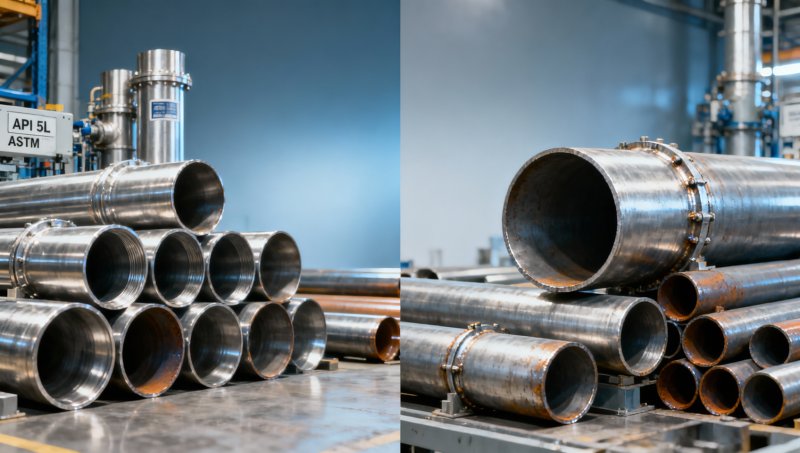
Many sourcing mistakes happen because teams focus only on initial price instead of the full service environment. Pipe standards help define whether the material is suitable for corrosion exposure, pressure loading, and fabrication requirements. This directly affects maintenance frequency, replacement intervals, and safety performance.
For example, corrosion-resistant pipe selection may involve stainless steel, coated carbon steel, galvanized pipe, or alloy pipe depending on the medium and environment. A standard does not only tell you the base material; it often also defines testing, surface condition, and manufacturing consistency. That matters because corrosion failures are often caused by a mismatch between real operating conditions and the selected specification.
In industrial and construction projects, pipe systems also connect to supports, base structures, skids, and equipment platforms. In those broader assemblies, material coordination matters. For related fabrication needs such as support plates, mounting plates, racks, and heavy-duty connection components, some buyers also source structural materials together with pipe packages. In such cases, a qualified Mild Steel Plate Supplier can support applications in construction, bridges, heavy machinery, transmission towers, bridge panels, support plates, mechanical mounting plates, construction equipment, and racks. Grades such as A572 and S355JR are often selected where low-carbon, low-alloy high-strength steel is needed, with benefits including welding performance, forming ability, good density and uniformity, and reliable mechanical properties.
This type of coordinated sourcing can improve compatibility across the project, especially when teams need materials certified to recognized systems such as ASTM, EN, ISO, JIS, DIN, BS, or ASME. For project managers and commercial teams, the value is not only technical consistency but also simpler supplier communication and better schedule control.
What buyers and engineers should check before placing an order
Knowing the standard name is not enough. A good purchase decision requires checking the full specification details. Before ordering fluid pipe, review the following points carefully:
- Standard and edition: Confirm the exact standard and revision level.
- Grade: For example, API 5L Grade B, X42, X52, or ASTM-specific grades.
- Manufacturing method: Seamless, ERW, LSAW, SSAW, or other process.
- Dimensions: Outside diameter, wall thickness, length, and tolerances.
- End finish: Plain end, beveled end, threaded, or special preparation.
- Testing requirements: Hydrostatic test, NDT, chemical analysis, tensile test, impact test, flattening test, or other required inspections.
- Coating or surface treatment: Bare, painted, galvanized, anti-corrosion coating, or internal lining.
- Certification: Mill test certificate, third-party inspection, traceability, and country-specific compliance needs.
- Application environment: Temperature, pressure, fluid type, corrosiveness, and installation conditions.
For procurement personnel and financial approvers, this checklist helps avoid hidden costs caused by incomplete inquiry documents. For quality and safety managers, it creates a stronger basis for incoming inspection and risk control.
Common mistakes when comparing fluid pipe suppliers
A lower quote does not always mean a better purchase. One supplier may quote to a lower inspection level, different wall tolerance, or alternative material route while using similar wording. This is why technical and commercial comparison should happen together.
Common mistakes include:
- Assuming different national standards are fully equivalent
- Ignoring required testing or documentation
- Comparing seamless and welded pipe only by price
- Overlooking corrosion environment and coating needs
- Failing to confirm dimensional tolerance and length range
- Not reviewing the supplier’s export experience and quality control process
For overseas buyers, supplier capability is especially important. A manufacturer with stable production, clear inspection procedures, and familiarity with ASTM, EN, JIS, API, and GB requirements can reduce sourcing risk significantly. This matters not only for first delivery quality but also for communication efficiency, document accuracy, and on-time shipment.
How to make a better standard selection decision
If you need a simple decision framework, start with the application first, then the compliance requirement, then the budget. Ask these questions:
- What fluid is being transported, and under what pressure and temperature?
- What codes, customer specs, or regional standards must the project follow?
- Is seamless steel tube necessary, or will a qualified welded pipe meet the requirement?
- What corrosion risks exist inside and outside the pipe?
- What documentation, testing, and traceability are mandatory?
- Can the supplier demonstrate consistent compliance and export reliability?
This approach helps technical teams and commercial teams reach a more balanced decision. It also supports clearer communication between engineering, procurement, QA, and management.
Fluid pipe standards are not just technical labels. They are decision tools that affect safety, service life, inspection workload, and total project cost. The most important standards to know are those tied to your actual application, such as API 5L for line pipe and relevant ASTM, EN, JIS, or GB standards for pressure service and general fluid transport. By checking grade, manufacturing method, testing level, corrosion performance, and supplier capability together, buyers and engineers can select pipe with far more confidence.
In short, the right standard helps you reduce risk before the pipe is ever installed. That is why understanding fluid pipe standards is one of the smartest steps in any sourcing or engineering decision.
Please give us a message


Please enter what you want to find