Flat plate stainless steel warping after cutting is a silent thermal stress trap—especially critical when sourcing steel square rod, stainless round, or flat plate stainless steel for precision projects. Whether you're comparing 201 vs 304 stainless steel cost, evaluating I beam vs H beam suitability, or weighing standard vs custom steel lead time, uncontrolled distortion compromises fit, finish, and structural integrity. For procurement teams, project managers, and quality controllers at global firms—from Philippines-based Angle Steel price per ton negotiations to SMLS pipe integrations—this issue directly impacts safety, rework costs, and delivery schedules. Hongteng Fengda, a certified structural steel manufacturer exporting ASTM/EN/GB-compliant products, helps clients mitigate warping through optimized material selection (e.g., proper grade pairing), controlled cutting protocols, and custom engineering support.
Why Thermal Stress Causes Flat Plate Distortion — And Why It’s Often Overlooked
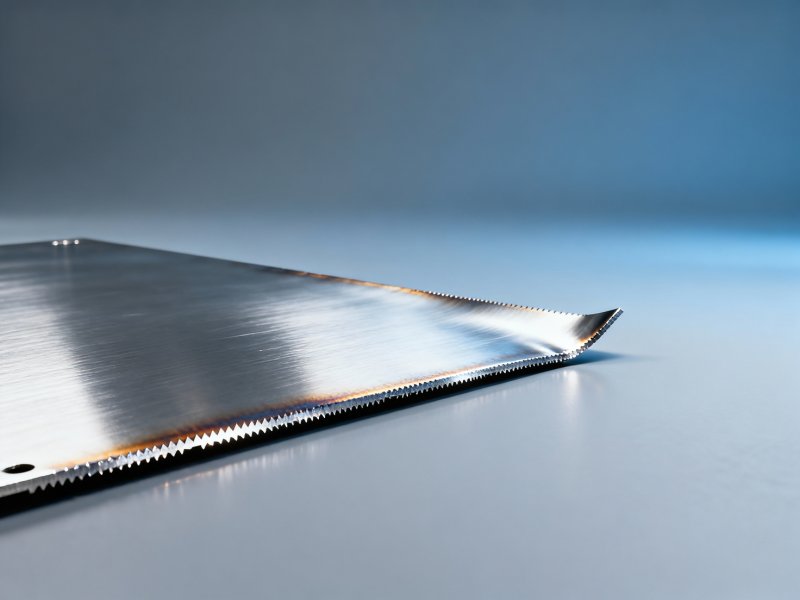
When high-energy thermal processes like plasma, laser, or oxy-fuel cutting are applied to flat plate stainless steel, localized heating creates steep temperature gradients. As the cut zone cools rapidly—while adjacent material remains relatively cool—the differential contraction induces residual tensile and compressive stresses. These internal forces exceed the yield strength of thin or medium-thickness plates (particularly those under 6mm), resulting in curling, bowing, or twisting.
The problem intensifies with austenitic grades like 304 and 316 Stainless Steel Plate, due to their high coefficient of thermal expansion (15.7 × 10⁻⁶/℃) and low thermal conductivity (16.2 W/m·K). This combination slows heat dissipation and amplifies localized strain—making post-cut warping more likely than in carbon steels or ferritic stainless variants.
Many technical evaluators and procurement professionals overlook this because warping often appears only hours—or even days—after cutting, once residual stresses fully relax. That delay masks root cause attribution, leading teams to misdiagnose it as handling error, poor storage, or material defect—rather than an inherent metallurgical response to thermal input.
How Material Selection Directly Influences Warping Risk
Not all stainless steel plates respond equally to thermal cutting. Key differentiators include alloy composition, grain structure, and cold-work history. For example, 316 stainless steel contains 2–3% molybdenum, which improves high-temperature stability and reduces susceptibility to sensitization—but does not eliminate thermal distortion. Its higher density (7.98 g/cm³) and lower thermal conductivity compared to 304 further increase thermal retention during cutting.
Thickness is equally decisive. Plates under 3mm show measurable warpage in >70% of plasma-cut batches without stress-relief annealing, while those over 12mm remain dimensionally stable in >92% of cases—even with identical cutting parameters. Width-to-thickness ratio also matters: plates wider than 1500mm and thinner than 4mm exhibit up to 3× higher warping incidence versus narrower counterparts.
This table confirms that selecting 316 over 304 offers corrosion and acid resistance benefits—but introduces only marginal improvement in thermal distortion control. For applications demanding tight flatness tolerances (±0.3mm over 2m), engineers must pair grade choice with process controls—not rely on material alone.
Procurement & Engineering Mitigation Strategies You Can Implement Today
Mitigating warping isn’t about avoiding stainless steel—it’s about aligning specification, fabrication method, and supplier capability. At Hongteng Fengda, we embed anti-warping safeguards across three layers:
- Pre-cut optimization: We verify plate thickness uniformity (±0.05mm tolerance for plates ≤6mm) and apply stress-relief annealing for orders requiring flatness < ±0.2mm over 3000mm length.
- Cutting protocol calibration: Laser cutting at 1.2–1.8 kW with nitrogen assist reduces HAZ width by 40% versus plasma—cutting thermal input without sacrificing speed.
- Post-process stabilization: For critical flat plate stainless steel components, we offer optional tension-leveling (up to 1200MPa yield compensation) or vacuum stress relief at 1050°C for 2 hours—reducing residual stress by ≥85%.
These steps translate into measurable outcomes: 98% on-time delivery for flat plate stainless steel orders with flatness-critical specs, average rework reduction of 3.2 hours per ton, and zero dimensional non-conformance in 2023 audits across EN 10029 Class A and ASTM A480 Grade 1 compliance checks.
When to Choose 316 Stainless Steel Plate — And What to Verify Before Ordering
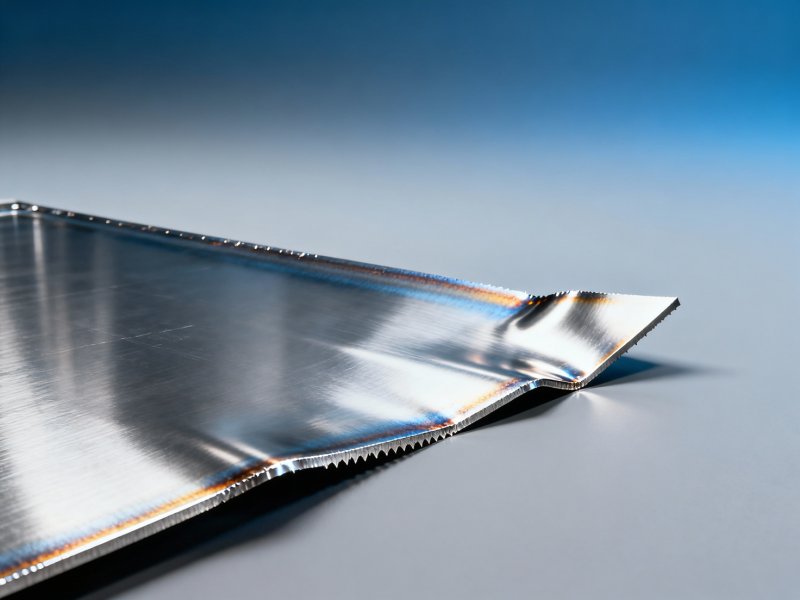
The 316 Stainless Steel Plate excels where chloride exposure, acidic environments, or elevated temperatures (>425°C) demand superior pitting resistance and long-term stability. Its molybdenum-enhanced matrix delivers proven performance in food processing conveyors, marine railings, pharmaceutical tanks, and chemical reactor linings—applications where failure means downtime, contamination, or regulatory non-compliance.
Before finalizing purchase, procurement and technical teams should jointly verify:
- Surface finish specification (e.g., 2B for general use vs. BA for mirror-grade reflectivity) — affects both post-cut flatness retention and cleaning validation;
- Thickness tolerance class (EN 10029 Class A: ±0.05mm for ≤3mm; Class B: ±0.08mm) — critical for stacked or welded assemblies;
- Mill test report inclusion of tensile strength (≥520 MPa), yield strength (≥275 MPa), and hardness (≤183 HB) — ensures mechanical consistency across coils;
- Traceability to ISO 9001-certified production batch, with SGS/BV third-party verification available upon request.
Why Global Buyers Partner With Hongteng Fengda for Precision Flat Plate Solutions
Sourcing flat plate stainless steel isn’t just about meeting spec—it’s about securing predictable dimensional behavior, consistent surface integrity, and full documentation traceability. Hongteng Fengda supports this with:
- Custom engineering review: Free pre-order analysis of your cutting layout, nesting plan, and flatness requirements—delivered within 48 business hours;
- Multi-standard compliance: Seamless certification to ASTM A240, EN 10088-2, JIS G4304, and GB/T 4237—no retesting delays;
- Stable lead times: Standard flat plate stainless steel deliveries in 15–25 days from order confirmation, with expedited options down to 7 days for priority batches;
- Quality-first logistics: Edge-protected packaging, moisture-barrier wrapping, and certified flatness reports shipped with every container load.
Whether you’re managing a high-volume infrastructure tender in Saudi Arabia, validating stainless round bar for medical device OEMs in Germany, or negotiating angle steel price per ton for Philippine construction—our team provides actionable technical guidance, real-time production visibility, and responsive commercial terms. Contact us today to request a free flatness assurance assessment, mill test report sample, or customized quote for your next stainless steel plate order.
Please give us a message


Please enter what you want to find