Choosing the right deformed rebar for concrete is not just about strength—it also depends on rib pattern, bond performance, and project requirements. Whether you are selecting rebar for concrete slab applications or evaluating structural steel beams for construction, understanding how surface design affects concrete grip can help improve safety, durability, and cost efficiency.
Why rib pattern matters more than many buyers expect
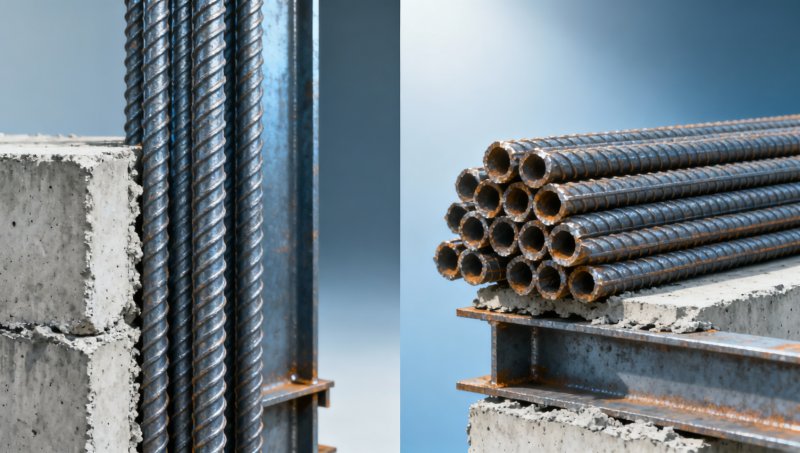
In reinforced concrete, load transfer does not rely on steel strength alone. The concrete must grip the bar surface effectively, and that grip is heavily influenced by the rib pattern on deformed rebar. For project managers, technical evaluators, and procurement teams, this means the visible surface profile can affect crack control, anchorage length, and long-term structural stability across 3 key stages: pouring, curing, and service life.
A deformed bar uses transverse ribs and longitudinal ribs to increase mechanical interlock with hardened concrete. Compared with plain round bars, the difference is practical rather than theoretical. Better bond can support improved stress transfer, help reduce bar slip under load, and support more reliable performance in slabs, beams, columns, and foundations. In many building specifications, bond behavior is part of the reason deformed rebar is the standard choice.
However, not every rib pattern performs the same way in every jobsite condition. Rib height, spacing, angle, and deformation consistency can influence how the bar behaves during placement and after curing. In congested reinforcement zones, concrete flow and vibration quality also matter. A bar with aggressive deformation may improve bond, but it can also require closer attention to compaction and cover quality when section dimensions are tight.
For buyers sourcing from international suppliers, the challenge is often not finding rebar, but confirming whether the supplied bar profile matches the project’s code expectations and fabrication needs. That is why experienced steel partners do more than quote tonnage. They help buyers compare standards such as ASTM, EN, JIS, and GB, align specifications with project drawings, and reduce procurement risk before shipment begins.
What the rib pattern actually changes in real projects
The most direct effect is bond strength between concrete and steel. But for contractors and site operators, the real impact shows up in 4 areas: embedment efficiency, crack distribution, lap splice reliability, and performance under repeated loading. If one of these is overlooked during material review, the issue may not appear until installation or inspection.
- Embedment behavior: rib geometry affects how efficiently force transfers from steel to concrete over a given development length.
- Slip resistance: a more suitable deformation profile helps reduce micro-slip when service loads change over time.
- Placement practicality: if ribs are inconsistent, tying, positioning, and concrete consolidation can become less predictable.
- Inspection confidence: uniform rib formation and dimensional tolerance support easier quality checks before use.
This is especially important for infrastructure, industrial flooring, mid-rise structures, and export projects where material substitution is difficult once fabrication and shipping are underway. A small specification mismatch can trigger rework, delay approval by 7–15 days, or create cost escalation across multiple supply chain steps.
How to judge deformed rebar for slabs, beams, and demanding concrete work
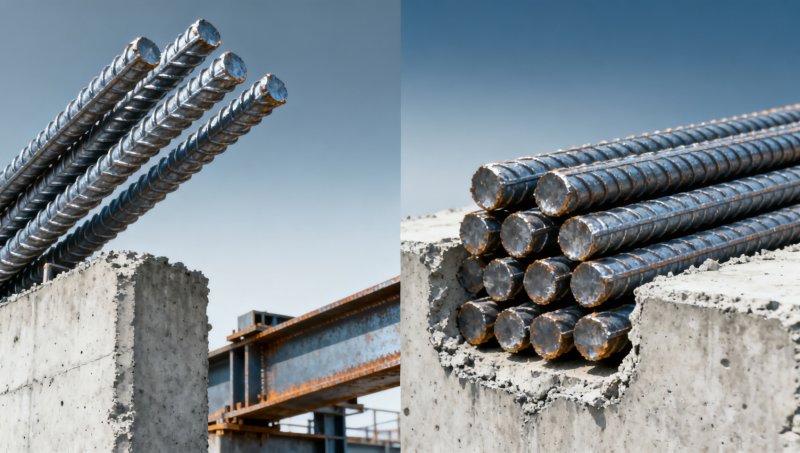
Not every project needs the same rebar surface design. A concrete slab, for example, often prioritizes reliable bond, practical spacing, and efficient placing speed. Deep beams and columns may require stronger attention to anchorage performance and congestion control. Technical teams should therefore review the rib pattern together with diameter, grade, bending needs, cover requirements, and the expected concrete placing method.
For slab work, consistent deformation is often more valuable than overly aggressive surface irregularity. Slabs usually involve repeated bar layouts, mesh-style installation logic, and high demand for stable positioning during pours. If the rib profile is too variable from batch to batch, workers may notice uneven handling, and inspectors may raise concerns about dimensional consistency even when nominal diameter appears correct.
For heavy structural zones, the evaluation becomes broader. Procurement and engineering teams should check whether the rebar is intended for seismic, static, or mixed loading conditions, whether bending on site is expected, and whether the supplied mill can maintain tolerances across large-volume production. Typical review points include bar diameter range, rib geometry consistency, length tolerance, heat identification, and standard compliance documentation.
The table below helps compare common project priorities when evaluating deformed rebar for concrete applications. It is not a substitute for design calculations, but it is a practical decision tool for sourcing discussions, internal approvals, and supplier comparison.
A practical takeaway is simple: the right deformed rebar for concrete is selected by use case, not by appearance alone. Buyers should compare at least 5 points before ordering: standard, bar grade, rib consistency, fabrication needs, and delivery schedule. That approach supports both engineering review and commercial approval.
A 5-point review checklist for technical and purchasing teams
- Verify which standard controls the project: ASTM, EN, JIS, or GB requirements can differ in detail.
- Confirm the intended application: slab, beam, column, footing, or prefabricated reinforcement assembly.
- Check manufacturing consistency across the batch, especially for large-volume supply over 2–4 weeks.
- Review whether on-site bending, cutting, or welding is expected and whether the chosen grade supports it.
- Request quality documents early, before vessel booking or final payment approval.
These steps help reduce disputes between engineering, purchasing, finance, and site teams. They also shorten internal approval cycles because each stakeholder can review the same decision basis instead of evaluating steel only by price per ton.
What should buyers compare beyond rebar itself?
In real construction supply chains, deformed rebar is only one part of the structural package. Buyers often source rebar together with beams, channels, light-gauge members, or support components for roofing and wall systems. When this happens, supply coordination becomes just as important as material performance. A supplier that understands both reinforced concrete and structural steel procurement can reduce interfaces, simplify scheduling, and improve project predictability.
For example, many steel structure buildings use concrete foundations together with steel framing and secondary members. In such mixed systems, buyers may need rebar for footings and slabs while also purchasing purlins, wall beams, or light structural components. A practical mid-project option is C Beam Steel, which is commonly used in purlins and wall beams of steel structure buildings, lightweight roof trusses, brackets, and selected light industry manufacturing components.
From a procurement perspective, this kind of product is useful because it supports multiple configuration needs. Common material options include Q195, Q235, Q345, A36, SS400, and S235JR. Typical thickness ranges from 1mm to 12mm, and standard lengths include 6m, 9m, and 12m, with custom lengths often available for larger quantities. Surface options such as galvanized finish, powder coating, or black varnish also help match environmental and design requirements.
For project managers handling 2 or more steel categories in one schedule, combining sourcing discussions can lower communication delays. Instead of checking separate vendors for every component, buyers can align standard requirements, inspection timing, processing services, and shipping plans in one coordinated review. This is especially useful for export projects where lead times of 15–20 days and trade terms such as FOB, CFR, or CIF must be reviewed carefully before final confirmation.
How integrated steel sourcing reduces project friction
When concrete reinforcement and structural steel members are reviewed together, the buyer gains better control over logistics, tolerances, and installation planning. That matters to distributors, EPC teams, and factory construction buyers who need predictable packaging, stable supply, and documentation that matches contract requirements.
- Shared quality review: standards, dimensional checks, and inspection records can be organized in one process.
- More efficient scheduling: secondary members and reinforcement can be planned around the same production and shipment window.
- Lower coordination cost: fewer supplier interfaces often means fewer delays in approval and site communication.
- Better fit for OEM or custom work: punching, bending, welding, decoiling, and cutting can be discussed early rather than after order release.
For many overseas buyers, the goal is not only to purchase steel, but to reduce sourcing risk. Hongteng Fengda supports this need through structural steel manufacturing and export experience, broad standards familiarity, and supply capability for standard and customized steel products used in construction, industrial, and manufacturing projects.
Standards, tolerances, and compliance checks that should not be skipped
A competitive quote is useful only if the supplied steel can pass project review. For deformed rebar, compliance should include not just nominal grade, but also dimensional consistency, marking traceability, and the correct applicable standard. For structural components ordered together with reinforcement, tolerance and processing requirements also need review. This is where technical assessment and quality control teams should work from a common checklist.
In international procurement, the most common reference standards include ASTM, EN, JIS, and GB. Buyers should not assume that one standard is interchangeable with another without engineering confirmation. Even when materials appear similar on paper, project acceptance can depend on specific clauses related to chemistry, mechanical properties, deformation profile, or inspection documents. Cross-standard substitution should always be reviewed before production starts.
For cold-formed or structural accessory products used in the same project package, additional points matter. Example checks include tolerance around ±1%, perforation requirements, galvanized coating condition, edge type, and available processing services. These details affect downstream installation and can influence whether site teams finish quickly or face avoidable modification work after delivery.
The table below summarizes practical compliance checkpoints that purchasing, QC, and project teams can use when reviewing deformed rebar and related structural steel items in one sourcing cycle.
If your project includes CE, SGS, BV, or ISO-related document expectations for supplied products, confirm the exact scope of required paperwork before order release. Document names alone are not enough; buyers should confirm whether the project needs product inspection evidence, system-level certification references, or shipment-specific supporting files.
Common mistakes that slow approval or increase cost
Many problems begin before manufacturing, not after. A purchase order that lists only grade and quantity may be too vague for export supply. The result can be clarification delays, unsuitable surface finish, or mismatch between engineering expectations and commercial terms.
- Assuming all deformed rebar profiles are equivalent without checking the governing standard.
- Reviewing price per ton without including cutting, processing, coating, or packaging differences.
- Waiting until final inspection to ask for compliance documents or traceability information.
- Ignoring lead time impact when custom lengths, perforation, or special processing are required.
Avoiding these issues can save more than direct material cost. It can protect the project timeline, reduce resubmission work, and support faster approvals across engineering, procurement, and finance departments.
FAQ: practical questions about deformed rebar for concrete
How do I know if the rib pattern is suitable for my concrete slab project?
Start with the project standard and slab design requirements. Then review 4 practical factors: bar size, spacing, expected concrete flow, and installation speed. For slab applications, a consistent deformation profile is often more helpful than an unusually aggressive pattern. Ask the supplier to confirm the applicable standard, dimensional consistency, and batch uniformity before shipment.
Is higher rib height always better for bond performance?
Not necessarily. Bond depends on the full geometry and the concrete placement condition, not one feature alone. A more pronounced rib profile may improve mechanical interlock, but if reinforcement is congested or compaction is difficult, overall performance can still suffer. Technical evaluation should consider bar arrangement, cover, concrete workability, and fabrication demands together.
What delivery lead time should buyers normally expect for structural steel products?
Lead time depends on product type, quantity, processing scope, and shipping route. For some structural steel items, a common manufacturing window is around 15–20 days after order confirmation, while larger export packages may require additional planning for inspection, packing, and vessel booking. Always confirm whether custom lengths, coating, punching, or welding will extend the schedule.
What should distributors and EPC buyers ask before placing an order?
At minimum, ask for 6 things: applicable standard, material grade, size range, tolerance, available processing services, and delivery term. It is also wise to confirm documentation scope, packaging method, and whether mixed-product supply can be arranged. These details improve forecast accuracy and reduce downstream claims.
Why work with Hongteng Fengda for steel sourcing and project support
For buyers comparing deformed rebar for concrete and related structural steel products, supplier capability matters as much as quoted price. Hongteng Fengda is a structural steel manufacturer and exporter from China serving global construction, industrial, and manufacturing projects. The company supplies angle steel, channel steel, steel beams, cold formed steel profiles, and customized structural steel components with support for standard specifications and OEM requirements.
This matters because steel procurement is often a cross-functional decision. Engineers want standard alignment. Purchasing wants dependable lead time. Finance wants cost clarity. QC teams want consistent documentation. Project leaders want fewer disruptions at the jobsite. A supplier with modern manufacturing facilities, quality control discipline, and export experience across North America, Europe, the Middle East, and Southeast Asia can help align those priorities more efficiently.
If you are evaluating deformed rebar, structural steel beams, or supporting members for a steel-concrete project, a focused consultation can save time early in the process. You can discuss specification confirmation, application matching, custom processing, coating options, trade terms, and the most practical delivery schedule for your project volume. That is often more valuable than comparing quotations without technical context.
Contact Hongteng Fengda to review your material list, confirm standards such as ASTM, EN, JIS, or GB, compare suitable steel grades, and discuss sample support, production timing, and export documentation. Whether you need parameter confirmation, product selection, OEM fabrication, or a combined quotation for reinforcement and structural steel components, the next step can be a clear technical and commercial review based on your actual project needs.
Please give us a message


Please enter what you want to find